27649 results found
Pakistani authorities will make cosmetic changes of incumbents handling crucial matters, rope in foreign ambassadors, diplomats, military attaches and foreign media based in Islamabad.
Having already replaced the United States as Brazil's largest trading partner, China-Brazil trade is set for further boost, with benefits to both the economies. However, the increase in trade, and also the huge trade gap between the countries, is becoming a major challenge for Brazil's policy-makers.
The slow pace of rail track construction in India is a total contrast to the development across the border. China has already built a 1142 km-long electrified railway line from Golmud to Lhasa. Now it has plans to extend it to Shigatze and Yatung, reaching almost Nathu La pass.
After the successful operation into Myanmar against Naga insurgents, it is natural for all Indians to feel thrilled at the valour and skill of our forces and show it. But, it is not so natural for a government to beat the drum in this fashion.
Unlike many other countries where China is making risky investments, Delhi is a more credible long-term economic partner for Beijing. If China is ready for a genuine consultative approach with India and is willing to facilitate serious tie-ups between companies in both countries, Modi should embrace President Xi Jinping's Silk Road initiative.
Under the Vibrant Villages Programme nearly 3,000 villages selected along the 3,400-km-long border are set to get better infrastructure facilities
The unanimous passage of the LBA bill through both houses of Parliament underlines the growing maturity of the political discourse on foreign policy in India. In particular, the larger political parties have shown that building consensus on India's foreign policy can increasingly be a bipartisan affair.
British polity is undergoing a churn unlike any in recent history and it will end up reshaping the nation’s political texture. Whether British politicians are ready for this change is a different matter altogether.
The problem with the Indian state is less to do with capacity, than the state-society interaction being constrained by political dynamics. The state measures continue to be captive to narrow, patronage-driven political imperatives that are highly embedded in political returns at national and state levels.
The twin bomb blasts during the Boston Marathon on April 16 present new counter-terrorism challenges for the US as well as other countries gearing up to face a rapidly mutating threat.
Given the US's counter-terrorism experience and security threat, it is in its interest to come out of its earlier bureaucratic deadlock and view the threat of terrorism more objectively and work to enhance counter-terrorism cooperation with countries such as India.
With the US already having made a strong base to deal with terrorist activities from external sources, it is time the US, and other countries develop mechanisms that tackle home-grown groups with vigour, but without endangering the principles of 'rule of law'. This is particularly important as the elements of home-grown terrorism are, in fact, the citizens of the respective countries.
In healthcare, one of the main rudimentary elements is health education which is lacking in India. Hygiene and cleanliness are very important as is emphasised by Prime Minister Narendra Modi and if basic habits like washing hands before eating are inculcated in the people, a lot of diseases could be prevented.
Trump may spring surprises but there exists a broad outline that other policymakers could go by
Enabling greater free trade and removing NTBs should be undertaken with the goal of not just regional integration and growth but also development of communities, employment and poverty alleviation across South Asia.
A gender-inclusive trade agenda will help create better jobs and unlock greater economic potential.
As India's online footprint has increased, so has the role of e-commerce. The industry is expected to cross $6 billion in revenues by 2015, not including ticketing and travel, according to Gartner Research. It must then follow that e-commerce should be encouraged to play a key role in building requisite supply chain efficiencies across India.
Smart Grid technology solutions can not only help India reduce its transmission and distribution losses, but can also help leap to the future by bundling major public utilities over one single grid.
India’s outreach to the Caribbean, Latin America and Africa can be a game-changer for the Global South
This paper explores the various opportunities and challenges of the Bay of Bengal Initiative for Multi-Sectoral Technical and Economic Cooperation or BIMSTEC, a unique inter-regional grouping composed of aspiring member countries from South Asia and Southeast Asia. While the grouping has massive potential to contribute to regional cooperation, this paper explores the capabilities of the organisation in terms of meeting the expectations of renewed
Nepal signed the framework agreement of the Belt and Road Initiative (BRI) with China in May 2017. Of the initial 35 projects that Nepal had proposed, the final number eventually came down to nine. Seven years later, none of the BRI projects have been completed. In 2023, the tenth year of the BRI, controversies surrounding China’s attempt to co-opt even ‘non-BRI’ projects under the framework, and Nepal’s efforts to secure more grants inst
BRIC or BRICs is an acronym referring to the fast growing economies of Brazil, Russia, India and China. The acronym is used increasingly by politicians and the mass media, reflecting the emergence of a new global reality.
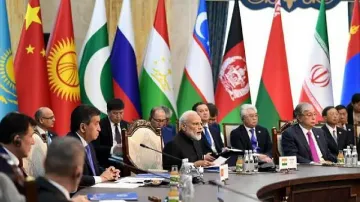
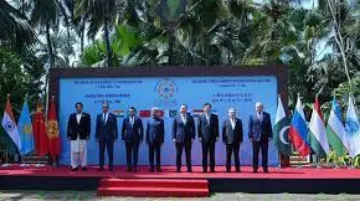
China has twice broached the matter of expanding the membership of BRICS (Brazil, Russia, India, China and South Africa): first, at the 2017 Xiamen Summit, and again, more recently, at the 14th BRICS Leaders’ Meeting in June 2022 convened virtually under the chairmanship of Beijing. With China and India locked in a stalemate along the Line of Actual Control (LAC), the Chinese proposal has raised concerns in New Delhi. This brief examine
It is apparent that panaceas such as debt write-downs only offer short term relief to the debt ridden Eurozone as long as structural imbalances persist. European leaders need to look for a multipronged approach to deal with the problems.
At this unique geopolitical moment, when India faces a multitude of challenges seeking its attention both towards the region and the global stage, BRICS provides a flexible platform to respond to both.
The BRICS bank, now tentatively called the New Development Bank, is indeed a new and long overdue development. It is the first step towards reforming the world financial system. It has to be read against the decision of the BRICS nations to do trade more with each other on the basis of currency swaps.
The major achievement of the recent BRICS Summit was the decision to create the long-awaited (BRICS) New Development Bank. The bank can be seen as a growing influence of the BRICS which together represents 18% of the World trade and accounts for 40% of the global population with a combined GDP of $ 24 trillion.
The expansion of BRICS in 2023 has infused a new energy into the grouping. Despite certain rivalries, BRICS members still largely tend towards cooperation on issues of development and economic growth. The grouping now accounts for 40 percent of global trade. This report explores areas of cooperation for BRICS members in the domains of trade and investment. It identifies vulnerabilities in current supply chains, including connectivity, scarce raw
The BRICS-Africa partnership provides the potential for positive cooperation between developing nations in the future. It is this potential that delegates from Brazil, Russia, India, China and South Africa will be trying to cultivate and deepen over the next couple of days in Durban.
The BRICS leaders have accepted the report titled "Towards a Long Term Strategy for BRICS", the recommendations made by the BRICS Think Tanks Council (BTTC). Observer Research Foundation is the Indian representative at the BTTC.
Has the emergence of BRICS had an impact on IBSA, was the question posed by Mr M Ganapathi, former Secretary (West) in the Ministry of External Affairs (MEA), Government of India.
Perhaps, the most critical issue for the five BRICS leaders, who will meet at the sunny shores of Fortaleza, will be practical goal-setting. This will be an exercise in planning and coordination to maintain continuity as well as honing in on objectives for the long term. If there is an opportunity to be seized in cross-leveraging political and economic ties, it will be in the coming years.
The Fortaleza summit will represent the reboot of BRICS. Prime Minister Modi has the biggest political mandate among his BRICS counterparts, and also the weight of the largest expectations.
The recent G-20 Summit in Los Cabos, Mexico, featured a pivotal change in the geopolitics of international finance. Emerging economies contributed billions to an emergency IMF (International Monetary Fund) fund designed to provide additional support to the Eurozone nations in case the debt crisis worsens.
Sino-Indian ties have been going downhill for the last few years. At the BRICS summit, India sought to re-engage Russia more substantively.
Think tanks from five BRICS countries, participating in the 5th Academic Forum meeting in Durban, have announced the setting up of the BRICS Think Tanks Council (BTTC).
The unity and purpose of BRICS has been the target of speculation and scepticism from various quarters. With the Delhi Declaration, BRICS members have been able to assuage such doubts as they have begun to create a credible hedge against traditional global narratives of security and development.
China as the leader of the pack will use BRICS for control and dominance. The West will see this as a threat to existing arrangements and try to pull it down before it takes off. Indian presence will remain weak so long as our economic reforms and progress remain slow and our internal political and policy frameworks remain uncertain.
BRICS mandate is under siege at a time of slowing economies and growing intra-BRICS political divergences. Above-all, it has been struggling to retain its relevance
The world of BRICS is expanding. Despite setbacks, this association of Brazil,Russia, India, China and South Africaall of them important, emerging-marketeconomiesremains relevant as it continues to comprise a big share of the world's population,its resources, and global trade. This paper describes the rise of BRICS and their growing mutualinterest in cementing their economic and political ties. It argues that while problems remain inpromoting coh
Ambitious expansion meets internal divisions as the bloc strives to redefine global power dynamics.