27944 results found
Given its proximity to India and its importance in global value chains, ASEAN is in a vital zone of India’s strategic interests.
Narendra Modi and Xi Jinping met in Tianjin to discuss border issues and cross-border terrorism. Modi emphasized the importance of peace along the Line of Actual Control. Both nations agreed to work towards border demarcation. The SCO declaration condemned the Pahalgam terror attack. India maintains its right to build relations with Taiwan. New Delhi signals strategic autonomy to Washington.
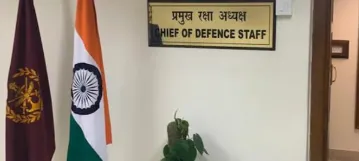
By announcing the creation of a chief of defense staff, New Delhi hopes to modernise India’s armed forces.
EGoMs were a useful device that helped decide many contentious issues in India in the past. It was pioneered by the Vajpayee government. It may be useful for the Modi Govt to note that 18 "leading small groups", four presided by President Xi Jinping, exist in the Chinese system as well.
Modi government has stirred a hornet’s nest in imposing a one-day ban on NDTV India on clearly specious grounds that need to be looked into
Even though India's defence, security and economic relations with Israel have been on the upswing since the 1990s, Modi has been credited with elevating the strategic dimension of India-Israel partnership by bringing relations "out of the closet".
Prime Minister Modi's visit to Australia, taking place nearly 30 years after the last Indian Prime Ministerial visit (Rajiv Gandhi in 1986), comes at a critical time for both countries - when strategic equations are being redrawn, creating new Asian security dynamics.
Cricket has always come in handy for India and Pakistan leaders to break political ice at difficult moments. And this World Cup has provided Modi with an opportunity to end the current diplomatic impasse. Modi called up Sharif to wish Pakistan well in the Cup and offered to send the new foreign secretary to Islamabad.
Under Modi, India must find the right balance between a strong national leadership, popular expectations for change and an optimistic vision of progress. Change can certainly be achieved, but Indians need more than just the will of a strong leader.
Is it realistic to expect the new Prime Minister and his team to bring about a turnaround when some of the key economic indicators have been stagnating for so long? He struck the right note at his inaugural speech by asking people to build a developed and inclusive India.
India's new Prime Minister Narendra Modi faces a tough challenge in balancing cost-optimisation for ordinary people while mitigating environmental risks, meeting the needs of stakeholders and interest groups from energy companies to activists to regular folk who rest their hopes on his electoral promises of cheaper, cleaner and safer power.
Indian industry stalwarts have welcomed the arrival of Narendra Modi. The first priority of Prime Minister Narendra Modi should be to ensure the revival of economic growth, which has gone below 5 per cent in the past two years and also tackle food inflation and price rise.
Continuity, rather than change, is the true hallmark of Indian Prime Minister Narendra Modi's foreign policy. True, he has been far more vigorous and muscular than his predecessor Manmohan Singh, but the difference is in tone and emphases, rather than substance.
Delhi's foreign policy discourse continues to be dominated by the metaphor of "non-alignment" and the mindset of a weak state. Are there other ways of thinking about India's grand strategy? Delhi could turn to classical geopolitics in understanding the global power shift.
Enabling a stable Asian strategic framework to the mutual benefit of both New Delhi and Tokyo should be a compelling factor for both prime ministers, Mr Narendra Modi and Mr Shinzo Abe.
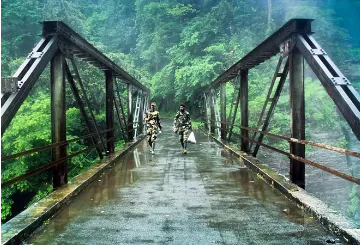
In the post BRICS narrative, Modi government’s recent policy towards Pakistan has been described as a "game changer" but has it's own limitations
The prime minister has shown a refreshing approach towards Indian agriculture, but for the real challenges to be surmounted he needs a massive dose of digital technology in all part of the value chain.
For a bilateral visit at the highest-level after an undesirable and inexplicable gap of 28 long years, Prime Minister Narendra Modi's three-day tour of Sri Lanka was noted as much for what it achieved as for the optics.
New Delhi can't really expect that the Americans can or will solve India's problems with Pakistan. India can better leverage support from the US and other international partners only when it has a strong and sustainable engagement of its own with Pakistan.
The question remains as to how the Modi government will choose to address nuclear liability issue, balancing both the supplier and the domestic concerns. Dilution of the Liability Act is not an option, which is an important lesson learnt globally.
Former Ambassador to Nepal Jayant Prasad says that the relationship between India and Nepal should not depend on the number of projects or the amount of credit sanctioned. It should be a more sensitive political relationship.
Prime Minister Narendra Modi's visit to Vietnam later this week will mark the first visit by an Indian prime minister in the last 15 years.
Modi's visit to Dhaka is likely to focus on greater economic cooperation and engagement. Some of the major highlights of the visit will be on rail, road and water connectivity as well as coastal shipping services.
Modi's foreign visits resemble roadshows with their attendant hype, even though they also have a larger strategic purpose. But like all roadshows there is a time for publicity, and a time to get down to work on the MoUs, agreements, promises and commitments.
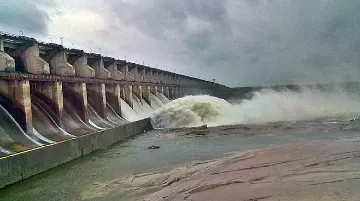
Some nuances can be captured from the opening remarks made in Sochi. Modi thanked Putin for helping India get a permanent membership in the Shanghai Cooperation Organisation. In turn, Putin noted: “Our defence ministries maintain very close contacts and cooperation. It speaks about a very high strategic level of our partnership.”
The expected meeting has seen a focus on what both sides could agree to on the defense side.
Alternatively, for India, BRICS remains a non-West platform as reiterated by PM Modi at the Russia summit that the organisation must not foster a notion that it seeks to replace international institutions.
The informal nature of the summit — namely the absence of pressure involved in putting out a joint statement, among other aspects — helps create an environment for better understanding of each other’s concerns.
The issue of NRC, especially in Assam and West Bengal, is inherently linked to the problem of migration.
New Delhi has ambitious plans to bolster its armed forces with French procurements, but it is unclear how these deals are to be delivered
In his Kozhikode speech, Modi managed to underscore how Pakistan was going against the forces of history and how isolated it stood today as a result.
The diversity of engagements planned during PM’s visit suggests that after a long hiatus, relations between two of the world’s oldest civilizations are on an upswing