27936 results found
Pointing out that the problem for an upcoming Indian defence industry is in the basics, experts suggest that a refinement of processes in conducting business and procurement would go a long way.
With India and Russia having a common interest in Afghanistan’s stability, the ensuing big power competition, which is pushing Moscow into a tight Chinese economic embrace, is increasingly turning out to be a challenge.
More than six months into his tenure, Afghan President Ashraf Ghani is possibly as far from achieving a breakthrough with the Taliban. There is no unanimity in the Taliban for peace talks. And Pakistan's failure to bring the Taliban to the table could possibly be a reflection of its limited influence over the group and a bigger obstacle to the talks may be the Taliban itself.
The voluminous participation by the Afghans in the elections, in which all major candidates asserted their desire to sign the Bilateral Security Agreement with the US, does not bode well for the Taliban, which describes signing of the BSA as "a huge crime".
Delhi must not forget that the tyranny of geography limits India's role in Afghanistan. Delhi is in no position to compete with Rawalpindi in Afghanistan. Nor can it dream of replacing US military power across the Durand Line. For now, Delhi must welcome the current dialogue between Kabul and Rawalpindi.
Comparing Afghanistan and the rest of the world, Farkhunda Zarah Naderi, Member of the Afghan National Assembly, said that while the world is looking forward to achieve the status quo, Afghans are still fighting for their primary rights, be it women's, cultural or ethical.
Area states should work together to address security concerns

Saeed Naqvi, Distinguished Fellow at ORF, recently journeyed across Afghanistan where he met scores of political leaders, Taleban, US officials, filmmakers, journalists, NGOs, religious leaders and ordinary Afghans. The result is an insightful document on Afghanistan at the crossroads. Do Americans have an Endgame planned? Or, more important, can a superpower in a theatre of strategic importance, have a linear exit plan when multiple strategic op
Nearly ten years in Afghanistan and not a solution is sight makes for sad commentary for the ability of the US to solve its security problems or to force a solution on other regions. The year of reckoning may have been postponed from 2011 to 2014.
Given his limited choices in stabilising Afghanistan, which include supporting a national election, US President-elect Donald Trump will find India to be a reliable and trusted partner in this process
Erosion in the international consensus on rebuilding the country must be reversed before it’s too late
The change in leadership in Kabul has provided a new opportunity for the US and Afghanistan to work together. Media reports suggesting a larger role for the United States post-2014 than originally envisaged have been doing the rounds for the better part of the past six months.
The US is unlikely to withdraw from Afghanistan, and the unstated reason for its prolonged stay in the area is to ensure the stability of nuclear Pakistan.
The visit of Mr. S Jaishankar, India's Foreign Secretary, to Kabul this week came at the fag end of his trip to all the other South Asian neighbouring countries. During this brief visit, he met with Afghan President Ashraf Ghani and his Chief Executive Abdullah Abdullah and reaffirmed India's commitment to stay the course in Afghanistan.
In Afghanistan, there are concerns among Abdullah Abdullah's supporters that he may be reduced to a mere figurehead or that Ashraf Ghani, as President, could still seek to extend his powers.
As foreign troops begin to leave Afghanistan, criticism of the international coalition's handling of the war has been pouring in from all corners. A recent survey by the Pew Research Center for People and Press showed that a majority of the public does not think the US has achieved its goals in Afghanistan.
The security situation in Afghanistan is deteriorating and there is an overall sense of anxiety about a possible economic collapse and a Taliban takeover. The role of Pakistan and China will add to India's challenging task to ensure stability in Afghanistan in the next few years.
The year 2014 is, in many ways, the year of reckoning for Afghanistan which is undergoing three simultaneous transitions - security, political and economic. Unlike the first two, the economic transition has not had the advantage of clear deadlines and roadmaps and has suffered from lack of long term planning.
In the midst of growing political instability, emerging complexities in the peace process, and significant aid cuts, the coronavirus outbreak is intensifying the struggle on all fronts in Afghanistan.
The presence of foreign fighters in Afghanistan presents a serious challenge in securing counterterrorism gains of the past, while ensuring that the Taliban delivers on the promise of ensuring non-use of Afghan soil to plan attacks against the US or its allies.
The registration process for the Afghan presidential elections came to a close last week. As many as 27 candidates have filed nomination and the vetting process, by the Electoral Complaints Commission (ECC),
Even with the knowledge that Afghanistan has suffered terrorist violence for almost two decades now, the brutal attacks on the maternity ward and the funeral in the holy month of Ramadan, have unleashed a wave of horror and disgust that is unlikely to die down anytime soon.
New Afghan President Ashraf Ghani fulfilled his promise of signing the Bilateral Security Agreement (BSA) with the U.S. and Status of Forces Agreement (SOFA) with the NATO within 24 hours of taking office.
Much has already been written about both the drawdown of US troops from the region, and the recent Iranian nuclear deal and the possible impact it could have on Iran-US relations.
The confirmations about the death of Mullah Omar, who is said to have died in 2013, may not have taken many by surprise. His absence from the public domain for years led to various theories about his possible whereabouts.
The killing of a former Taliban minister, Mullah Abdul Raqeeb, has raised questions about the involvement of the Pakistan establishment in the peace process and a possible rift within the ranks of the militant movement.
The 13th century Italian theologian and philosopher, Saint Thomas Aquinas, said that in order for a war to be just, the three things needed would be the "authority of the sovereign," a "just cause," and a "rightful intention." By that moral compass, the war in Afghanistan could probably be on its way to becoming one-third "just."
The recent developments in the Afghan reconciliation process have evoked a new sense of optimism regarding a peaceful solution to the conflict in the country. First, there was the release of 26 prisoners, in batches, by Pakistan and then the two-day talks in Paris,
In Afghanistan, how the unity government strikes an internal balance will in turn determine in long run its ability to carry forth a range of bold policy initiatives through political consensus. It would also to an extent impact morale on the battlefield.
The US position on Afghanistan has many weaknesses. Having announced prematurely that the US would withdraw in 2011, efforts at backtracking have only meant that the locals and their Pakistani masters believe that it is a matter of time before the US and NATO will leave.
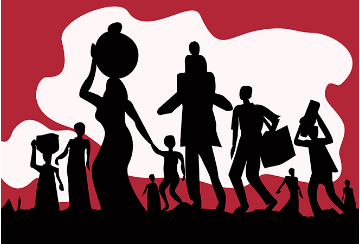
Afghan refugees in Iran are experiencing increasing hostility as State policies become explicitly discriminatory. The recent persecution of these displaced persons has brought this fact to light.
The possibility of, and debate about, a 'zero option' for American troop presence, or absence, in Afghanistan post-2014 has surfaced once again. According to The New York Times, the US administration has not ruled out the possibility of a complete withdrawal from Afghanistan come 2014.
The recent US decision to suspend training of Afghan local police has underlined the growing worries in Washington over the incidents of Afghan soldiers killing American troops in 2012.
The key is to achieve peace within the Islamic Republic of Afghanistan — a system that is defined by its core values related to human rights, women’s rights, democracy, rule of law and political inclusion.
The COVID-19 outbreak poses immense challenges to Africa’s resilience. The pandemic’s economic fallout, caused by disruptions in global and regional value chains and a slump in commodity prices, can derail the progress which the continent has recorded in recent years. Despite the bleak forecasts, however, African countries have managed to mount a concerted response to the pandemic. This paper examines the extent of the economic and health imp

In the context of the African Union-International Criminal Court confrontation, the court is no longer about finding justice for the victims as many wrongly assume and believe; rather the process is now about whether an ICC faced with prosecuting cases that don't belong there,
Across Africa, Beijing’s mining dominance is now being scrutinised more closely, with a growing demand for fairer, more transparent partnerships
Some of the best performing countries of Africa -- Nigeria, South Africa and Botswana -- have GDP growth rates comparable with the fastest developing countries of the world. Their GDPs are the least volatile in Africa. Rwanda was declared the best reformer by the World Bank for encouraging business in the country.
Given Africa’s unusual pattern of structural transformation, India could be a natural partner as far as the search for new development models is concerned.
As Africa urbanises amid a warming climate, climate-smart food systems offer a path to resilience, sustainability, and shared prosperity.
Even after the decolonisation of Africa, the continent was unable to formulate, let alone implement its own agenda because of its deep political and economic vulnerabilities. This situation has changed in the last two decades, and today, Africa is witnessing political and economic resurgence. Its leaders realise that the time has come for African development to be owned and driven by the African people themselves. There is a new enthusiasm for th
Prime Minister Narendra Modi's muscular outreach to the world has evoked intense curiosity. Foreigners are lining up to check if we are ready to walk the talk. Does reality match the hype? It helps that India has a global reputation for gorgeous shopping ? the jewelry, the silks, the pashmina, fashion wear, all available at competitive prices.
One runs the risk of stepping on many corns by attempting an objective assessment of the place of the late Yasser Arafat, the leader of the Palestine Liberation Organisation (PLO), in history.
The high table at the NATO Summit at Chicago will discuss some withdrawal agenda, but the real policy towards Afghanistan and Pakistan will only be delineated when the new administration takes charge in Washington in November.
The problem of contemporary India's foreign policy making is not that states have acquired a veto over the Centre. Most state leaderships have not only supported regional economic integration and trans-border connectivity, but are also craving for it.