27613 results found
Malé is playing India and China against each other and trying to get the best deal, but Muizzu appears to have gone a bit overboard this time.
On April 6, the Tuaregs rebelled against the Mali state, captured large areas in the northern region (Kidal, Gao and Timbuktu) and declared autonomy by forming a new "Azawad" state.
Under-nourished women, in all likelihood, became under-nourished mothers with a greater chance of giving birth to low birth-weight babies, perpetuating this cycle
Boosting further the relations between India and Bangladesh, West Bengal Chief Minister Mamata Banerjee recently undertook a three-day visit to Dhaka. The successful visit is expected to create a positive ground for Prime Minister Modi's visit likely later in the year.
Birds provide multiple benefits to the world’s ecosystems. In recent years, experts have raised the alarm about deteriorating bird populations, with some species becoming extinct and others threatened to dangerous levels. This decline in avian populations is primarily attributed to urbanisation. Concerted efforts are required to conserve birds and their habitats in cities. The Government of India, state governments, urban local bodies, non-gove
The rapid uptake of artificial intelligence (AI) in the military in the past couple decades has been accompanied by a slow but gradual build-up in attempts to understand how these AI systems work to achieve better results in military operations. The idea behind what is called ‘eXplainable AI’ (XAI), and the technologies driving it, are a manifestation of this trend. The question, however, is if XAI in its current form is the solution
Former Prime Minister Vajpayee¿s government may not have left India shining, but to its credit, it notched up several major achievements on the national security font. Foremost among these was declaring India a nuclear weapons state, a move that unquestionably enhanced India¿s quest for strategic autonomy.
Today, world powers are debating a regime to regulate outer Space activities. India cannot let itself be left out of any Space regime as happened over nuclear weapons. In order to be heard in the discussions of any new rule-making effort, India needs to demonstrate its capabilities in Space research and technology, something that the Mangalyaan amply did.
This brief analyses the manifestos of the Indian National Congress and Bharatiya Janata Party in the past four Lok Sabha elections. It introduces the concept of “falsifiability” to evaluate whether promises made in manifestos can be verified, to begin with; it then outlines the poll promises that are falsifiable across various sectors. The authors examine whether or not the promises were fulfilled, and if not, if they were carried aga
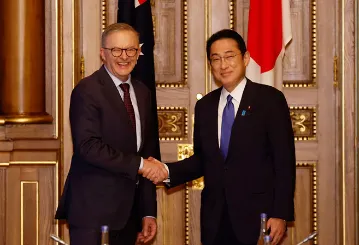
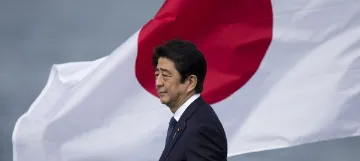
From all reports, it is quite clear that the Japanese PM's Delhi visit would mainly be devoted to consolidate the partnership and draw up a fresh road map for future developments. The much anticipated agreement on civil nuclear cooperation is not likely to happen during the current visit.
The traditional Left in the country too has failed to 'grow' with the new-generation labour force, with the result that there is a vacuum that the Maoists possibly seem to be exploiting. This is not the first time traditional Left have failed the labour force.
The US has provided financial and military support to Ukraine since 2014, when Russia took control of Crimea, and more firmly since February 2022, when the ongoing Russia-Ukraine war began. Indeed, US military, political, and strategic support to Ukraine is crucial to Kyiv as the conflict continues. For the Biden administration, aid to Ukraine is a vital principle on which his party politics hinges; it is a critical pathway to rebuild transatlant
This paper presents a bibliometric analysis of the literature on private health aid and official health assistance between 2000 and 2022. It provides an overview of the sites and themes in the literature pertaining to development assistance in health, and collates the significant policy recommendations presented therein. Several crucial findings emerge from the bibliometric analysis: 44.2 percent of the 489 papers/articles assessed focused on low
Since Xi Jinping became General Secretary of the Communist Party of China (CPC) in 2013, the People’s Liberation Army (PLA) has witnessed an accelerated modernisation drive. Following the 2015-16 organisational reforms, the CPC further standardised its service-level force structure and upgraded its military doctrine, combat capabilities, and weapons systems. This report analyses recent improvements with the development and integration of new we
India's Maritime Agenda may appear to be a major step forward, but unless translated into a time-bound action plan which is resolutely implemented and closely monitored, it may remain merely another document.
Resolution of the maritime dispute between India and Bangladesh has opened up a new horizon for cooperation between the two countries. They can now join together to exploit the natural sources in the Bay. Both countries should try to transform the Bay of Bengal region into a major hub for trade and commerce, bringing prosperity to the region.
India’s geography lends itself favourably to the cultivation and expansion of maritime ties. Yet, for much of the country’s contemporary history, the country has overlooked these opportunities. As the world reengages with its vast ocean spaces, India too, has become more willing and capable of participating in the maritime domain. This paper outlines the evolution of the country’s maritime outlook as it shifts its largely continental-orient
The Indo-Pacific, often regarded as the ‘maritime underbelly’ of Asia, has emerged as the world’s economic “centre of gravity”. The home of vast geo-economic opportunities, and facing manifold security challenges at the same time, this maritime domain has attracted the keen attention of global powers in recent years. This births prospects for multilateral collaborations in maritime security, and justifies the significance of a �
This paper examines India's maritime development pathway through the lens of the Blue Economy within the framework of Viksit Bharat 2047. Drawing on India's maritime legacy, it analyses how government-led initiatives such as Sagarmala, Maritime India Vision 2030, and Maritime Amrit Kaal Vision 2047 are strategically transforming the sector. The paper outlines the key components of the Blue Economy, focusing on port-led development and maritime in

Post-9/11, counter-terrorism experts all over the world have been focussing attention on three new aspects of counter-terrorism: counter-terrorism relating to weapons of mass destruction (WMD), maritime counter-terrorism and counter-terrorism relating to energy security. Each of these requires a new approach and a new thinking.
In recent years, the Small Island Developing States (SIDS) of the South-West Indian Ocean (SWIO) region have emerged as vital security and developmental partners in the geopolitics of the Indian Ocean Region (IOR)—thereby gaining prominence in India’s foreign policy priorities. This paper examines India’s bilateral and multilateral engagement with the SIDS of the SWIO region, and argues that India should consider the concerns of the
This paper examines security collaboration in the Bay of Bengal. It argues that despite increased cooperation in the maritime domain, the security perceptions of Bay states differ significantly, arising primarily from disagreements associated with China’s presence in the region. Crucially, the Bay states are wary of being seen as siding with India to counterbalance China. Even in nontraditional security areas where cooperation is readily possib
During a lecture on 'Japan's foreign policy: Strategy and practice', Japan's Vice Minister for Foreign Affairs, Mr Akitaka Saiki reiterated the Japanese position that the security issues in the Pacific Ocean, Indian Ocean, the South China Sea and East China Sea cannot be treated separately.
Debate on whether Indian armed forces need a continental land defence strategy or a sea-based maritime strategy has gained currency in recent years, but there is yet a clear answer to emerge.
This paper evaluates the possibility of an increase in maritime terrorist violence in Asia, based on a recounting and analysis of some of the most recent past incidents in these waters. It argues that the vulnerability of high seas shipping to criminal acts of violence and the weak and inconsistent nature of maritime governance raises the possibility of a terrorist strike in the Asian littorals. In assessing the odds of a major terrorist attack i
As part of the Maritime Security Programme which was launched by then Chief of the Naval Staff Admiral Arun Prakash on 19th May 2006 at ORF Chennai, Observer Research Foundation, the National Maritime Foundation and the College of Naval Warfare, ORF Mumbai joined hands to conduct an International seminar at ORF Mumbai on 11th and 12th January 2007.
Task Force 6: Accelerating SDGs: Exploring New Pathways to the 2030 Agenda
With Maldives veering towards China, Mauritius is emerging as a decisive factor in ensuring India’s dominance in the Indian Ocean Region
Theresa May arrived in India in her first bilateral visit outside Europe to reinvigorate the India-UK strategic partnership.
Any evaluation of Shia politics in West Asia would be flawed until it takes into account the considerable influence that the holy city of Najaf exerts on Baghdad, Teheran, the Hezbullah and the majority of Bahrainis.
If proof were required, the DMK-Congress spat on the Sri Lanka related vote at the UN Human Rights Council has once again provided it. Foreign Affairs will increasingly impinge on national politics.
India ranks 10th out of 46 top medical tourism destinations in the world, owing to its affordable healthcare facilities and capabilities in specialised treatment. This paper is focused on medical tourism as a pillar of India-Bangladesh partnership. Notable numbers of Bangladeshis seeking medical care visit India annually; of the typical destinations of these “medical tourists”, Kolkata, the capital of West Bengal, is among the most preferred.
By transferring Rs 1.76 lakh crore from the RBI’s surplus funds, the government is determined to meet its fiscal deficit target of 3.3 per cent of the GDP because doing that seems to be its top priority, rather than spending more on infrastructure, welfare programmes and centrally sponsored development schemes.
Experts stress upon amending the Land Acquisition Act, Ask for making rehabilitation a duty of the State
The Indian railway is the largest passenger rail system in the world, yet it makes up just about 13% of India's transport sector
The Indian Ocean has seen a steady increase in the size and number of Ultra Large Container Vessels (ULCVs) or mega-ships equal to or in excess of 18,000 twenty-foot equivalent units (TEU) from 2014 onwards. This has created economic and infrastructural pressures on Indian Ocean littorals. With mega-ships growing on the Asia-Europe route, the Indian Ocean Region (IOR) will need to create flexibility in landside maritime infrastructure and hin
A three-day Mekong-Ganga Dialogue has stressed the need for shifting thinking around river-basin development and climate change issues from narrow national security concerns to a regional perspective with ecological and social concerns.
The confluence of these factors has breathed new life into Yoon’s base