28318 results found
Iraq's Prime Minister designate, Haider al-Abadi, a member of the Shia-led Islamic Dawa Party, must build an inclusive national government and unite Iraq's fragmented ethno-religious communities against the rise of the Islamic State (IS).
On 1 January 2020, the Ministry of External Affairs announced the establishment under its wing of the New, Emerging and Strategic Technologies (NEST) division. This marked a welcome addition to the government’s organisational capacities in an era increasingly being characterised by the interplay of technology, trade, security and geopolitics. This brief outlines the global and domestic context that will surround the operations of the NEST divis
Sohini Bose, Ed., “Priorities for Prime Minister Hasina's New Term in Bangladesh,” ORF Special Report No. 225, May 2024, Observer Research Foundation.
One of the critical issues that seem to have missed the Indian-Pakistan peace process is terrorism. Pakistan has quietly managed to keep the issue on the backburner by raising the issues of Baglihar dam and Kashmir.
Digital financial services have benefits but pose privacy risks that harm consumers, merchants, markets, and nations alike. Some payments systems in India suffer from vulnerabilities because they were not prospectively designed on the basis of the ‘privacy by design’ principle. At the back-end, the centralised storage of data is risky. At the front-end, faulty capture devices enable data misuse. Across the middle mile, data is transmitted wit
The privatisation of railway operations has been a subject of intense debate in India, particularly in the context of improving efficiency, service quality, and financial sustainability. This brief examines the ongoing privatisation initiatives in Indian Railways, assessing their potential benefits and challenges. It explores case studies to understand the implications of privatisation, drawing lessons from successful models in other parts of the
This paper evaluates the impact of various policy reforms, including the economic reforms of the 1990s, on India’s manufacturing sector. Covering the priority sectors relevant to the government’s ‘Make in India’ initiative, the paper analyses the productivity of registered manufacturing units from 1974-75 to 2012-13. It offers empirical evidence on the growth of productivity in the organised manufacturing sector through an inter-tem
To meet the World Health Assembly target for breastfeeding, the government needs to promote breastfeeding in a big way. At the same time, it is important to create awareness about the benefits of breastfeeding, as well as initiate steps to improve breastfeeding practices.
The application of emerging technologies in humanitarian assistance has increased in recent years, and they have proven effective in delivering life-saving interventions to populations in need. In a fast-changing technological landscape, the use of such tools is only expected to increase further. At the same time, however, the use of technologies brings certain challenges, such as misuse of data and the spread of misinformation. This brie
Agrobiodiversity—the foundation of resilient and just food systems—is undergoing rapid and unprecedented erosion across the Global South. More than 90 percent of traditional crop varieties have disappeared, while just nine plant species now provide two-thirds of calorie intake globally. Similarly, 97 percent of global meat production is derived from only eight domesticated species, and nearly 20 percent of food-relevant wild species are threa
Democracy is about winning elections, forming stable governments, governing efficiently and ensuring justice.
The COVID-19 pandemic is taking an enormous toll on health systems across the world. A growing concern is that efforts to manage the pandemic are undermining care for serious non-Covid illnesses such as cancer. In the UK and US, for example, it is estimated that delays in cancer diagnosis and treatment due to COVID-19 will lead to excess cancer deaths in the range of tens of thousands within a year. In India, where health systems are weak, it is
Although the trajectory of India's relations with the Middle East remains a grey area, in the future, it can become a defining relationship to global security.
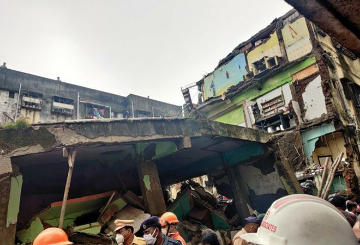
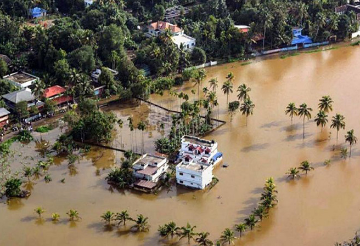
India’s built heritage—rich and diverse, an amalgamation of the country’s multi-millennial interactions with different cultures—is managed by governmental agencies at the national, state and local levels. These bodies have their respective mandates in protecting and preserving the country’s ancient monuments and other structures of historical value. At the same time, India faces a host of natural disasters that pose a multitude of hazar
War on terror was the rationale for the occupation of Afghanistan and Iraq. What was the rationale for the destruction of Libya and now persistent destabilization of Syria?
Knowledge assessment is essential to policymaking, including for health. This report measures awareness of antibiotics and antimicrobial resistance, and finds crucial gaps in understanding on many issues. In a survey among visitors to a science museum in Kolkata, the authors found, for example, more than six of every 10 respondents (67 percent) believing that antibiotics can be used to treat viral infections. This report highlights the need to de
In many parts of the world, including India, Public Credit Guarantee Programmes (PCGP) improve access to credit for small enterprises that are unable to obtain assistance from mainstream financers. This brief discusses the relevance of PCGPs in India, their mechanisms, features, and efficiency. Although these programmes have improved access to credit for MSMEs (micro, small and medium enterprises), there are concerns regarding their efficiency an
New Delhi and Islamabad dominated dialogue have failed to come up with any solution to vexed issues like Kashmir. May be sub-regions like Punjab and other border provinces like Rajasthan-Sind.
As part of this effort, the Observer Research Foundation (ORF) launched a report, Health Equity and Inclusion in Action, which seeks to examine the ways different health initiatives in six countries across Asia and Africa are exploring to address this complex problem. The report, created by the ORF in collaboration with Gilead Sciences who commissioned it, examines case studies from Bangladesh, India, Morocco, Rwanda, South Africa and Vietnam to
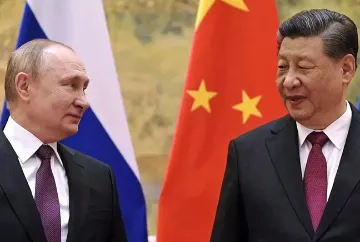
While Moscow's core demands remain unchanged, its secondary demands have evolved. Among other things, it no longer objects to Ukraine joining the EU.
The US would be foolish to deepen the new Cold War atmosphere by trying to isolate Russia over Ukraine developments. As for China, that option is simply not open to them any more. The reason is that the Americans need cooperation from Moscow to deal with Syria, Iran and Afghanistan.
Russian President Putin's Eurocentric approach and having a Europeanist as his primary foreign policy advisor seem to be impacting on his policy towards Asia. The clout that the Orientalists and Indologists once had in the Kremlin is well and truly gone, and the relationship is that much weaker for it.
India's new GDP data speaks of robust growth (6.9%) rather than of policy paralysis and industrial decline in 2013-14. But even Chief Economic Advisor Arvind Subramanian is not convinced by the new data. Because, other indicators do not seem to corroborate the high rate of growth, especially when imports actually declined last year.
The striking capability and influence of the People¿s War Group (PWG) Naxalites¿ has steadily been declining in their flagship North Telengana Special Zone (NTSZ) area since the past few years. The death of some experienced, capable and important leaders of the NTSZ, especially in the past couple of years, in security force operations has weakened the Naxalites there.
Biotechnology is a critical and emerging technology with wide-ranging applications in human medicine, biodefence, nutrition, and the use of bio-based materials. This positions it as a key driver of geopolitical influence and a pillar of global health security, where innovations shape disease surveillance and enable the development of medical countermeasures. Recognising biotechnology as an upcoming frontier in technology competition, the Quad cou
The latest Quad meeting underscored continued growth, but when will the four countries seriously confront the matter of direct security cooperation?
The Quad’s growing effort to shape international norms and rules in the Indo-Pacific is taking place in an environment fraught with multiple challenges. China’s assertive rise as well as internal differences within the group pose significant risks to the plurilateral platform’s mission of creating a free, open, and secure Indo-Pacific. Focusing on the Quad’s cybersecurity cooperation, this brief examines the various internal and e
Biden hosted the Quad Leaders’ Summit, emphasizing Indo-Pacific security and cooperation, but faced criticism for vague military strategies and unclear outcomes.
India’s competitiveness in manufacturing and the success of ‘Make in India’ depend on its ability to produce high-quality products and services. Product quality is important for human health and consumer safety, as well as for protecting the climate and the environment. One way of ensuring that products and services meet certain standards is through technical regulations with mandatory compliance. However, technical regulations also have th
The Aadhar project remains complex - a herculean task. The UK government shelved its identity card project because it was untested and the technology not secure, and because of the risks to the safety and security of citizens. With India in the midst of an election, it remains to be seen what will happen when a new government is formed,