27844 results found
The registration process for the Afghan presidential elections came to a close last week. As many as 27 candidates have filed nomination and the vetting process, by the Electoral Complaints Commission (ECC),
Even with the knowledge that Afghanistan has suffered terrorist violence for almost two decades now, the brutal attacks on the maternity ward and the funeral in the holy month of Ramadan, have unleashed a wave of horror and disgust that is unlikely to die down anytime soon.
New Afghan President Ashraf Ghani fulfilled his promise of signing the Bilateral Security Agreement (BSA) with the U.S. and Status of Forces Agreement (SOFA) with the NATO within 24 hours of taking office.
Much has already been written about both the drawdown of US troops from the region, and the recent Iranian nuclear deal and the possible impact it could have on Iran-US relations.
The confirmations about the death of Mullah Omar, who is said to have died in 2013, may not have taken many by surprise. His absence from the public domain for years led to various theories about his possible whereabouts.
The killing of a former Taliban minister, Mullah Abdul Raqeeb, has raised questions about the involvement of the Pakistan establishment in the peace process and a possible rift within the ranks of the militant movement.
The 13th century Italian theologian and philosopher, Saint Thomas Aquinas, said that in order for a war to be just, the three things needed would be the "authority of the sovereign," a "just cause," and a "rightful intention." By that moral compass, the war in Afghanistan could probably be on its way to becoming one-third "just."
The recent developments in the Afghan reconciliation process have evoked a new sense of optimism regarding a peaceful solution to the conflict in the country. First, there was the release of 26 prisoners, in batches, by Pakistan and then the two-day talks in Paris,
In Afghanistan, how the unity government strikes an internal balance will in turn determine in long run its ability to carry forth a range of bold policy initiatives through political consensus. It would also to an extent impact morale on the battlefield.
The US position on Afghanistan has many weaknesses. Having announced prematurely that the US would withdraw in 2011, efforts at backtracking have only meant that the locals and their Pakistani masters believe that it is a matter of time before the US and NATO will leave.
Afghan refugees in Iran are experiencing increasing hostility as State policies become explicitly discriminatory. The recent persecution of these displaced persons has brought this fact to light.
The possibility of, and debate about, a 'zero option' for American troop presence, or absence, in Afghanistan post-2014 has surfaced once again. According to The New York Times, the US administration has not ruled out the possibility of a complete withdrawal from Afghanistan come 2014.
The recent US decision to suspend training of Afghan local police has underlined the growing worries in Washington over the incidents of Afghan soldiers killing American troops in 2012.
The key is to achieve peace within the Islamic Republic of Afghanistan — a system that is defined by its core values related to human rights, women’s rights, democracy, rule of law and political inclusion.
The COVID-19 outbreak poses immense challenges to Africa’s resilience. The pandemic’s economic fallout, caused by disruptions in global and regional value chains and a slump in commodity prices, can derail the progress which the continent has recorded in recent years. Despite the bleak forecasts, however, African countries have managed to mount a concerted response to the pandemic. This paper examines the extent of the economic and health imp
In the context of the African Union-International Criminal Court confrontation, the court is no longer about finding justice for the victims as many wrongly assume and believe; rather the process is now about whether an ICC faced with prosecuting cases that don't belong there,
Across Africa, Beijing’s mining dominance is now being scrutinised more closely, with a growing demand for fairer, more transparent partnerships
Some of the best performing countries of Africa -- Nigeria, South Africa and Botswana -- have GDP growth rates comparable with the fastest developing countries of the world. Their GDPs are the least volatile in Africa. Rwanda was declared the best reformer by the World Bank for encouraging business in the country.
Given Africa’s unusual pattern of structural transformation, India could be a natural partner as far as the search for new development models is concerned.
As Africa urbanises amid a warming climate, climate-smart food systems offer a path to resilience, sustainability, and shared prosperity.
Even after the decolonisation of Africa, the continent was unable to formulate, let alone implement its own agenda because of its deep political and economic vulnerabilities. This situation has changed in the last two decades, and today, Africa is witnessing political and economic resurgence. Its leaders realise that the time has come for African development to be owned and driven by the African people themselves. There is a new enthusiasm for th
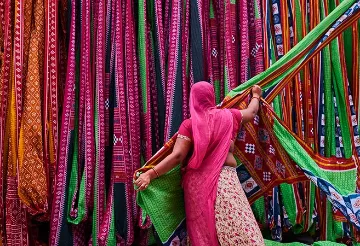
Prime Minister Narendra Modi's muscular outreach to the world has evoked intense curiosity. Foreigners are lining up to check if we are ready to walk the talk. Does reality match the hype? It helps that India has a global reputation for gorgeous shopping ? the jewelry, the silks, the pashmina, fashion wear, all available at competitive prices.
One runs the risk of stepping on many corns by attempting an objective assessment of the place of the late Yasser Arafat, the leader of the Palestine Liberation Organisation (PLO), in history.
The high table at the NATO Summit at Chicago will discuss some withdrawal agenda, but the real policy towards Afghanistan and Pakistan will only be delineated when the new administration takes charge in Washington in November.
The problem of contemporary India's foreign policy making is not that states have acquired a veto over the Centre. Most state leaderships have not only supported regional economic integration and trans-border connectivity, but are also craving for it.
The United States has, in its history, vacillated between global dominance and isolation. A phase of inwardness may be in the cards.
India will have to learn the fine art of staring down the dragon to preserve its political space, while embracing China for some important economic opportunities. At Doklam, it did the former; will a different India turn up at BRICS?
Counter-terror narratives are backsliding, and this trend needs to be arrested as a compromise with a section of these groups becomes an acceptable way out.
There is no question that Pakistan's Afghan strategy is evolving. If the Taliban seemed inflexible about negotiations in the past, Pakistan is promising to make it more reasonable. Many in the West and China are ready to accept, at least for now, Pakistan's claim that a new and moderate Taliban is at hand.
After the court sentencing of former Maldives President Nasheed, India has expressed 'deep concern over the developments' and said that it was watching the situation. Yet, it may not be the best of time for Nasheed?s supporters in Maldives and sympathisers in India.
Instead of responding with counterterror operations, which are conservative and contained, operations such as Operation Sindoor will be the new norm
With much of the international fury directed at Russian President Putin for supporting rebels in eastern Ukraine, the suspects in shooting down the Malaysian airliner, Narendra Modi may soon find that there are costs associated with India's "privileged" partnership with Russia.
What impact the capture of Saddam Hussein by the US troops on the night of December 13,2003, would have on the ground situation in Iraq? Would it lead to a petering out of the resistance movement and the acts of terrorism against the coalition troops, their Iraqi collaborators and foreign organisations? Would it weaken the Iraqi opposition to the occupation of Iraq by the US and allied troops? Would it mark the beginning of the return of normalcy
Cut this any which way you like, the US still holds all the aces and can influence different outcomes in AfPak region depending on how it defines its interests.

Bond issuers from any country can never have a credit rating higher than their country’s rating.
It would be unwise to expect that Trump’s tweet represents a major policy shift. That Pakistan has been playing the US on the issue of support to the Taliban is no secret. If anything, Trump’s remarks are a manifestation of American frustration in getting Pakistan to behave.
China has been cracking down on US companies for a while and the pressure has intensified after revelations that many of them have collaborated with the NSA to spy on the Internet. Google is virtually persona non grata in China now, as are Facebook, YouTube and Twitter.
Indian Navy requires at least 30 submarines to fulfil its commitments. But the Navy currently has only 13 subs - that too fairly old diesel electric conventional submarines . Shockingly, only half of them are operational at any given time.
Despite the optimism surrounding the potential dividends from India’s youth population, demographic ageing is underway. All but five of India’s 28 states have fertility rates below replacement levels, with the share of older adults growing faster than all other age cohorts. However, existing policies, laws, and schemes targeting older adults have fallen short. Poor drafting, limited implementation, and a disproportionate focus on youth needs
ndia was facing a massive balance of payment crisis when the Observer Research Foundation released a document, ‘Agenda for Economic Reform’, on 1 July 1991. The Agenda outlined the reasons for the crisis and recommended a broad strategy to enable the country to overcome it. As India marks 30 years since the start of widespread reforms that opened up the economy, ORF revisits the recommendations outlined in the document.
Be assertive close to home. But India should not shrink from distant waters, either.
The successful Agni V test adds to the incremental steps that India has been taking to enhance its strategic deterrent capabilities. This has been marked earlier this year by the commencement of the sea trials of the Arihant, nuclear propelled ballistic missile firing submarine.
From Agra to air-link, it has been one long U-turn for the Pakistani leadership of President Pervez Musharaff. Today, he readily agrees to address peripheral issues affecting relations with India, and has even ¿unilaterally¿ announced the restoration of over-flights for Indian craft. Going a step further, he has mooted the conferment of Nishan-e-Pakistan, the nation¿s highest civilian title on Prime Minister Vajpayee, if and when the latter ma
India and Bangladesh relations got a major boost following the signing of two agreements, an extradition treaty and a liberalised visa agreement between the two neighbouring countries.