27863 results found
Delhi’s positions on these issues reflect its world view. But domestic economic and political challenges remain.
In short, the principle of subsidiarity demands that India’s national government take some cues from global trends and cede more powers to the city government in capital territory. The current bill by the Centre not only betrays the concept of “cooperative federalism” often espoused by the Union government, but will further complicate governance in India’s fastest growing mega-city.
Kautilya said that the worst enemy is the enemy within. In Arthshastra, he stated, ¿Arrows may not kill a soldier but skillful intrigue can kill even those in the womb.¿
The Finance Minister has addressed the various deficiencies in agricultural production which are responsible for high food inflation. But the actual measures announced are not enough to shake up agriculture and as Dr MS Swaminathan pointed out - it will not make the youthful population take up farming.
This is the time for Delhi to use years of goodwill and investments in Kabul. We must remember, there is never anything constant in Afghanistan where every change presents us with an opportunity.
Can we bring ‘nature’ beyond the confines of just protected forests into a city, while allowing the wildlife with it?
It would be premature to blame any one party or organisation for the violence in Muzaffarnagar. Though it is apparent that, once the violence erupted, parties have been trying to make political capital from it. Primary blame must fall on the Samajwadi Party which has been ruling the state for the past one year.
India’s emergent techno-military doctrine is redefining calibrated escalation to impose the cost of ‘fighting without victory’ on Pakistan within the nuclear environment.
In March 2023, the foreign ministers of India, Japan, Australia, and the US (that form the Quadrilateral Security Dialogue, or Quad) announced the establishment of a working group on countering terrorism. While the urgency of counterterrorism cooperation may have arguably faded in political debate in recent years, it remains steady in military-to-military cooperation at the bilateral and multilateral levels. In a fast-changing glo
As global and urban populations continue to grow, and climate change threatens food security, it is imperative that cities—often the largest food consumers—contribute to its production through urban agriculture. Urban agriculture comprises food and non-food products grown for self-consumption or sale. Entrepreneurs, non-governmental organisations, and citizens worldwide are adopting new technologies to optimise production amid space c
ORF has launched a new, bold and impressive logo as it completed 25 glorious years. The logo was unveiled by the senior-most Trustee and Honourary Secretary Mr. Baljit Kapur at the 26th Foundation Day. Also present were Trustees Mrs Renuka Mishra and Mr Lalit Bhasin and Director Sunjoy Joshi.
The seminar on Status of India Studies in the United States is co-sponsored by Observer Research Foundation, New Delhi and India Studies Program of Indiana University. The seminar is scheduled for September 15 and 16, 2004 at Indiana Memorial Union Hotel, Indiana University, Bloomington.
The study urges urgent action to improve the state of sanitation and demands facilities comparable to those at airports
Mr. Lalit Bhasin, Trustee, Observer Research Foundation, and one of the senior-most lawyers of the Supreme Court, has been bestowed with the National Law Day Award for his "Outstanding Contribution to the Development of the Legal Profession in India and for his deep involvement and engagement in the maintenance of the highest standards at the Bar".
Observer Research Foundation (ORF), India and Fudan Institute for Advanced Study in Social Sciences Fudan University, China have agreed to undertake a joint research project.
ORF and Hammurabi & Solomon, a law firm, have submitted a memorandum to Justice Verma Committee, detaling suggestions in the law and the government setup to provide for speedier justice and enhance safety and security of women.
On the first anniversary of Osama bin-Laden's killing, questions about his relevance are déjà vu. What's more interesting is how even when on the run and long dead the Sheikh of misdirected Jehad shaped the histories of nations.
Over the last 30 years, digital innovation has been met with vacillating opinions on whether technology is emancipatory or tends to benefit those with political and/or economic power. In the context of innovations in AI in the early 2020s, this brief tackles the question: In a digital age, what is new in who exercises power over whom? It focuses on the power of States in relation to both citizens and territory, and outlines four areas where funda
The realm of space is “fluid, contested and driven by politics.”
In May 2016, the Health Secretaries of the States and Union Territories of India gathered in the capital and issued “The Delhi Commitment on Sustainable Development Goals for Health”. Among others, the document acknowledged the need to invest in health data collection, analysis and research so that these can properly inform government policies and strategies necessary to address the various challenges facing India’s healthcare. Such commitm
Digitalisation has the potential to boost local economies and people’s quality of life. However, citizens’ mistrust can prevent large-scale adoption and slow the public innovation curve. This brief categorises public mistrust into three groups and highlights examples. It proposes a cultural framework comprising a number of key actions that public administrations can implement to enhance communication and foster citizen engagement in digitalis
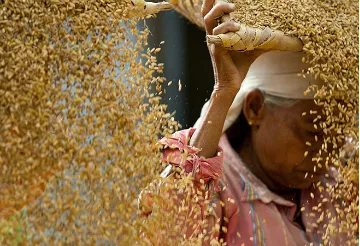
Dr K S Subramanian, IPS (retd), a former DGP-level official in Tripura, spoke on the topic, "Political violence and policing in India", at the ORF Chennai Chapter of the Observer Research Foundation, on 19 January 2008.
Blue carbon ecosystems, despite covering less than 2 percent of the total ocean surface, account for nearly 50 percent of carbon burial in marine sediments. They provide many other co-benefits too, especially for Global South countries where they aid in food security, income generation, and disaster risk reduction. However, blue carbon ecosystems are rapidly degrading, and financing for their protection and restoration remains insufficient as the
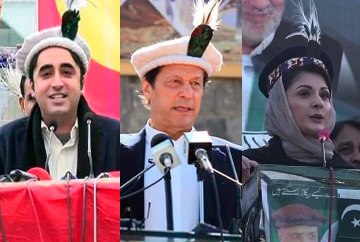
The Pakistan Accountability Act, moved in the US Congress this week, lacks the necessary coercive elements required to persuade Pakistan or to alter its strategic calculus in the context of Afghanistan. It very well realises its importance to the US for successful completion of the counter-insurgency campaign and sustaining troops.
There is only one way in which Pakistan can survive as a nation-state. That is, the Pakistan Army will have to confine itself to being an armed force and not usurp the powers and responsibilities of the legislature and executive branch of the government. The mission objective of an armed force is to safeguard the integrity and sovereignty of the country and not run it. The people of Pakistan have a choice here.
Pakistan Army is in the throes of a dramatic transformation both in its profile and approach but is no where near relinquishing its stranglehold over the political and corporate landscape of Pakistan. The office-cadre is much more conservative but not radical,
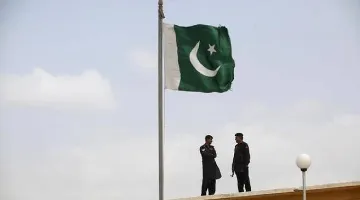
India has expressed its willingness to extend technical assistance for improving infrastructure in Pakistan. Pakistan is bound to realise that holding on to terrorism as an instrument of State policy would not be in its interests as Pakistan would be the real sufferers in the long run.
No one really knew what had happened on the high seas off Porbunder on the New Year Eve, yet everyone had an answer within hours. The boat was apparently in the wrong place at the wrong time, and the choice was limited to take the challenge to its logical conclusion, including shooting it down or blowing up the boat as soon as possible. The Coast Guard acted on intelligence inputs. There is no "what if" in such circumstances.