27840 results found
India has embarked on a large-scale infrastructure development program, ranging from highways to airports, a critical government-led push to provide the economy a strong base to build upon.
Whatever Modi may want to do in the coming years is circumscribed by the fact that India does not have too many cards in its hands. It is not an oil-rich country, or one with some ideology to export. It is a poor country whose primary goal is to transform the lives of its people.
India-Africa science and technology cooperation offers a unique opportunity for agricultural growth in Africa. The case for greater agricultural cooperation between India and Africa is stronger because of the similar agro-climatic conditions in India and Africa. African agriculture suffers from low productivity and limited use of technology.
At the second Africa-India Forum Summit held in Ethiopia's capital Addis Ababa on May 24-25, notable points for cooperation were established with hopes of further strengthening the longstanding relationship between India and African nations.
In an increasingly multi-polar world, Africa is an important partner for India on all global strategic issues. Africa is one of the fastest growing regions with huge natural resources. It offers not only resources to India's increasing needs but also a huge market for Indian firms for trade and investment.
With the upcoming 3rd India-Africa Forum Summit (IAFS-III) this month, Prime Minister Modi is set to prove a point to the country that he indeed follows a proactive foreign policy with exuberance and austerity. IAFS-III seems to be critical for reshaping and nourishing historical India-Africa ties and is considered as not just another diplomatic event.
It has been a cliché to refer to India and Africa as natural partners. With the recent India-Africa Summit in Delhi, there is a chance to make it a reality. But for this, concerted action is needed on the parts of the governments, private sectors, civil societies, think tanks, academics and the media on both sides.
The Western Indian Ocean connects North America, Europe and Asia, and as such is of global strategic importance. Its rich natural resource profile has pushed global players, including India, to view the region with increasing interest in recent years. Although for a long time, much of India’s political attention was directed towards its eastern neighbourhood, in recent years, the country has begun giving more attention to maritime security in i
Amid rising challenges such as food insecurity and climate change, the India-Africa partnership in agriculture and food security has become increasingly vital. But what is India’s “3A” framework, and how does it provide scalable, cost-effective solutions tailored to African realities?
India and Africa’s complementary sectoral priorities and similar roles in the evolving global food markets present numerous opportunities for collaboration in the agricultural sector. This paper analyses the potential for India-Africa cooperation towards food security and capacity building. It makes an assessment of Indian partnership with African countries in the areas of agriculture and food security, outlines current initiatives in both regi
India has made significant strides in agricultural production since the days of green revolution and has valuable lessons to share with its development partners, including countries in the African continent. This paper argues that there is a strong rationale for India-Africa collaboration on food security, given their common challenges of hunger, undernutrition, and low productivity. The paper finds that India plays an important role in augmentin
India and Southeast Asia share a long cultural history, which over the years has helped shape economic and commercial relations between them. This partnership garnered an impetus following the launch of India’s ‘Look East Policy’ in the early 1990s, rechristened ‘Act East’ in 2015. This brief analyses the trade and investment relations between India and the member states of ASEAN. It highlights the various challenges in the relationship
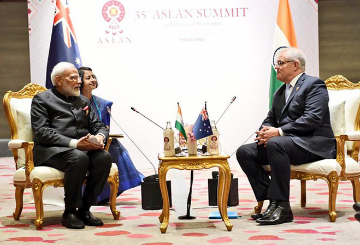
It’s fashionable to be pessimistic about the India-Australia partnership, but in fact it is steadily improving.
Keeping in mind the historical and civilisational ties of India and Bangladesh and their geographic proximity, ORF-Kolkata undertook a year-long study on India-Bangladesh connectivity, using extensive field visits and interviews with relevant stakeholders. The findings of the study were collated in a report, titled, India-Bangladesh Connectivity: Possibilities and Challenges, and released just before the visit of Prime Minister Narendra Modi
Participants at a Consultative International Workshop on India-Bangladesh Connectivity: Possibilities and Challenges, organised in Kolkata, emphasised the need for a common transport policy for the entire region.
At the release event of the report on India-Bangladesh Connectivity: Possibilities and Challenges, participants stressed the need for leveraging the positive political climate and emphasised pro-active role of state governments in cross-border connectivity.
The main objective of the Dialogue was to explore the security perspectives of India and Bangladesh, with special focus on the threat of terrorism in the region
PM Modi’s recent visit to the mountain nation visit was intended to address the new dynamics of a changing Bhutan
There have been several changes in the political landscape in the geography of Central Asia — with the entry of China as a major player in funding infrastructure projects in the region, and the weakening influence of USA in the markets, along with the independence from Soviet Union.
The use of past to pitch present-day India-China interaction is not a very helpful strategy because the situations, political entities were different and the role of Buddhism was more complex than acknowledged, according to Dr. Tansen Sen of the City University New York.
In the backdrop of Chinese President Hu Jintao's visit to India, a roundtable discussion was organized by ORF on 1 December 2006 to assess the outcome of the visit and its impact on the relations between the two countries. The discussion focused on how India-China relationship will evolve in the wake of the visit.
India has held such dialogues with the U.S. and Japan in the past.
By broadening the scope of bilateral cooperation from the Indian Ocean Region (IOR) to encompass the entire Indo-Pacific region, the India-France Indo-Pacific Roadmap, released in July 2023, underscores the importance of moving beyond the traditional self-centred approach to foster a more outward-looking dynamic with key regional partners. The cooperative trilateral mechanisms established by India and France in 2020 (India-France-Australia) and i
The visit by Iran’s president to New Delhi has come at a tricky time in the bilateral relationship.
Despite some disappointments on both sides, the India-Japan relationship looks set to further deepen in the face of an aggressive China.
The Prime Minister’s Japan visit highlights India’s steady strategic intent, with signals to China and the U.S.
As leading Asian democracies, India and Japan are perfectly poised to stake their claim in the sphere of geopolitical influence by increasing regional cooperation with countries like Myanmar
This report presents an initial stocktaking of the India-Middle East-Europe Economic Corridor (IMEC) announced in 2023 following a meeting in New Delhi between the leaders of India, the US, the United Arab Emirates, Saudi Arabia, Italy, France, Germany, and the European Commission. Given that the participating economies contribute to almost half of the global GDP, there are many opportunities and challenges associated with the economic corridor.
The reality of India-Myanmar land connectivity is increasingly becoming a possibility as militancy and insurgency are on the decline in the region, says Mr. Rajeev Bhattacharyya, a journalist who has lived with several insurgent groups in Myanmar and India?s North East.
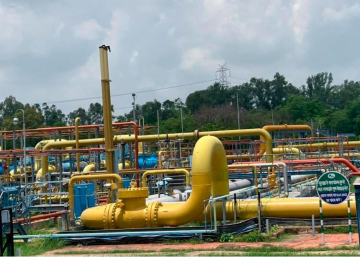
The 41 km India-Nepal pipeline, designed to supply cost-effective and environment-friendly petroleum products to the landlocked the nation, is the first trans-national pipeline in the SAARC region. This initiative represents a win-win outcome for both the countries which will also enhance regional connectivity and economic development across the region.
The India-Russia military technical relationship has withstood the test of time. Despite strains since the collapse of the Soviet Union, the relationship has remained highly critical both in terms of the level of trust between the two states and the imperatives of sustaining a military-technical relationship to counter the growth of Chinese power. A more synergistic military-technical is possible, and Moscow and New Delhi must explore ways to con
India’s relations with Russia have made little progress since they got stalled following the end of the Cold War. Today their bilateral ties—officially labelled “special and privileged strategic partnership”—focus heavily on defence cooperation, while the economic partnership remains listless even as the respective relations of the two with other states have grown rapidly. This paper analyses the ebbs and flows of India-Russia relations
While energy security continues to dominate the agenda, security and defense cooperation are becoming more important in the India-Saudi relationship.
India’s growing strategic importance as a balance to China in the Indo-Pacific region, as well as convergence between New Delhi and Washington DC about Beijing’s aggressive stance on emerging technology, have resulted in warming relations between the United States (US) and India. Indeed, in recent years, there has been a spur of cooperative agreements between the two sides on domains such as defence technology, 5G, and semiconductors. This br
India’s ties with the UK are at an interesting crossroads. Regardless of the direction taken, relations seem poised to move in an upward trajectory
The Indo-US strategic partnership is still evolving. At present, it seems that political sensitivity, deep-seated distrust, bureaucratic and procedural hurdles and some short-sighted domestic policies in both countries are stalling this process.
This brief explores the factors informing the Donald Trump administration’s continuity on the US’s defence trade with India. The administration’s impetus to maintain US-India defence trade stems from factors like the ‘reverse revolving door’ policy that has increased the influence of US defence contractors, its ‘Buy American’ policy to boost US arms exports, and defence trade being construed as an incremental means to correct the bi
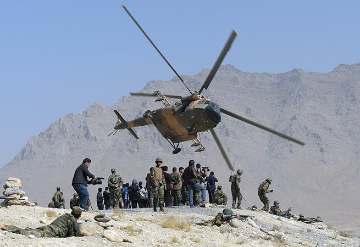
Bilateral ties between India and the United States have strengthened remarkably in recent years and nowhere has cooperation been greater than in the area of security. Despite certain divergences, both countries realise that there is a need for cooperation in combating terrorism to keep their homelands safe from extremist threats. Ever since the election of Prime Minister Narendra Modi in May 2014, India has invested political capital in improving
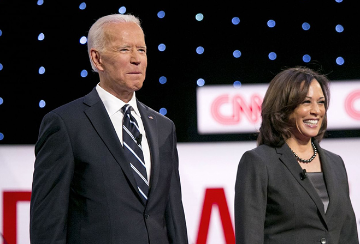
The ties between Delhi and Washington seemed headed for the doldrums due to a policy error on Biden’s part, but the US reversal is a good sign for both nations