27613 results found
Conflicts between central banks and governments are embedded in the evolving discourse of every democracy. The recent discord between the Reserve Bank of India (RBI) and the Ministry of Finance (MoF) is neither the first nor likely to be the last. Institutionally, once a disagreement between the RBI and the MoF crosses the Rubicon, the government has the power to overrule the central bank’s decisions. Moreover, such a structure is not restricte
PM Modi's decision not to join RCEP is an admission that even the prospect of joining a massive regional trade agreement isn't incentive enough for New Delhi to launch deep economic reforms.
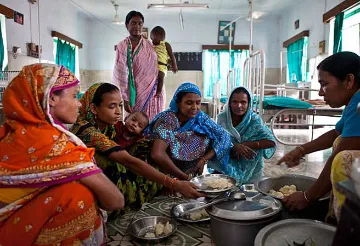
India's progress in reducing the prevalent stunting rate in under-five children has been slow, and it must work hard to double the current annual rate of decline if it hopes to meet its sustainable development goals. Among others, this target requires ninety-percent coverage of women and children in the first one thousand days of life with evidence-based Essential Nutrition Interventions (ENIs) and maternal-child health services. Such coverage of

For India to be taken seriously by its neighbours, and other friends and adversaries alike, it has to be clear in its mind as to what it is and where it is headed, and where it wants to go - and can actually travel to.
This year marks a decade since the announcement of the China-Pakistan Economic Corridor (CPEC). This brief analyses Chinese-language literature to understand the country’s current stance on Pakistan and the CPEC. Two trends emerge. First, China appears to be facing a dilemma over Pakistan. While the Chinese government wants the CPEC to be successful, China’s strategic community now shows little optimism on the initiative. Second, contrary to
The July 15 talks in Islamabad between the foreign ministers of India and Pakistan ended badly for many reasons. India has been putting itself at a disadvantage diplomatically by showing too much eagerness to restart the dialogue with Pakistan.
This brief examines the reciprocal relationship between science fiction and real-world technological, geopolitical, and policy developments throughout the 20th century and into the 21st. Beginning in the 1940s, the analysis explores how the genre has evolved amid historical events such as the World Wars and the Cold War, and the rise of digital technology. The brief gives particular attention to the role of science fiction during periods of criti
Indian companies, however, have different compliance protocols, answerable as they are to the Indian state.
Considering India's economic standing, a $2.9 billion loan for the Padma Multipurpose Bridge of Bangladesh would not have been a difficult proposition. If India finds this option too difficult, there are many other alternatives for India to help Bangladesh.
After a decade, officials from India, Japan, Australia and the United States convened in Manila in November 2017 to renew their quadrilateral cooperation in the Indo-Pacific. While the agenda of the quad is still unknown, this paper presents a political-military strategy for the grouping directed at shaping Chinese behaviour in the region. Viewing strategy through the ends-means-ways lens, the paper describes key objectives of dissuasion, deterre
Efforts toward a peaceful reconciliation with the Taliban have failed and Afghanistan and the United States remain engaged in a bitter war against the insurgent group. The US has shown willingness and capability to go after Taliban leaders on Pakistani soil, upsetting its relations with Islamabad and ending Pakistan's game of plausible deniability. Under its new leader, Haibatullah Akhundzada, the Taliban continue their onslaught against the
Aggressive red teaming would help discover gaps and vulnerabilities before India’s adversaries do. Against this backdrop, these seven questions are critical for the post-Op Sindoor strategic environment
Abstract On the battlefield, the enemy’s intent, will, capabilities, and plans are taken into consideration to achieve end goals. In peacetime simulations, wargaming centred on adversaries serves the same purpose. Red-teaming is used in the planning and decision-making of a military organisation to assess one’s plans by simulating adversaries’ cognitive and operational behaviour. The Indian military is undergoing organisational and capabil
The 2024 advisory opinion issued by the International Tribunal for the Law of the Sea (ITLOS), recognising GHG emissions as marine pollution, marks a pivotal intersection in maritime and climate governance. The opinion, while non-binding, establishes legal obligations for states to mitigate climate-induced marine impacts, including acidification, warming, and sea-level rise. It emphasises due diligence, transboundary impact assessments, and adher
While India has instituted pretty stringent measures, some of which are lacking in even other key nuclear players, India has done a bad job of advertising to the global community of what it has done. This has meant poor appreciation of India's efforts in the area of Nuclear Security.
Unstable political systems, ineffectual international organisations, and unprecedented technological advancements have created a global environment that can enable the development and deployment of bioweapons. New-age bioweapons could be used for more than just as weapons of mass destruction. This necessitates a new approach to mitigate risks by staying apace with technological development. India must take a leadership position at the Biological
The report is based on the key recommendations that emerged out of the deliberations at National Conclave on India's Energy Security: Major Challenges held in New Delhi on 14-15 February 2006. The recommendations emerging out of the Conclave have been compiled in this Report for consideration by the Government
After the loss in Bihar, now it is incumbent on Modi and his team to start rolling out reform, iron out the wrinkles and implement his promises, otherwise, 2019 will be a distant dream. The days of waiting are over.
Urban water bodies play a critical role in maintaining ecological balance, supporting biodiversity, and providing essential ecosystem services, including water purification, flood mitigation, and recreation. However, globally, rapid urbanisation, pollution, and overall disregard have resulted in the degradation of urban water bodies, posing a threat to urban water security and compromising the well-being of communities. Encroachment, and pollutio
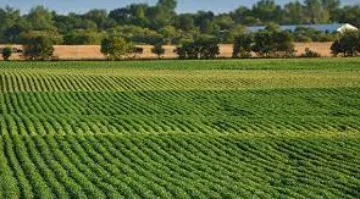
Growing pressure on global food systems—from multiple factors such as soil degradation and climate volatility, biodiversity loss and shifting agri-food markets—has revived interest in production models that combine ecological integrity with economic viability. In this context, regenerative agriculture is being explored as a set of practices and management principles aimed at improving soil function, strengthening landscape-level processes, an
As economic growth continues to slump around the world, it has become imperative for developing nations such as India to seek to strengthen partnerships with African nations. There is a growing consensus that Africa is the last remaining capitalist playground. With an abundance of natural resources and the lack of an institutionalised capacity to harness them, Africa's statesmen have sought to move beyond their dependence on foreign (mainly West
With the inauguration of a railway track in the Northern Province, Prime Minister Narendra Modi, during his two-day visit to Sri Lanka from March 13 to 14, has managed to hit the right string amidst the people of Sri Lanka. The trip has marked the beginning of a renewed India-Sri Lanka ties.
This brief outlines a framework for India if it is to play a more proactive role in integrating and reimagining its immediate neighbourhood, in particular with reference to the economic relations with its BIMSTEC partners. The analysis is done in the context of important economic and strategic developments in the Asia-Pacific region in the recent years. It describes how India can navigate between competing economic and geo-strategic imperatives b
As the global balance of power shifts, deeper engagement with the Global South has become a strategic necessity for the European Union (EU). However, the EU’s engagement with the Global South is undermined by a convergence of challenges that cumulatively erode its credibility and offer limited incentives to potential partners amid competing alternatives. This brief makes a case for a shift toward pragmatic, demand-driven cooperation, designed t
The aim of any surrender and rehabilitation policy for militants is clear: To allow them the opportunity to lay down their arms and rejoin mainstream society, and ensure that recidivism is arrested. This issue brief examines the failures of past rehabilitation policies implemented in Kashmir. The brief gives a historical overview of a succession of surrender and rehabilitation policies attempted by the Indian Government to counter violent extremi
In the aftermath of 9/11, fissures between the 'Islamic' and 'non-Islamic' world - a categorisation which is rather nebulous - have 'vindicated' the claims of many individuals on the Indian and Pakistani side that faith is a cause of conflict between both countries.
Maritime terrorism directed at international trade and energy supplies is not just within the realm of possibility but a distinct threat that confronts the international community. Acts of maritime terrorism of a noticeable scale began with the Palestinian Liberation Front hijacking an Italian cruise ship in 1985.
The DMK's current resurgence had its beginning in the 2004 Lok Sabha polls that the ruling AIDMK-BJP combine lost completely after the negative fallout of the economic and fiscal reforms hit the common man

In the Kashmir Valley, violence has receded. But the situation is not normal, as evidenced by recent incidents of attacks. Normality will not come till the Union government addresses the sentiment that is exploited routinely by the Hurriyat. Normality will also be judged by the return of the exiled Pandit community to the Valley.
The concept of food security comprises access, affordability, food safety, food preferences and dietary patterns. Recently, there has been a demand-driven shift in food consumption patterns in India towards nutrition-rich and economically high-value horticulture (fruits and vegetables), livestock and dairy products. Providing for such consumption needs will require diversification of agricultural production beyond the staples, especially wheat an