27950 results found
Chinese Defence Minister Cao Gangchuan's tri-nation goodwill tour started with Pakistan on March 22, 2004 and ended with Thailand, with an in-between five-day visit to India from March 26 to 30.
In light of Africa's increasing dependency on and trouble with Chinese actors, African leaders are beginning to look beyond China in an attempt to diversify. India and the long-standing presence of Indian businesses in the continent can help Africa deal with the losses from China.
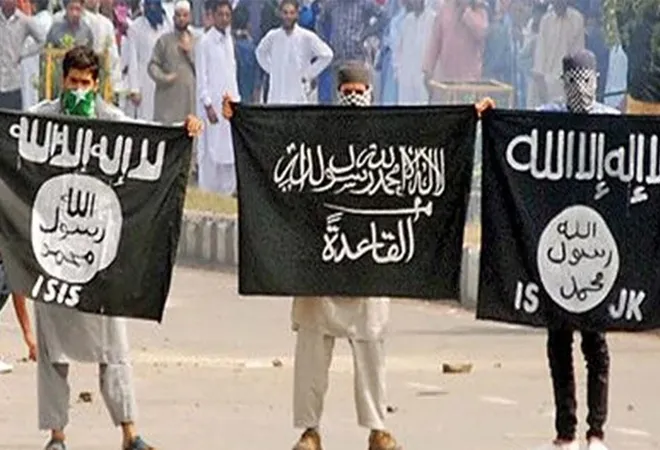
Since 9/11, both China and the US have one concern in common - the threat of 'Islamic' terrorism. On December 15 2003, China's Ministry of Public Security (MPS) issued a list of four terrorist organisations and eleven terrorists that pose a threat to China's security.
While declaring that China opposes all forms of terrorism, its foreign ministry asserts that it seeks to foster amity. Does Beijing really think it can present itself as an honest broker even as it acts like a behind-the-scenes instigator?
This brief makes an assessment of the data-sharing arrangement between China and India as outlined in the Memorandum of Understanding for sharing hydrological information on the Brahmaputra river system, aimed at facilitating advance warning for floods in India during monsoon. Using hydro-meteorological data, this brief assesses the arrangement and identifies its limitations, primary of which is the wrong choice for the location of measuring stat
India-China relations appear to be showing signs of easing, particularly with successive high-level exchanges between the two governments since late 2024. Given the positive momentum in bilateral ties in the past few months, there is cautious optimism in certain quarters that some kind of détente might be on the anvil. Against this backdrop, this brief surveys a sampling of current domestic discourse in China around issues related to India. It f
This year’s defence budget marks an increase of 8.1 percent from last year. China has justified its defence budget by arguing that its defence spending is less than 1.5 percent of its GDP, but that argument is not going to go down well with its neighbours.
Tibet is where India and China meet. It is through Tibet that China manages its relations with India, using the boundary dispute to keep New Delhi off-balance. India is also where the most revered Tibetan, the 14th Dalai Lama lives in exile. Having failed to negotiate his return, there is now a two-pronged effort by China to deal with the consequences of the Dalai Lama’s passing and his possible reincarnation outside Tibet: to m
China’s Belt and Road Initiative (BRI) is central to the country’s ambitious policy reorientation. The energy sector accounts for nearly 40 percent of all investments under the BRI, with significant geostrategic and geoeconomic implications. In recent years, China has adopted a “greening the BRI” strategy, emphasising green energy projects. This brief analyses China’s BRI investments in the energy sector to establish the potential trend
Over the last two decades, China has established a significant economic presence in most African countries. Its lucrative economic investment package, flexible political approach, and focused big-ticket development projects under the Belt and Road Initiative (BRI) provide an ostensibly massive opportunity to African countries. However, the unilateral nature of the initiative, the lack of transparency and accountability to African countries, and t
This brief evaluates the state and development of China’s cruise missile capabilities, specifically that of its air-launched and ground-launched missile forces. It finds that China has developed a formidable inventory of cruise missiles, which poses a threat to India’s own military infrastructure. The brief lays out the imperative for India: to build up its long-range cruise missile forces. It argues that India’s current capabilities woul
China’s aircraft carrier programme anchors its transformation from a continental to a maritime power. The Liaoning, Shandong, and EMALS-equipped Fujian together underscore Beijing’s intent to operate far from its shores, blending audacious innovation with disciplined, experience-driven learning. Unlike the United States’ (US) mature carrier operations model, China’s EMALS effort remains exploratory yet strategically purposeful, aimed at d
China’s growing military profile in Africa is following its economic footprint in the continent as exemplified by the Chinese “logistics support base” in Djibouti. It is moving towards an ever more expansive definition of its global interests, as its business in Africa pushes it to create new mechanisms for securing those interests, including its own growing military footprint abroad. This brief examines the changing nature of China’s inv
The expansion of China’s nuclear arsenal and improvements in its delivery capabilities have serious implications for India. In order to counter China’s growing atomic and missile delivery capabilities, the Indian state faces two tests: a maximum test and a minimum test. The maximum test involves the greatest exertion, risks, and costs but also significantly augments strength across a spectrum of nuclear, sensor, delivery platforms, offensive,
In October 2019, China’s Free Trade Agreement (FTA) with Mauritius opened the Chinese market to Mauritian exporters and investors. Not long after, concerns arose that Mauritius might be lacking in the capacity to benefit significantly from the agreement and thus lose in terms of a trade imbalance that clearly favours China. This brief revisits China’s motivations for the FTA, and finds economic and geopolitical goals. Given Mauritius’s smal
China is extending its hand to Nepal, India’s Himalayan neighbour, which for its part is understandably attracted to the prospects that are emerging on its Northern front. How does China’s expanding footprint in Nepal affect India? This brief examines the possibilities for India’s success in competing with China in Nepal, and posits two overarching factors: New Delhi’s overall capacity to challenge China, and India’s political will to a
China’s space policy planners are convinced that the country should aim for manned lunar landings by 2040. It has already established a sophisticated robotic lunar exploration programme and human landings are perceived as the logical next step. New navigation and communication architectures are being developed for this purpose, in addition to building life support systems and a suitable launch vehicle. However, China’s political leadership wo
China’s annual parliamentary meetings offer a glimpse into its future direction. This year, amidst economic headwinds, a key takeaway is the continued surge in defence spending
Since the assumption of Xi Jinping to the post of General Secretary of the Communist Party of China (CPC) in 2013, the People’s Liberation Army (PLA) has undergone numerous changes, both in its modernisation and organisation, that are meant to ensure that the PLA forces will be battle-ready. The modernisation aims for the PLA to acquire the latest technology and logistics for quick and decisive victories in any theatre of battle. This brief exa
Since the assumption of Xi Jinping to the post of General Secretary of the Communist Party of China (CPC) in 2013, the People’s Liberation Army has undergone numerous changes, both in its modernisation and organisation, that are meant to ensure that the PLA forces will be battle-ready. The modernisation aims for the PLA to acquire the latest technology and logistics that can lead the military to quick and decisive victories in any theatre of ba
China’s People’s Liberation Army (PLA) has undergone many changes since Xi Jinping became general secretary of the Communist Party of China (CPC) in 2013. Efforts at modernising the PLA have been conducted in earnest for the past 10 years through the overhaul of the organisation and the introduction of latest technologies to make it battle-ready. This paper describes these capability-related and institutional changes in China’s military, wh
Since Xi Jinping became general secretary of the Communist Party of China (CPC) in 2013, the People’s Liberation Army (PLA) has witnessed an accelerated modernisation drive. Following the 2015-16 organisational reforms, the CPC further standardised its services-level force structure and upgraded its military doctrine, combat capabilities, and weapons systems. This report analyses recent improvements in the structure, including the creation of t
On 3 September 2025, the People’s Liberation Army (PLA) held a grand parade in Beijing, showcasing ballistic and cruise missiles, nuclear triad components, unmanned platforms with countermeasures, and conventional systems from across its services. The event marked the 80th anniversary of China’s ‘War of Resistance Against Japanese Aggression’, which Beijing interprets as culminating in Japan’s surrender to the Allied Powers in September
Military modernisation was the fourth and last of Deng Xiaoping’s ‘Four Modernisations’. Even before the third modernisation got underway—that of science and technology—China began using commercial technologies to advance its military capabilities. This strategy has gained salience since Xi Jinping came to power in 2012 and made it the state’s key goal to transform the PLA into a “world-class military”. Military-Civil Fusi
The white paper is an amalgamation of past experiences as well as the role that China will play in the global order in the coming years.
China’s evolving security dynamics with the United States have compelled it to rethink its nuclear strategy to achieve effective deterrence. It is aiming to modernise its nuclear arsenal and increase its nuclear ambiguity through conventional-nuclear entanglement. Ambiguity will increase the risks of mischaracterisation and can have a destabilising impact on the Indo-Pacific region. This paper highlights two areas where India ought to be most c
China’s nuclear weapons arsenal has grown and modernised over the recent years, and current estimates say the country has 350 operational warheads ready for delivery, over 248 land-based ballistic missiles, and 72 sea-based ballistic missiles. China also has 20 nuclear gravity bombs and additional warheads intended to be armed on land- and sea-based missiles. This brief outlines a history of China’s nuclear weapons programme, scrutini
The oil deal could be a fundamental test for the future of Afghanistan-China cooperation
China wants to move its manufacturing up the value chain to become a producer and exporter of high-value goods, for which Europe can be the best market.
Despite continuing talks between India and China, military preparations clearly are continuing, too.
In recent years, the United States (US)—under both the Donald Trump 1.0 and Joe Biden administrations—has resorted to a technology-denial regime to deprive China of advanced know-how that could give it any military advantage. During Trump’s first presidential term, he levied tariffs that led to a trade war, prompting China to respond with retaliatory tariffs and currency depreciation. Anticipating Trump’s possible return, China began deve
Arguably the most significant global phenomenon of the past four decades has been the economic and strategic rise of China. Today analysts are confronting questions of whether China will replace the United States as the world’s biggest power, if it will do so peacefully or through confrontation and conflict, how it will subvert the existing system of global rules and institutions, and whether a new form of bipolarity would emerge to accommodate
For China, it is the problems in what it considers to be its core interests which are becoming difficult to handle.
China finds that its trustworthiness among ordinary Aussies has plummeted from 52 per cent to just 23 per cent in two years.
Three months since the World Health Organization (WHO) declared the outbreak of COVID-19 as a pandemic, the health crisis has wreaked havoc on people’s lives and livelihoods across the globe. Can state responsibility be apportioned for the pandemic, under the current international legal system? What would the elements of such responsibility be? This brief explores the concept of “state responsibility” under public international law and exam
New Delhi’s Indian Ocean woes aren’t confined to Sri Lanka. Across the Indian Ocean’s littorals, the Chinese navy has been preparing to establish a stronger security presence. On Pakistan’s Makran coast, the PLAN has deployed regularly, including at Gwadar, also constructed by CMPorts. Earlier this year, the PLA is said to have initiated talks with the Pakistan military for another outpost at Jiwani.
China’s actions in Ladakh since 2020 are in violation of common understandings and have brought the focus of bilateral relationship back to the issue of the border. This paper seeks to contribute to the understanding of China’s behaviour along the India-China border by exploring a fresh perspective that explains the instability along the border as a function of China’s two-front conundrum. It makes a historical account of past events to arg
Restricting access to strategic resources is a classic statecraft strategy that China seems to be perfecting
The China-brokered Saudi Arabia-Iran deal puts the spotlight on New Delhi’s ties with Tehran
China’s moves in the region, despite the pandemic, are only likely to generate fear and inspire greater cooperation with Washington.
Despite the hypocrisy and power politics at the foundation of the GSI, it would be foolish to dismiss it or assume that it will not garner support from other countries.