28206 results found
South Africa’s Covid-19 responses are marred by policy paradoxes. How does a country with one of the most sophisticated health systems in Africa account for the highest number of Covid-19 fatalities? This brief argues that contemporary approaches to South Africa’s social, domestic, and foreign policy responses should be viewed through the theoretical lenses of racial capitalism—a racially hierarchical political economy constituting war, mil
Indian concerns over a 'rising China' is more about China's 'increasing influence' in the South Asian neighbourhood than over the possibility of a revived border episode or a return to war between the two Asian giants.
India and Pakistan have much to learn from their once-poorer neighbor Bangladesh.
South Asia's Weekly report with news of peace brokering in Afghanistan among other news
It is four years since Observer Research Foundation launched an exclusive South Asia Weekly, with scholars specialising in individual nations of the region presenting a weekly report of individual countries with their assessments.
The meeting of Indian Prime Minister Dr Manmohan Singh with his Pakistani counterpart, Syed Yusuf Raza Gilani, on 10 November 2011 on the sidelines of the 17th South Asian Association for Regional Co-operation (SAARC) summit in the Maldives, should be welcomed.
The crises in Sri Lanka and Pakistan are raising questions about the relevance and the costs of their reliance on the alternative financial system provided by China’s Belt and Road Initiative
This Special Report examines key themes highlighted during a series of panel discussions exploring South Asian Perspectives on Net Neutrality, hosted by the Observer Research Foundation and the Centre for Internet and Society in New Delhi on 12 December 2015. The first panel analysed the potential effects of net neutrality regulation and zero-rated platforms on the market. The second explored viable regulatory frameworks for net neutrality that c
The story of 2019, whatever the outcome of parliamentary elections, will essentially be about India adjusting its engagements in its neighbourhood.
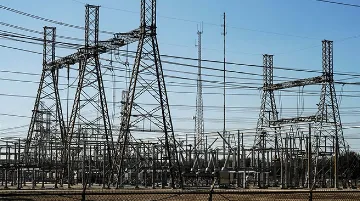
A regionally integrated grid is central to South Asia’s clean energy transition. Cross-border electricity trade (CBET) in the Bangladesh–Bhutan–India–Nepal (BBIN) subregion has nearly tripled from 7.8 TWh in 2013 to 21 TWh in 2024, yet remains far below its potential. An integrated grid can harness the region’s diverse clean energy resources, lower system costs, enhance energy security, and support decarbonisation. Recent milestones, in
The likely announcement by Philippine President Duterte of the Scarborough Shoal as an environmental marine sanctuary and off limits to fishermen could prove to be the first incremental step towards defusing the South China Sea disputes and in the process endow considerable strategic advantages to Beijing.
Geopolitics of South China Sea appears to be ever-changing with approach of the Philippines towards China assuming a shift under current President Duterte
Japan protested to China after four Chinese coast guard ships sailed into territorial waters of Senkaku Islands & other roundups from South China Monitor
Beyond 2015, South-South cooperation will have to increase and continue to support developing countries, with a special emphasis on poor and low-income countries in Asia and Africa facing sustainable development challenges.
Space technology has manifold applications in areas as wide-reaching as disaster management, resource management, meteorology, governance, and military and security. Southeast Asian countries, recognising the importance of space technologies, have made investments quite early on. While some of these countries already have established institutions and programmes, others are in the earliest stages of structuring their own. This report tracks the sp
Populism is tearing apart the traditional understanding between Brussels and European states. The European dream is facing a crisis which the present leadership is unable to tackle
With the Japanese crisis triggering worldwide re-thinking on the feasibility of pursuing nuclear energy to meet growing global energy demands, it is time that India, US and others looked at the option of Space Based Solar Power (SBSP).
At the launch of the ORF Kalpana Chawla Annual Space Initiative, experts felt that space is unlikely to become an exception to the security-seeking nature of the international system. They felt States should accept space militarisation as a reality and develop institutions to regulate its use for both peaceful and military purposes.
There are genuine concerns that if steps are not taken to halt the current trend toward space weaponization, space could become an active warfighting domain.
Space, as a true global commons, must be protected for safe, secure and uninterrupted access. India and China, along with other Spacefaring powers, must therefore utilise every opportunity to push for developing norms of responsible behavior, including strengthening measures in the area of active debris removal and on-orbit satellite servicing.
The defence and foreign ministers of Japan and the US, meeting under the bilateral consultative committee, have decided to revise the 1997 Guidelines for US-Japan Defence Cooperation to make sure that the alliance continues to maintain its credibility and effectiveness in deterring conflict in Asia-Pacific.
Ever since the start of the insurgency in Kashmir, the Pakistani intelligence agencies have constantly raised, mutated, emasculated and even extirpated the so-called jihadi groups active in Kashmir. The dependence of the Jihadis active in Kashmir on Pakistan for training, logistics, arms and ammunition and most of all sanctuaries, has been exploited to the hilt by the Pakistani establishment.
The Burari session of the Congress, NDA rally, JPC-PAC sparring, onion and scams, are all building up to a lively election season beginning early next year - Tamilnadu, West Bengal, Kerala, Pondicherry, Assam, leading to UP elections in 2012 and the General Elections in 2014.
The US’s diplomatic boycott of the 2022 Winter Olympics is setting the stage for the addition of another dimension to the US-China saga of widening confrontation
After the coming UNHRC session, the Commonwealth Ministerial Action Group is set to meet in London in April, when they are bound to flag the issue. The Indian position at London would have to be reflective of the position that it might have to take at Geneva only weeks earlier.
Sri Lanka¿s worsening security situation under an undeclared war is most likely to persist. Both the LTTE and President Rajpakshe¿s government are violating the four-year-old ceasefire agreement, which, in fact, seldom was honoured seriously, but neither of them is in a position to formally break it and declare an open, all-out war. Both of them are under intense international pressure to desist from doing so.

After the UNHRC meeting and the Indian vote against Sri Lanka, now it needs to go beyond Geneva, in the preservation of 'supreme national self-interest' in the case of both the countries. The ghost of Geneva would be hovering over them, yet Colombo should acknowledge the un-kept promises.
There are humanitarian and human rights issues in Sri Lanka. Yet, it is basically a political cause, still, which no one in Tamil Nadu seems to be talking about, any more.
By focusing excessively on 'war crimes' and issues of accountability, the international community (West) may have taken Sri Lanka away from the political negotiations for power-devolution to the Provinces, particularly the Tamil Province(s).
The delivery of a Chinese frigate to Sri Lanka reinforces China’s role within competition between the two Asian giants.