27847 results found
The Ukraine crisis may have effectively ended the rapprochement between the USand Russia, and in turn affecting relations such as those of Japan and Russia. Prior to this crisis,and the subsequent Western sanctions on Russia, Tokyo and Moscow had been reaching out toeach other, and hope flickered for a resolution to the territorial dispute over the NorthernTerritories or Southern Kurils. This paper argues that with nationalist governments in powe
Despite being a victim of terrorism for decades, India has demonstrated remarkable consistency in the irrational and incoherent response of its policy makers, people and sections of its mass media to dramatic and outrageous terrorist violence.
The threat that is pre-eminent today is terrorism. And none of the counter terror efforts will succeed unless global powers deal effectively and consistently with the epicentre of terrorism -- Pakistan.
In the aftermath of the serial train blasts in Mumbai on July 11, the question uppermost in public mind has been, ''Why has India become the most affected target? Are we in a no-win situation against terrorism?''
To fight terrorism effectively, the world community should identify the nations which sponsor and support terrorism and the sources of funds with which terrorist group buy sophisticated weapons.
This paper proposes a counter-terrorism (CT) framework in terms of three types of CT policies—i.e., offensive, defensive, and confidence-building measures (CBMs)— targeted at a terror outfit that is either resource-constrained or resource-abundant. It argues that defensive measures are a ubiquitous element of CT, as these can prove effective irrespective of whether the targeted terrorist group is resource-abundant or resource-constrained. On
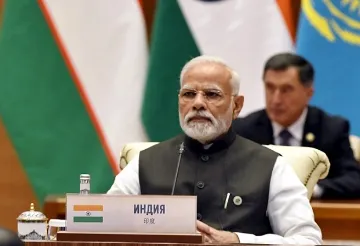
ORF Kolkata organised its 2nd annual Inter-University Debate Competition on 7 November, 2015. Students of the Tezpur University won the competition that saw participation of representatives from eight universities from eastern and north-eastern Indian states.
The number of malnourished children in India has increased significantly between the time of the National Family Health Survey (NFHS)-4 (2015-16) and the fifth round (2019-2020), and the progress in the first half of the decade has been reversed. This paper tells the story of the Northeast region of India, where malnutrition is worse than the country average. It examines the policy landscape in the region, evaluates current programmes and initiat
The recently concluded 19th Party Congress of the Communist Party of China (CPC) brought the world’s attention to the future direction of the CPC. As the proceedings of the Party Congress revealed, sustaining the legitimacy of the CPC’s hold on power is an overriding concern for the country’s political leaders. The Party Congress addressed the corruption plaguing the CPC and the Chinese state writ large, which has deep, long-term consequen
General elections of 2014 could well be the most interesting election they will witness in their lifetime. Several developments suggest that the elections could mark a big shift of the political paradigm and, in that sense, they could well mark the true beginning of 21st century politics in the country.
The border between India and Bangladesh—highly crucial to their bilateral relationship—has always been difficult to manage given, for one, its sheer length. The most important bilateral initiative between Bangladesh and India may yet be the attempt to resolve the longstanding border dispute that arose after the Partition of 1947, by means of the 2015 Land Boundary Agreement (LBA) and the exchange of enclaves (chhitmahals) and adverse possessi
In December 2020, the government released the results of the National Family Health Survey (NFHS) 5 for 2019-20, covering 22 states and Union Territories (UTs). Contrary to expectations, NFHS5 found an increase in the percentage of stunted children in 13 states and UTs, compared to the results of NFHS4. This paper analyses such reversal of the three-decadal progress that India had previously made in reducing stunting in children. It analy
The African countries are set to launch the African Continental Free Trade Area or AfCFTA, the biggest free trade agreement in the world since the World Trade Organization was created in the 1990s. When implemented, the AfCFTA is projected to increase intra-African trade by 52.3 percent by 2022, from 2010 levels. In turn, higher trade levels can facilitate economic growth, transform domestic economies, and help the countries achieve the Sustainab
Unlike in other regions of the world, the value of intra-Africa trade has remained low over the years. Moreover, Africa accounts for just 2 percent of global trade. In 2021, African countries launched the African Continental Free Trade Area (AfCFTA), which aims to create a single African market for the free movement of goods, services, labour, and capital, and increase intra-African trade. AfCFTA may be able to provide Indian firms and in
The India AI Impact Summit 2026 signals Delhi’s intent to shift the global AI conversation from abstract anxieties to the politics of impact — who benefits, who is excluded, and who sets the rules
Often referred to as among the most strategically located island chains in the world, the Andaman and Nicobar Islands are critical for India’s strategic interests. The islands comprise the sole archipelago in the Bay and they straddle important sea channels. As the long-standing protectionist regime in the islands morphs into a more flexible form of governance that will balance development with conservation, the stage appears set for India to c
To understand the strategic significance of the second summit meeting between Prime Minister Narendra Modi and US President Barack Obama, it is necessary to look beyond the very important and tangible outcomes that the two leaders have unveiled.
Ties between India and Japan are historical and enduring. In the Asia-Africa Growth Corridor (AAGC), the leaders of the two countries have married their respective countries’ “Act East” Policy and “Free and Open Indo Pacific” aspirations. The AAGC is envisioned to provide a renewed opportunity for partnership where both regions can complement each other’s development and growth. The AAGC will bring out the economic gains for Afr
As China and the US compete, episodes like the “Balloongate” are likely to be the norm than exception
Little is known and even less understood about the 2,00,000-strong Bangladesh Army's corporate interests. The importance of the subject owes itself to the fact that the army has been a veritable power of stability in a country that has been dogged by decades of unending political turmoil. The fact that the Army had to step in to keep the country from slipping into a political abyss in 2006 underlines the criticality of its role in providing stabi
This brief examines the importance of economic integration between India and Sri Lanka in fostering both nations’ growth as well as regional stability. Their deep cultural, historical, and geographic ties support an evolving economic relationship driven by trade, investment, and connectivity. As Sri Lanka’s largest trading partner and investor, India plays a pivotal role in its economic recovery, particularly following Sri Lanka’s recent ec
Despite concerted efforts to improve urban public transport, the use of personal vehicles has increased across India. City administrations must consider promoting the use of paratransit vehicles, such as bike-taxis, that can provide ridership to more commuters than a private vehicle. While bike-taxis are prevalent in some Indian cities, their use is curtailed elsewhere in the country by state policy and statutes. Amid growing city congest
Connectivity facilitates economic growth, social development, and people-to-people interactions. Recognising the imperative of connectivity in regional engagement, the Bay of Bengal Multi-Sectoral Technical and Economic Cooperation (BIMSTEC) in 1997 declared ‘transport and communication’ as one of its sectors of cooperation. In 2018, BIMSTEC drew up its Master Plan for Transport Connectivity, and subsequently updated the plan at the fifth BIM
A major reason for the BJP’s latest posture is that it has nothing to offer by way of a political dialogue.
As the global shift toward green and digital shipping gathers pace, the competitiveness of port cities will hinge on their ability to mobilise finance, technology and skilled talent
There is little scientific basis behind the claims of Chinese interventions on the stream-flow of the Yarlung-Tsangpo / Brahmaputra
In signing the civil nuclear deal with India, Japan has made an exception of not conducting nuclear commerce with a state that is not a signatory to the NPT.