28209 results found
Fourteen years ago, in 1996, Dr Vijay Kelkar, one of my distinguished predecessors in the long list of luminaries who have delivered this Lecture, said, "What petroleum was to the 20th century, natural gas will be to the 21st."
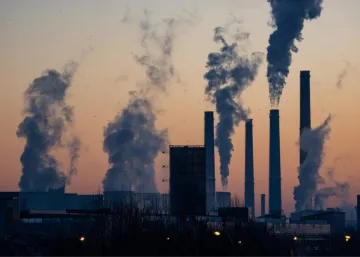
The increasing demand for mobility and the rising rates of motorisation in India have substantially increased energy consumption and carbon dioxide (CO₂) emissions from the road transport sector. As of 2021, road transport was responsible for 14 percent of the nation’s total energy consumption, 92 percent of transport-related energy demand, and 94 percent of transport-related CO₂ emissions. In 2021, India committed to net-zero carbon emissi
Waste-to-energy projects in India have historically been city-centric. As cities are well-served by LPG and CNG distribution systems, the Bio-CNG produced has to be used for either fuelling urban public transport, or moved to rural areas at considerable cost. Distributed production and distribution of compressed biogas (CBG) from municipal organic waste in rural and peri-urban areas could be a cheaper option for local consumers. Such prod
The Gulf Cooperation Council (GCC) states have seen strong and accelerating progress in the energy transition, driven primarily by economic more than environmental factors. The adoption of low-carbon energy, including nuclear, renewables and batteries, has been most prominent in the electricity sector. Most of the Gulf countries have set net-zero carbon targets and all have renewable and hydrogen production targets in place as well. A key objecti
The importance of today's Africa for India is self-evident. India's ambitions of being a global power cannot be achieved without the support of the African continent consisting of 55 countries. Nowhere is the importance of African countries felt more than on the issue of the expansion of the UN Security Council.
An international conference on "Engaging with a resurgent Africa" was organised in New Delhi on 20th and 21st of November. It was organised jointly by Observer Research Foundation and Rosa Luxemburg Stiftung of Germany.
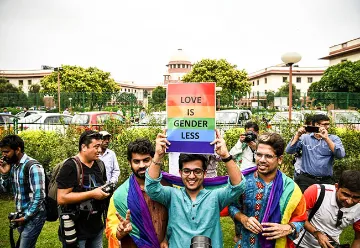
Mainstreaming gender in urbanisation can be a useful tool in understanding and tackling exclusionary growth and access to resources in urban spaces more generally.
This brief discusses the challenges faced by urban local bodies (ULBs) in India in accessing urban climate finance (UCF), and proposes solutions based on successful strategies used by some of them. The hurdles include institutional barriers and limited capacity. The brief finds that ULBs that have met with success in accessing UCF overcame the obstacles through early sensitisation programmes and global network connections. It offers plausible sol
As technologies evolve, so do threats.
This brief examines how India’s Business Responsibility and Sustainability Reporting (BRSR) framework under SEBI’s Listing Obligations and Disclosure Requirements can evolve into a disclosure regime that is globally credible yet locally relevant. Drawing on comparative analysis and stakeholder consultations, it finds that the BRSR suffers from limited regulatory coherence and international comparability. The brief recommends using the Interna
The potential misuse of chemical precursors, toxic industrial chemicals, and pharmaceutical-based agents (PBAs) by non-state actors poses a massive threat to national and international chemical security frameworks. There is an urgent need to strengthen the oversight of dual-use chemicals to arrest the frequent use of ammonium nitrate-enhanced improvised explosive devices and the potential use of fentanyl-linked PBAs in domestic terrorist attacks
Cyber security should take centrestage in nuclear-policymaking. This brief evaluates the current state of cyber security in India’s civilian and military nuclear systems, as gleaned from both incidents of breach on-ground and analyses in the public discourse. It outlines the level of threats faced in this domain, and makes a case for the development of policy measures for an integrated cyber-nuclear security strategy.
HOW to ensure food security and control inflation has emerged as a major challenge for the government in the New Year. The hangover of food inflation from 2010 cannot be ignored as it is still in double digits.
Adequate access to water is not only a human right but it also forms the cornerstone of economic development. It is growing in importance in Asia where the population is rising at an exponential rate making it home to more than half of the world's population.
Russia’s ongoing war against Ukraine follows its annexation of Crimea in 2014 and its continued direct support for separatist activities in eastern Ukraine, marking a new chapter in Moscow's geopolitical approach. China's response and its overt diplomatic, financial, and economic support for Russia was also noteworthy. This brief assesses the contours of the new geopolitical formation (the ‘DragonBear’, a term coined by this author)
The SCO is not another SAARC, and its member states will most likely not sit by and watch their agenda hijacked by a bilateral dispute.
The Sundarban ecoregion, straddling India and Bangladesh, is home to the largest contiguous mangrove forest in the world. Parts of the forest are designated as World Heritage Sites in both countries due to their rich biodiversity. The natural areas of the Sundarban are influenced by human use and, in recent years, increasingly by climate change. This paper explores an institutional arrangement that could help identify and implement the options th
The tensions between India and Pakistan have to be seriously examined and ways and means to bring back normalcy should be worked out and implemented. India stands to lose much more if terrorist organisations are deployed in various cities in the country at a time of Pakistan's choice.
This paper presents an approach towards promoting nutritional security on one hand, and water security on the other, in an integrated framework. Using econometric models, it delineates water use efficiency on the basis of calorific estimates of the productivity of agricultural water use in the context of various crops. Based on the estimated marginal product of water across the various crops, the paper finds that alternative crops such as maize a
South Sudan does not possess the political leadership to resolve the current crisis of citizenship and governance. But it is time for an unbiased state to step in and address vital issues and questions that it did not address immediately after independence for the collective sake of all South Sudanese.