28272 results found
Land use on floodplains needs better regulation so that rivers have space to flood and contribute ecosystem services
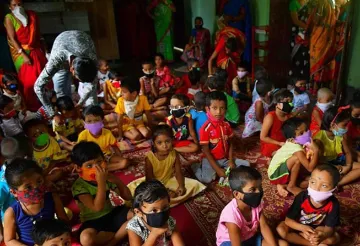
Vaccine hesitancy among women adds to the risks to economic recovery by prolonging the pandemic.
FOR all those following the developments in Nepal, the King¿s coup, has not come as a surprise. Notable, however, is the sweep and sting of the King¿s action.
The Rules-Based Order (RBO) underpins the global maritime trading and security system. A subject of growing discussion and debate in strategic studies circles, it is seen by many as a prerequisite for seaborne trade and commerce, and a crucial factor in formulating national security policy. While many Asian powers have a shared understanding of the principles of maritime conduct, regional states have tended to situate the RBO within the framework

Russia is widely regarded as one of the major revisionist powers in the world, determined to upend the global liberal order. To be a global power, Russia must become a maritime power as well. Thus, it seeks to gain control in Eurasia and the region between the Black Sea and the Baltic region. The North European Plain and the river Danube hold strategic significance for Russia, the former being a gateway to Europe and the latter the economic lynch
Despite efforts, Indo-Russian nuclear engagement has been limited, mainly because of two factors. One, there is an unstable status of legal framework for the transfer of nuclear technology and second, India's efforts to diversify nuclear partners have been a little upsetting for Russia.
The future of strategic arms control faces a host of problems, from Russia’s invasion of Ukraine and China’s growing nuclear forces to the challenging geopolitical landscape.
The development is the latest indicator that the bilateral relationship is getting stronger.
Russia and North Korea signed the Treaty on Comprehensive Partnership in June 2024, signalling the re-establishment of their strategic ties. Following the treaty, a number of tactical developments have occurred, including the deployment of North Korean troops in Russia and Moscow’s support for North Korea’s nuclear and military modernisation. While their cooperation has been typically viewed through tactical and operational lenses, little att
At a time when it is facing Western sanctions and a proxy war on oil prices, Russia sprang a huge surprise early this month by signing a gas deal with Turkey. The deal will enable Russia to pump natural gas into a Turkish hub, near the Turkey-Greece border and from there into the southern EU market.
The US-led backers of Ukraine are facing a dilemma — arm Kiev quickly, or take time to train Ukrainian forces
Even as the war of words continues, there will need to be practical measures to deal with the increasing threats to space.
If the Indian government appropriately leverages Russia's goodwill, Russian Far East could turn out to be a growth area for Indian business. Innovatively implemented, India's ties with the Russian Far East could help cement Indo-Russian relations as well as bolster its ties with Central Asia and East Asia.
Africa has become essential to Russia’s geostrategic posture as Moscow seeks to overcome the backlash to its invasion of Ukraine in February 2022. However, in the face of isolation and a contracting economy, Russia has realised that cultivating an entry point in Africa through conventional means such as foreign direct investment (FDI), trade, development assistance, or cultural and educational exchanges may not be its best option. Instead, Mosc
Contrary to Western assessments that Russia’s military intervention in Syria would only deepen the economic crisis it is already facing in lieu of conflicts
This paper outlines the development of Russia’s relations with the countries of Southeast Asia, focusing on the years after 2014. As relations with the West reached a new post-Cold War low, Moscow has intensified its efforts at building stronger ties with the East. The paper deals with the impact of these developments on the state of its political, economic and defense engagement in Southeast Asia, both bilaterally and multilaterally. It will s
Russia has always been actively involved with European politics. Its genesis in Kiev—close to the European borders—allowed it to participate in the affairs of the continent. Although Russia’s geographic expanse has been more in Asia, Russian political elites have traditionally identified the country as a European entity. However, following attempts at integrating with the transatlantic economic and political system during the first decade o
The 17th SAARC Summit was held at Addu Atoll, Maldives on the 10th and 11th of November 2011. The venue, in the words of the Bhutanese Prime Minister, reflected the vastness of South Asia.
Despite SAARC's failures of the past, the repeated declarations by Indian Prime Minister Narendra Modi of the need to reinvigorate ties with neighbouring states have created a renewed interest in the possibilities of multilateral cooperation under SAARC.
In context of SAARC, the reality of the situation demands that India handles Pakistan separately. India also has to approach the rest of SAARC neighbours with a more accommodative mind-set. Such mind-sets cannot be confined to sharing history and culture, economic prosperity and development-spending.
Hard-nosed realists around the world are impressed with Modi's diplomatic flair seen during his visits to Nepal and Japan. But they ask if Modi can go beyond the atmospherics and bring about a substantial change in the relationship with China. Here again, Modi has the opportunity to introduce change.

India’s growing security co-operation with Mauritius will contribute towards a ‘free and open’ western Indian region.
Unlike the crowded and competitive Republican presidential nomination field, the Democratic field, for a long time, looked empty with only Hillary Clinton. The strong entry of Sanders in the Democratic nomination has given the American voters a fair choice between Clinton and Sanders' respective brands of politics.
Saudi Arabia, under the tutelage of the crown prince and heir apparent Mohammed bin Salman, is remoulding its two main exports—oil and Islam—to future-proof both the Saudi state and the monarchy that runs it. While transitions of such scale and consequence have been attempted before, they have met with limited success. Today, the challenges and opportunities before Riyadh are simultaneously invigorating and jarring. This brief assesses Saudi
Even as the 'Arab Spring' confrontations develop a sectarian character, the Saudi-Iranian relationship cannot be perceived through the dichotomous lens of sectarianism or of pragmatism. The evolving relationship between the two states incorporates both elements
By bringing China and Russia into the region and by developing strategic partnerships with important players such as India, Riyadh is signalling its intent to reduce its dependence on the US. Mohammed bin Salman is looking at a policy of multi-alignment that affords greater strategic autonomy.
The Supreme Court did award NCR's elected government due authority. But, by leaving reserve subjects with the LG, it contradicted a global governance trend.
The SCO is critical for India to advance its priorities for peace and prosperity in its northern periphery and broader Eurasia.
हाल के सम्मेलन से जो सकारात्मक संकेत मिले हैं, उन्हें वास्तविकता के धरातल पर उतारने के लिए चीन को सुनिश्चित करना होगा कि उसकी कथनी एवं करनी में कोई भेद नहीं. तभी एससीओ प्रती�
We have decided to resume the so-called composite dialogue with Pakistan, without admitting as much. Why not be frank about the change in our position? Why resort to word play to obfuscate?
This paper studies the case of the countries of BIMSTEC (Bay of Bengal Initiative for Multi-Sectoral Technical and Economic Cooperation) to investigate if progress towards achieving the Sustainable Development Goals (SDGs) plays an instrumental role in addressing structural vulnerabilities. It finds that it does. Despite improvements in certain SDGs such as increasing per-capita income levels, improving healthcare, and providing universal
Goal 11 of the UN Sustainable Development Goals aims to “make cities and human settlements inclusive, safe, resilient and sustainable.” Its targets include the promotion of resilience to disasters such as earthquakes. Many of India’s cities that lie in high-intensity zones—determined by ‘seismic microzonation’—are extremely vulnerable to earthquakes. Such cities, therefore, must move towards developing and adopting policies that pro