28247 results found
Developing national digital strategies has become crucial for all countries, especially for developing nations. African countries, in particular, must find a niche in the global digital economy to accelerate inclusive social and economic development using technology. This brief compares the national digital strategies of 17 African countries and analyses them based on the typology of the relationship between state and society in the context of th
National security has always been a part of national politics. What has changed is only the way this issue is now playing out in the public domain.
Many strategic analysts in India have suggested that the country evolve a national security doctrine to guide its armed forces and governmental system in dealing with matters relating to national security. The Observer Research Foundation took the initiative to examine the issue in its entirety. This report details the outcome of a discussion amongst the country's noted security experts.
When comparing the current geopolitical landscape of Europe to the circumstances in the years following NATO’s establishment, it becomes apparent that very little has changed.
One of the collaterals of the 2G verdict of the Supreme Court, which saw the revocation of 21 of Sistema Shyam Telecom?s 22 licenses, could be the flickering and faint Russian Interest in Indian business opportunity.
Far from the Gulf, Norway anchors its role in Middle East security—leveraging maritime might to safeguard vital trade routes and stability.
Does the Forum on China- Africa Cooperation 2024 (FOCAC) mark the end of an era in Sino-Africa relations in a proverbial boomto- bust scenario?” and “Is there disenchantment among the African leaders vis-à-vis China?
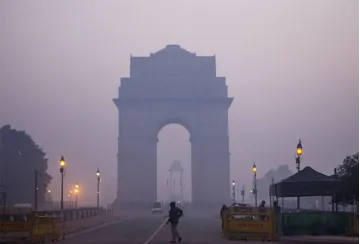
India faces a medium-term challenge from the Chinese PLA Navy, which has been active in terms of sending vessels on regular patrols in the Indian Ocean.
Travelling by horse back is the fastest mode of communication in the tribal-inhabited remote and interior forest areas of this (East Godavari) district,¿ said my guide during a visit to the Naxalite-Maoist-affected parts of the Andhra-Orissa Border Special Guerrilla Zone (AOBSZ).
Confusion and vacillation have been the marked features of the Andhra Pradesh government¿s policy towards the Naxalites of the Communist Party of India-Maoist (CPI-Maoist), which it proscribed on August 17, along with seven of its front organisations in the wake of the killing of nine persons,
There is a need for a new regional security architecture that reflects the changed geopolitical realities of the region. This suggestion was made during an interaction between senior Japanese and South Korean journalists and Indian scholars at ORF.
All over Europe, the new mantra is austerity. Though India's exports have been doing well since last month, this may not be sustained in the future if our big trade partners are busy tightening their belts and trade credits dry up.
There is a lot of disturbing news regarding the Indian economy today which is likely to spoil the outlook for 2012. One of them is regarding the rise in inequality.
Considering the importance of Lines of Credits in India's development cooperation programme, ORF has undertaken a study of the system and process of LOCs. Early results point to need for improvements in the system.
Nepal Prime Minister Baburam Bhattarai, by choosing to go to Bihar, has reinforced the point that States like Bihar and Uttar Pradesh are vital for maintaining a cordial Indo-Nepal relation.
It's heartening to note that the two rounds of talks between the Tamil National Alliance (TNA) and the Government on finding a political solution to the vexatious ethnic issue have gone off well over the past weeks.
Given the emerging geo-political tensions in the region, the need of the hour for India, South Korea and other nations is to integrate and stay united, according to Mr. Anil Wadhwa, Secretary, Government of India.
Sectors such as oil and gas, non-renewable energy, natural resources, agriculture, etc. hold tremendous potential for cooperation between India's North-East and the BCIM region. There was a need to ensure seamless movement of goods, services and people across borders to promote trade.
Prime Minister Manmohan Singh had taken a bold step in 2006 when he constituted five working groups on Jammu and Kashmir to grab the initiative for ushering in a phase of development by creating conditions of permanent peace in the troubled state.
Prof.K.R.Singh, formerly visiting professor, Chair of Maritime Studies, University of Calicut, initiated an interaction on 'Maritime Dimensions of Internal Security' at an Interaction organised by the ORF Chennai Chapter of the Observer Research foundation on 23 February 2008.
Even today, the ownership of the Bretton Wood Institutions (BWIs) continues to reflect the realities of 1943-44. Giving more voice to emerging economies will require ratification by the US Congress that has so far shown no sign of progress.
In today's political scene not many contestants have a background of having worked with the underprivileged people or fighting for the rights of women and children. Many think it is a good opportunity to get into the charmed circle of parliamentarians who have attractive remunerations and huge fringe benefits for five years
The Australian presidency of the G20 has witnessed a focus on the fundamentals: trade, tax issues, infrastructure, employment and banking.
The commissioning of the homegrown INS Vikrant in September has revived debates within India’s strategic community and the decision-making elite, on the desirability and viability of aircraft carriers for the Indian Navy. It remains unclear how these debates are settled among the political, bureaucratic, and military classes, and how decisions are made around the Navy's force structures, particularly on the issue of aircraft carriers. This pape