-
CENTRES
Progammes & Centres
Location
4644 results found
It is time we realised that the battle over Italian Marines is lost. Now we need to introspect and realise that, what people say to our faces and think of us are two very different things. And we have no one but ourselves to blame for living in La La Land.
The world is facing a climate-change challenge that requires nothing short of atechnological revolution to address. Yet the current patterns of technology development anddiffusions are not transformative enough; nor are they happening at a pace, rapid enough.Actions at multiple levels engaging different actors are needed to reduce emissions whilemeeting the developmental needs of the global south. This paper summarises the mostinnovative ideas s
In his opening remarks Mr. Sunjoy Joshi, ORF Distinguished Fellow, said that pace of adoption & innovation was critical for mainstreaming climate friendly technologies
The ceasefire agreement came after Iran's response to US airstrikes against its nuclear programme led Tehran to launch missiles towards Al Udeid air base in Qatar, the largest American military facility in the Middle East.
The new Iran strategy of the Trump Administration is aimed at “neutralising the government of Iran’s destabilising influence and constraining its aggression, particularly its support for terrorism and militants.”
A near-bankrupt Pakistan has only two choices. It can go to the IMF and suffer reforms. Or it can carry on with its lies, vagaries and economic wet dreams
India and Bangladesh must seize the opportunity to further enhance connectivity and trade ties
Connectivity facilitates economic growth, social development, and people-to-people interactions. Recognising the imperative of connectivity in regional engagement, the Bay of Bengal Multi-Sectoral Technical and Economic Cooperation (BIMSTEC) in 1997 declared ‘transport and communication’ as one of its sectors of cooperation. In 2018, BIMSTEC drew up its Master Plan for Transport Connectivity, and subsequently updated the plan at the fifth BIM
The problem with imposing sanctions on a country which has the world's third largest proven reserves of oil and second largest conventional natural gas reserves is that the implications are felt globally. The price of oil is highly correlated throughout the world due to market arbitrage.
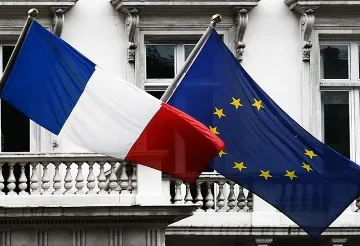
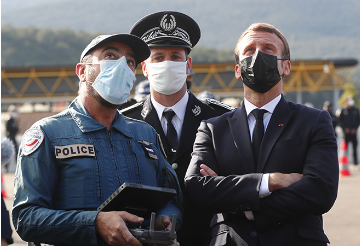
The challenge for France is not easy. The idea that education, hard work and following French laws and customs led to upward mobility has been challenged in recent years and Covid-19 has only highlighted it

After days of disputing the 2020 election results and claiming widespread fraud in the polls that gave the National League for Democracy a second term, Myanmar’s military, the Tatmadaw, staged a coup on 1 February 2021. The coup supposedly ended a decade of inadequate democratic reforms in Myanmar, which came after almost five decades of oppressive military rule. Ironically enough, the military regime itself had set the course of reforms post-2
Iran’s leaders invoke the rhetoric of unity and resistance to face Israel, but rising domestic fatigue and a fractured society limit the power of old mobilising narratives.
Amid disruptive international crises such as the COVID-19 pandemic and the ongoing war in Ukraine, ensuring a secure energy supply for development requires focused efforts by individual countries and the international community. This report examines the global governance of the energy transition from the perspectives of the Latin American and Indo-Pacific regions. Despite their geographic distance, the two regions share similarities in their econ
Eminent Indian nuclear scientists have been expressing their concern about the contents and direction of the Indo-US nuclear deal signed last July. Strategic analysts, former diplomats, prominent politicians and knowledgeable commentators have repeatedly cautioned the government about the minefields ahead. Ought not the government pause and clear these doubts? There is little effort towards this end, and we all seem to be running blind.
In an effort to financially hobble Iran, the United States mandated nations to halt their imports of crude from the country by early November, or else risk attracting sanctions themselves from Washington. Not long after, the US announced that eight nations will be exempted from these sanctions, supposedly in recognition of their effort to cut down on their imports of Iranian oil. This brief argues that while it is true that certain countries did
In a stratagem that would make Sun Tzu proud, the government first velvet-gloved an iron fist and then clamped down hard on digital freedom and enterprise
This paper highlights the likely impact that the Trump energy policy reset may have on Washington’s approach to energy transitions domestically and globally. It seeks to identify any recalibration that this changed approach may have triggered in the long-term agenda of US partners. The paper focuses on the United Arab Emirates (UAE)—a country that has substantiated its commitment to clean energy pathways with sizeable investments of political
There has been considerable spin from Islamabad as well as New Delhi regarding the results of the visit of the Chinese Prime Minister, Mr.Wen Jiabao, to the two countries. The fact that the Chinese have carefully refrained from joining this race for spin and
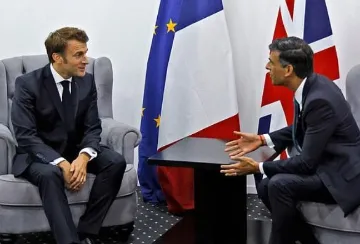
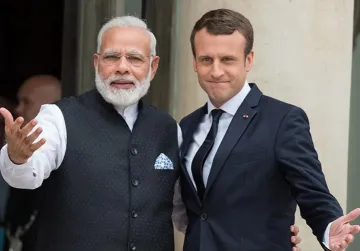
India, France and Japan — despite different geographies — share similar interests in the Indo-Pacific.
As technology, geopolitics and warfare evolve at breakneck speed, the new India-US defence framework provides a much-needed roadmap for bilateral security relations. However, its success will hinge on whether both sides can translate intent into shared innovation, trust and strategic depth.
As the US Congress scrutinises the Iran accord, partisanship on Capitol Hill might reach new heights and it will capture headlines. Whether Congress passes the Iran deal or not, it will loom large in the election debates because of its connection to American and Israeli national security, though it is unlikely to be a real game changer in the elections.
The excitement of the Board of Governor's meeting is over and the participants have not been slow to express their views at the outcome. The Iranians are defiant, the Americans triumphant, the Russians cautious, the Europeans smug, the Chinese inscrutable, the Arabs joyous at directing a new argument at Israel, the latter pleased over Iran's predicament yet angry over a dent in their nuclear ambiguity, and the Indians self-righteous.
The current Just Energy Transition Partnerships framework does not work for India because it prioritises G7’s agenda and overlooks our specific energy transition needs and challenges
Israel believes that the use of force is essential to stopping Iran from making the nuclear bomb. A vocal section of the strategic affairs community in the United States agrees with the proposition. This brief argues that military means are unlikely to sabotage the nuclear weapons programme of an advanced-stage bomb-seeker like Iran. Moreover, use of force could be counterproductive as it can incentivise Iran’s pursuit of the bomb, and it may e