-
CENTRES
Progammes & Centres
Location
4644 results found
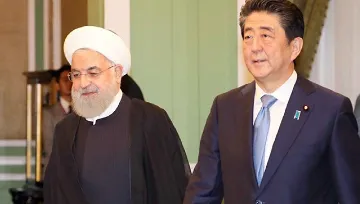
As New Delhi welcomes Rouhani, the two sides will be hoping to assuage each other’s concerns even as they will try to build partnership, which has often struggled to match the rhetoric surrounding it.
Healthcare in India could use the help of better data and analysis from both public health systems and private sector interventions.
Schemes have been announced — though how they’ll work is a mystery.
The government has to free India's top 50 institutions across all disciplines from the iron grip of UGC and AICTE. The institutions must be given the freedom to devise their own course curriculum. After all they have the best subject experts.
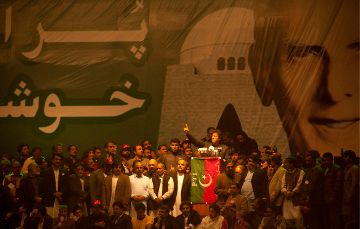
In the last two years, Imran Khan has proved to be a miserable failure who has in many ways turned the clock back for Pakistan.
Welcome to Naya Pakistan – just like the Purana Pakistan.
India's thinking about the Middle East, whether from the UPA or NDA, has tended to be ideological and rooted in their domestic political considerations. Prime Minister Narendra Modi needs to break from this tradition and develop a strategy towards the Middle East that is firmly anchored in realpolitik.
The US-led TPP would face increasing competition as China recently concluded a free trade agreement with Australia (ChAFTA) and South Korea and is pushing for a broader Asia-trade pact - Regional Comprehensive Economic Partnership.
A closer look at some of the security-related agenda items for the upcoming development and how they could impact bilateral ties.
There is no reason to believe that we will witness some change in Pakistan’s foreign policy.
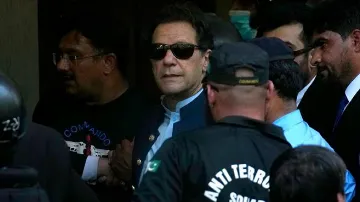
How will India manage a Pakistan led by Imran Khan?
Recent verdicts have strengthened civilian authority in principle, but left the PM in a spot with the army
The measure of a successful energy transition must go beyond statistics of installed capacity of renewables, investments and number of jobs. While these are important, the face of the transition should become the lives, livelihoods and well-being of the economy
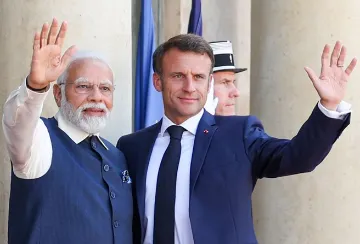
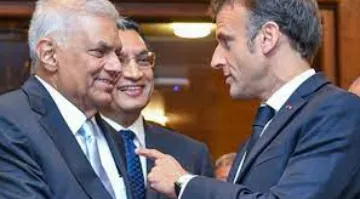
India has long valued France’s partnership on issues ranging from defense and space exploration to civil nuclear power generation.
India and South America have barely managed to maintain minimal bilateral ties for the last several decades. Absent strong ties in geography, what India and South America have instead is a shared post-colonial history. Colonised by European powers for several centuries, both began their journey as independent countries under conditions of underdevelopment and having inexperienced polities with a limited foreign policy agenda. Today, it is not onl
India has decided to adopt a wait and watch approach to the ongoing negotiations that aim to revive the trans-Afghan gas Pipeline (TAP) project. The proposed US$ 2.5 billion gas pipeline project is expected to transfer of 30 billion cubic meters of natural gas
The Modi government can choose to be part of a massive Indo-Pacific trading bloc, or succumb to isolationism. China complicates the choice.
The political tensions between Saudi Arabia and Iran can be better understood through the lens of ‘regimes.’
Even if we go by the Financial Times' FDI figure, let's remember that having low FDI inflows for a year or half a year does not mean much. China has received, on average, $100 billion per year in the last decade compared to India's annual $20 billion figure. The best way to compare is looking at the per-capita FDI stock, which is $691 for China compared to $181 for India in 2013.
India has made a push towards a low carbon economic transition by expanding its renewable energy capacity by 350% over the past 13 years.
Across the world, workforces 'stranded' by technological, regulatory, or climatic change have become politically crucial to the rise of populism
India must contextualise France in a region-specific sense because in the Pacific the French are associated with colonial past and present.
The strong strategic and political foundation as well as the trust between India and France provide for accelerated defense and security ties in the coming years.
After over a decade of declared intentions, India has finally decided to put money on the strategically important Chabahar project. It's a sad story of how bold intentions of leaders were stalled by the different perspectives in different ministries of the Government itself.
Dr P R Kumaraswamy, Associate Professor, School of International Studies, Jawaharlal Nehru University (JNU), New Delhi, initiated a discussion on ¿India, Iran and the US: The Problematic Triangle¿ at the ORF Chennai Chapter of the Observer Research Foundation on 22 December 2007.
This brief offers a way to rethink the ongoing dispute between India and Bangladesh over the former’s plan to build a high dam on River Barak (known as Surma-Kushiyara and Meghna in Bangladesh) at Tipaimukh in the state of Manipur. It identifies the origins of different sources of water for Bangladesh’s Haor, the region that is widely feared to be under threat by India’s planned dam. The brief recommends the conduct of a comprehensive study
India has held such dialogues with the U.S. and Japan in the past.
France has emerged as one of India’s closest strategic partners and the relationship is likely to bloom further in the coming years.
By broadening the scope of bilateral cooperation from the Indian Ocean Region (IOR) to encompass the entire Indo-Pacific region, the India-France Indo-Pacific Roadmap, released in July 2023, underscores the importance of moving beyond the traditional self-centred approach to foster a more outward-looking dynamic with key regional partners. The cooperative trilateral mechanisms established by India and France in 2020 (India-France-Australia) and i
India's deepening engagement with the states of the Gulf Cooperation Council as well as Israel could also moderate New Delhi's diplomatic ties with Tehran. India-Iran relations were at their peak during then Indian Prime Minister Atal Bihari Vajpayee's visit to Tehran in 2001 and then Iranian President Mohammad Khatami's visit to India in 2003.
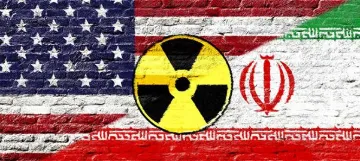
India's ties with Iran have clearly been strained by the latter's tumultuous relationship with the United States, with the Iran factor equally imposing constraints on India-US relations. India has had to walk a diplomatic tightrope in balancing its relationships with these countries.
India and Iran are not in the place they deserve to be in the global order, and they can play a more important and significant role by enhancing their cooperation, according to Mr. Ali Akbar Javanfekr, presidential advisor for press affairs to Mr. Mahmoud Ahmadinejad, the President of Iran.