-
CENTRES
Progammes & Centres
Location
4644 results found
For a government committed to 'minimum government, maximum governance' it is time that policy making in key economic ministries become far more open and consultative, its acts and actions predictable. In the long run, that is the only way to ensure that policies for the auctions of licenses, processes of tendering and award, and actions to ensure their implementation -- are not subject to capture by select coteries.
France and India have shared a common belief in the importance of multilateralism and have a common respect for international rules and regulations. These shared beliefs can form the basis for a cooperation agenda.
COVID-19, which is a highly infectious disease of zoonotic origin, serves as a serious reminder that human-nature interactions need to be based on sustainable development pathways. The recent surge in zoonotic infections in different parts of the world—among them, H1N1, Nipah virus, Zika virus, and Lyme disease—can be attributed to the intensification of human-animal contact through wildlife trade and livestock production. Reducing the rates
This paper examines two types of waste on which India can explore transboundary waste-trade opportunities and challenges: farm-produce waste and municipal solid waste. Using lessons learnt from trade between other countries, the paper argues that while India can augment its economy through increased waste exports or imports, certain conditions must be met for India to benefit from sustained international waste trade practices. The paper recommend
Sub-Saharan Africa (SSA) constitutes 23.82 percent of the global disease burden but less than one percent of health expenditure.[1] The region has a severe shortage of trained medical personnel[2] and health delivery has low coverage. This brief outlines the most crucial challenges facing SSA’s healthcare system, and describes the footprint of Indian health companies in the region, especially in the context of the failure of the public sector t
The ongoing security transition is critical to the success of the peace process in Afghanistan. As part of the US 2014 plan, the NATO forces are to hand over the responsibility of security of the country to the Afghan security forces, district by district.
The increase in the Muslim population since the last census has prompted alarmist coverage in some sections of the media.
Despite having been in power at the Centre for six years at a stretch, the BJP seems to be still suffering from the 'Opposition' conundrum. It is yet to produce a leader who is independent of the party's past.
In Maldives, legal and judicial process may be in for another season of controversies, ahead of the presidential polls in September. It is also in transition, from a not-so-democratic past to a democratised future. It is too early to say which way it would go.
The recent presidential polls show the continuing stranglehold of 'coalition politics' in the contemporary Maldivian context. It became visible when Nasheed defeated incumbent Maumoon Abdul Gayoom in the second round of the 2008 polls, after securing only 25 percent vote-share in the first round.
The Indo-Pacific, often regarded as the ‘maritime underbelly’ of Asia, has emerged as the world’s economic “centre of gravity”. The home of vast geo-economic opportunities, and facing manifold security challenges at the same time, this maritime domain has attracted the keen attention of global powers in recent years. This births prospects for multilateral collaborations in maritime security, and justifies the significance of a �
On May 25, four terrorists (initial reports suggested almost a dozen armed men) scaled the perimeter walls of PNS Mehran, Pakistan's only naval air base, located in Karachi. Guided by their commander through hi-tech wireless systems,
The armed assault and siege carried out by the Tehrik-e-Taliban Pakistan (TTP) on Pakistan's highly secured Pakistan Navy's Mehran airbase in Karachi (May 22-23) has raised fundamental concerns about the continuing failure on the part of Pakistan's intelligence and security agencies,
Ties between India and Japan are historical and enduring. In the Asia-Africa Growth Corridor (AAGC), the leaders of the two countries have married their respective countries’ “Act East” Policy and “Free and Open Indo Pacific” aspirations. The AAGC is envisioned to provide a renewed opportunity for partnership where both regions can complement each other’s development and growth. The AAGC will bring out the economic gains for Afr
New Delhi is going through the motions of pretending everything is normal.
Modi's foreign visits resemble roadshows with their attendant hype, even though they also have a larger strategic purpose. But like all roadshows there is a time for publicity, and a time to get down to work on the MoUs, agreements, promises and commitments.
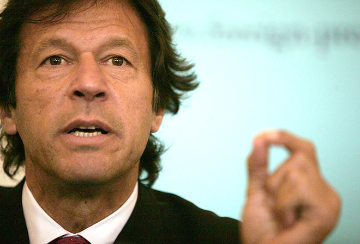
New Delhi has ambitious plans to bolster its armed forces with French procurements, but it is unclear how these deals are to be delivered
India's newly aggressive strategy puts Gulf money and Israeli weapons first.
Having played multiple roles - part comic, part tragic - in the Western mind, perhaps it's time for Iran to make its own Bollywood debut. And get to play a solid, character role.
It makes more sense to enable domestic multi-brand retailers to become strong and see how they develop the village infrastructure and supply chains. It would be risky to usher in oligopolistic global retailers without any strings attached and allowing them to take a big slice of India's huge retail market.
The two assassination attempts in quick succession on Gen.Pervez Musharraf, the President of an Islamic state, who is a key ally of the United States in the war in Afghanistan, came at a time when the US-led coalition forces in Iraq were rejoicing over the capture of Saddam Hussein, the enemy number two only after Osama bin Laden.
A question that merits a sharper assessment is the impact of Myanmar's transition process on India-Myanmar relations. Security cooperation between the two countries since Myanmar's transition has definitely scaled up. The most visible demonstration is Indian Army's recent cross-border operation.
The South-east Asian country of Myanmar has now completed three years of political and economic reforms, but the journey has been "not so hunky dory" if US secretary of State John Kerry is to be believed.
There is a need for a new regional arrangement in South Asia to tap water as it is a regional common issue that should be handled collectively rather than dividing it.
Regular communication with India and other host countries should be re-evaluated by Nepal, which is economically viable for the country in the long run, as it has to survive a major chunk of its economy on remittances.
Emerging technologies have the potential to reshape our world. These innovations, also called disruptive technologies, have started to seep into the area of finding solutions for mobility. Is existing infrastructure prepared for such technological advancements? These and related themes were discussed in a roundtable organised by Observer Research Foundation (ORF) on 8 February 2016. The roundtable, Urban Transportation and Disruptive Technologies
This paper examines Indian policies and decisions on Iran's nuclear programme and reveals a number of critical factors which have influenced New Delhi on this matter in varying degrees.
Since the early 1990's the nuclear non-proliferation regime, the centerpiece of which is the NPT, has grappled with an increasing number of threshold nuclear weapons states. The most recent case is of Iran which is believed to be pursuing a program for weapons of mass destruction. This is complicated by the fact that the US has a troubled relationship with Iran. This Issue recommends that the US and other western powers adopt a cooperative approa
Nuclear development in Iran has been an issue of great concern, not only to its neighbours in West Asia, but also for the global powers, in the interests of regional and global stability. At present, efforts are being made to find a solution to the crisis. The interim nuclear deal signed between Iran and P5+1 (China, France, Russia, the United Kingdom, the United States and Germany) on 24 November 2013, and the complementary Framework for Coopera
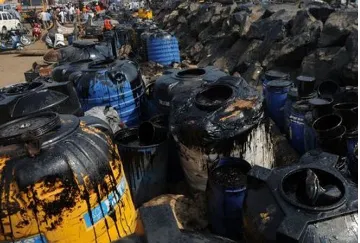
In light of the 2014 NTI Index which ranks India 23rd out of 25 countries with weapons-usable nuclear materials, this issue brief highlights problem areas in the Index and proposes suggestions for improving the Indian nuclear security regime.