-
CENTRES
Progammes & Centres
Location
4649 results found
Since his assumption to power in 2014, Indian Prime Minister Narendra Modi has been slowly stretching the arm of the country’s foreign policy into Pacific waters in furtherance of the ‘Act East’ policy. While India’s relationship with the Pacific island states (read, not Australia and New Zealand) is quite unestablished, Modi is attempting to set the foundations for prosperous future cooperation. In the form of a guidebook for India on Pa
This brief seeks to apply ancient Indian strategic thought to the country’s approach towards its immediate neighbourhood. Employing a Kautilyan perspective on India’s allies within the broader framework of foreign policy end goals, it proposes a non-zero-sum view towards four of its neighbours: Bhutan, Bangladesh, Sri Lanka and Nepal. The brief classifies these neighbours based on the attitudes they exhibit and presents a nuanced approach tow
Ensuring contestability and fairness in India’s digital market—one of the world’s most prominent—is critical to ensuring consumer welfare. This paper outlines a legal and regulatory framework that can ensure contestability and fairness in the Indian digital market. The paper identifies the following elements of this toolkit: (i) competition law; (ii) ex-ante regulation for digital gatekeepers; (iii) laws for increased transparen
PM Modi's official visit to the UK is unexceptional. This is despite the hype and hoopla that accompany any Modi tour. However, what was different was that for the first time Modi had to respond to issues like Gujarat 2002 riots and the climate of intolerance back home.
Pakistan has no option but to respond to public outrage. Blocking of the two NATO supply routes to Afghanistan and denying the use of a Baloch airfield to the CIA is actually a low risk retaliation when Iran, Hezbullah, Syria are much more in the eye of a huge, global storm.
The India-U.S. initiative on critical and emerging technologies could have a transformative impact on bilateral relations
Both the US and Russia have been developing a range of new weapons over the past decade and a half — recent developments have prompted the Russians to highlight their “achievements”.
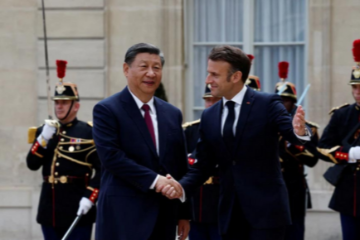
French president Emmanuel Macron tried to manage the contradictions, but nothing of substance was achieved in Biarritz.
There is a strong case to be made for a deeper EU-India partnership against the backdrop of global uncertainties and ongoing wars, an assertive China, and the likelihood of a more transactional United States (US) under Trump 2.0. Meanwhile, the EU-India Roadmap to 2025 has run its course, and the EU-India summit of 2025 could be an opportune moment to release a fresh blueprint for cooperation. As the new European Commission’s agenda springs int
In February 2004, President George Bush outlined his new nuclear non-proliferation approach, in his ¿seven points¿ speech at the National Defense University. It include the setting up of proliferation security initiative which will control and monitor not only shipments and nuclear transfer of material/technology but also will be empowered to take direct action against the violators of the law.
The intent of BIMSTEC member states to push forth with a bold vision for the region was evident at the 2nd Foreign Ministers’ Retreat
After the scheduled western forces drawdown from Afghanistan in 2014, one viable option that would assist Afghan economic development is the US-driven New Silk Road Strategy. But, China, Russia, and Iran have specific visions of a viable NSRS, and these do not necessarily sit well with the US strategy.
A new social contract between citizens, consumers, employees, the state, and enterprise is needed to delineate a new understanding around rights, responsibilities and entitlements. Digital transformations are rapidly altering the nature of work, models of employment, contracts, regulations and protections. Increasingly, the responsibilities of the state are becoming the obligations of,�
The US is entering its trickiest phase in the Af-Pak region, where elections are due in both, Pakistan and Afghanistan just around the time Washington has set for its troops to depart. Can troops depart without an overt or covert understanding with Iran which has a long border with Afghanistan?
Prime Minister Modi’s outreach to Europe has injected pragmatism in a relationship which was adrift for some time. Now the proverbial ball is in Europe’s court.
This research provides an empirical analysis of India’s limited, but transformative position in the global nuclear order. By examining India’s bid for a Nuclear Suppliers Group (NSG) membership, this paper makes three major arguments. First, India’s attempt to acquire veto power status through the NSG challenges classical revisionism in international relations theory. Second, India’s rise through the NSG is based on selective coalition-bu
It can happen in the hurly-burly of politics that a flood of images abruptly wells up to the naked eye and demands attention so that we do not miss out on an entire slice of politics breaking away to get transmuted as current history.
In recent years, a number of states have begun integrating their armed drones into collaborative drone swarms. Although global proliferation can be anticipated, drone swarm proliferation should not be expected to be even or immediate. Some states may race to develop massive, armed drone swarms, while others may never develop sophisticated drone swarm capabilities. This brief explores why some states pursue drone swarms, why others may not, and th
NATO’s growing defence expenditure is poised to intensify a range of geopolitical dynamics.
The Indian Navy has a bevvy of planned engagements this spring,. including with the UAE and France.
Most central banks across the globe are today seized with the idea of cryptocurrency, with countries like Sweden and China already embarking on their pilot projects. This paper argues that most of the proposed architectures for a Central Bank Digital Currency (CBDC) are not designed to mimic the paper currency in its digital form. It proposes an architecture that largely retains all the properties of a paper currency, with only one limitation—i
India is still a net importer, but its momentum is in the right direction.
Government should take suitable steps to improve the share of rail transport in both freight and passenger segments
The European Union (EU) stands at a critical junction in its institutional evolution. The European sovereign debt crisis in 2009, the Brexit decision in 2016, and the success of anti-European populist parties in many member states have triggered intense discussions about necessary reforms in the Union, which only intensified after Emmanuel Macron became president of France in 2017. His vehemently pro-European outlook and ambitious suggestions for
Iran is being treated more like North Korea, even though it is one of the world's great civilisations, with major historical and scientific achievements. And, as anyone who has deeply analysed the personalities of Ahmadinejad and Kim Jong Un knows, they don't look like one another. Or like one another.
The two countries’ geopolitical compulsions, especially regarding containing china in the indo-pacific, have translated into closer trade ties
Manoj Joshi, “A Survey of India-US Defence Cooperation,” ORF Special Report No. 224, March 2024, Observer Research Foundation.
India has been witnessing rapid urbanisation in the last decade, particularly in its large and medium-size cities. As more and more people move towards cities and towns, it is imperative to build an understanding of how cities are geared in terms of growth and inclusion. In what ways do India's marginalised communities get excluded from the country's growing urban spaces? This paper studies how individuals and groups are included inor exclude
Bashar al-Assad’s ouster and South Korean president Yoon Suk Yeol's retreat underscore the importance of channelling people power through effective institutional frameworks
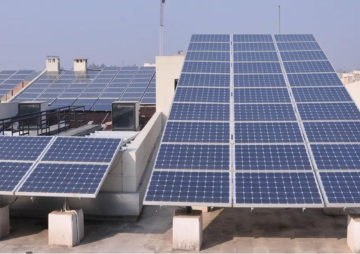
India’s government recently announced a safeguard duty (SGD) on solar cells and modules from China (and Malaysia) starting with 25% in the first year. This decision does not only jeopardise the own renewable energy targets but also harm the own economy. Why not let pay China for India's energy transition?
Dr.A. Q. Khan, the self-styled father of Pakistan's atomic bomb, is back in the headlines following a statement disseminated by the National Council of Resistance of Iran, a group opposed to the present regime in Teheran, on November 17, 2004, that between 1994 and 1996 (Mrs.Benazir Bhutto was then in power) Dr. Khan gave Iran a Chinese-developed nuclear warhead design.
The different service arms of China’s armed forces are all undergoing substantial transformation, including exploring the possibilities of integrating Artificial Intelligence (AI) to boost their combat power and effectiveness especially in a time of war. This paper evaluates the significance and potential of AI in improving China’s military capabilities. Chinese official documents and their enunciation of military doctrine indicate that the c
Abe’s role and legacy in transforming Japan’s role in global affairs, as well as in enhancing India-Japan ties, cannot be emphasized enough.
In an era of Asian strategic uncertainties and global power transition, India-Japan defence and security linkages have become particularly significant.
Bangladesh offers a rare strategic opportunity to transform the geopolitics of the subcontinent. A comprehensive partnership with Dhaka might be the key that will eventually open the door to a productive engagement with Pakistan.
The Indian Air Force (IAF) plays a critical role in securing India amidst a world in flux. For this massive task, India must possess indigenously produced fighter aircraft engines to power its fighter aircraft variants over the next 50 years without falling into undue dependency on foreign suppliers. As the timely delivery of fighter aircraft to the IAF is linked to the security of supply chains, this brief underlines the need for both the develo
India’s maiden solar mission undertook a journey of around 1.5 million km from Earth, taking 127 days to reach its final destination.
Why India and Iran had modest expectations of President Hassan Rouhani’s visit to New Delhi this month
With a number of African countries reworking their energy basket, Beijing could emerge as the partner country of choice
Affirmative action, especially in the form of reservation policies, to address the issues of inclusion and equity has been in place in India for a long time. The available evidence suggests that the policies of reservation have not been an unqualified success. Indeed, implementation of the reservation policies has faced a variety of issues ranging from problems of identifying the beneficiary groups and the creamy layer to legal interpretation of
Delhi must not forget that the tyranny of geography limits India's role in Afghanistan. Delhi is in no position to compete with Rawalpindi in Afghanistan. Nor can it dream of replacing US military power across the Durand Line. For now, Delhi must welcome the current dialogue between Kabul and Rawalpindi.
Saeed Naqvi, Distinguished Fellow at ORF, recently journeyed across Afghanistan where he met scores of political leaders, Taleban, US officials, filmmakers, journalists, NGOs, religious leaders and ordinary Afghans. The result is an insightful document on Afghanistan at the crossroads. Do Americans have an Endgame planned? Or, more important, can a superpower in a theatre of strategic importance, have a linear exit plan when multiple strategic op
Given his limited choices in stabilising Afghanistan, which include supporting a national election, US President-elect Donald Trump will find India to be a reliable and trusted partner in this process
The year 2014 is, in many ways, the year of reckoning for Afghanistan which is undergoing three simultaneous transitions - security, political and economic. Unlike the first two, the economic transition has not had the advantage of clear deadlines and roadmaps and has suffered from lack of long term planning.
The situation in Afghanistan is grim. There is a tendency to confuse random acts of violence with the instability caused by the the Taliban or the neo-Taliban. An analysis of the violent incidents in Afghanistan in the past few years has revealed that more than two-thirds of the violence has been related to land, resources or power-politics, pointing towards unequal sharing of power at the sub-national level. A round-table discussion on Afghanis
The killing of a former Taliban minister, Mullah Abdul Raqeeb, has raised questions about the involvement of the Pakistan establishment in the peace process and a possible rift within the ranks of the militant movement.