-
CENTRES
Progammes & Centres
Location
15606 results found
Although neither India nor China envisions participating in decisive naval battles given the interdependent nature of the world order, naval suasion continues in the Indian Ocean. The underlying strength for control of the Indian Ocean, however, is not geopolitical but economic power.
The geo-strategic uncertainties that prevail in Asia will drive India and Japan increasingly in the direction of jointly addressing the need for maintaining the prevailing balance of power in the continent, according to scholars from India and Japan.
It offers a notable contrast that India’s ties with Russia haven’t taken off despite New Delhi’s keenness while its relationship with the US has expanded notwithstanding hesitations.
The permission for Air India to fly over Saudi Arabia must be seen as a major breakthrough, cutting hours off flights between India and Israel
Continued efforts at looking beyond immediate horizons is required.
Pakistan's present actions of ratcheting up tensions not only on the Line of Control but also along the International Border, while obviously making an attempt to regain the initiative, is actually unlikely to pay any dividend for a number of reasons.
Peaceful relations with Pakistan is a prerequisite to India’s domestic stability and its quest for great power status.
Emissions from fossil fuel-powered motor vehicles adversely affect air quality and contribute to global warming. The manufacture and use of electric vehicles (EVs) is among the ways by which this challenge can be mitigated. This brief evaluates the best practices adopted by countries in the forefront of EV adoption, and outlines the lessons India can draw from them to inform its own EVs strategy. It finds that in addition to strengthening
What should be India's approach towards the international internet governance discourse? This Issue Brief attempts answer this question by examining the Indian government's engagement with the global community, using the recently concluded NETmundial conference on internet governance as a case study. It also provides policy recommendations for the way forward.
In the early years of the 21st Century, we find ourselves relearning the most enduring lesson of history. That is, ¿Only thing constant in nature is change. It is not the reality that is changing but change, which is becoming a reality.¿ The difference now is that the revolution in technology is making changes, including global trends and strategic changes, faster than ever before.
The recent violent actions of the Maoists have made big news. It will not be easy to resolve this problem because these are the people who have been deprived of their land and development, and they form the core of the movement. Only better distribution of the growth story can bring peace to these people
In the current and preceding years, the government has been trying everything to limit gold imports to control the current account deficit. Yet this commodity has one of the largest share in terms of exemption given. In 2012-13, the estimated amount of custom duty foregone for diamond and gold would be Rs 61,035 crore or 20.5% of the total revenue foregone.
The 2011 anti-corruption movement in India—characterised by a huge trust deficit in the political class—was the culmination of several such localised movements that marked the birth of a new civil society in contemporary urban India. This paper studies the profusion of middle-class-led associations in Mumbai fighting for good governance, and their increased political mobilisation in the city. It argues that a new civil society bypasses electe
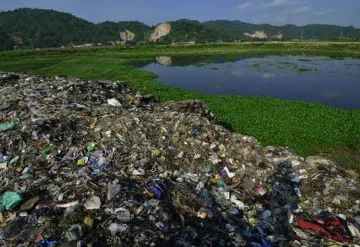
Wetlands are important ecosystems that provide benefits such as flood control, water purification, and biodiversity conservation. In India, however, wetlands are threatened by pollution, encroachment, and rampant real estate development. This brief assesses the East Kolkata Wetlands to illustrate the challenges of preserving urban wetlands in India. It also presents recommendations to establish more comprehensive wetlands management and conservat
The government should remain a licensor, regulator and adjudicator where neither capital nor technology are in constraint and should not make in India
Mr S. Jaishankar is reported to have said he was happy to join “the Tata Group… India’s most respected brand globally”.
In the latest despicable act of extreme cruelty, the arm of an Indian maid working in a Saudi Arabian household was chopped off by her employer. Since the royal in question was King Salman's son, there are no prizes for guessing that no member of the ruling family will be punished for this incident.
This report is part of the Observer Research Foundation’s “Financing Green Transitions” series which aims to find potential linkages between private capital, in all its forms, and climate action projects. The series will primarily examine domestic and international barriers to private capital entry for mitigation oriented climate projects, while also examining potential avenues for private capital flow entry towards adaptation and resilienc
The normalisation of trade between India and Pakistan could lead to preferential trade arrangement under SAFTA (South Asian Free Trade Agreement of 1996). This would increase regional trade and stability.
The National Democratic Alliance (NDA) Government headed by Mr. A. B. Vajpayee had made India increasingly invisible in its neighbourhood. It was content to play second fiddle to the US in Nepal and Sri Lanka, let Norway, the European Union and Japan play a more active role in Sri Lanka, maintained a silence on the growing confrontation between President Abdul Gayoom of the Maldives and the pro-democracy activists
Although India and Africa have long shared close ties, engagement between the two regions is yet to reach its full potential. However, amid the global green transition and attempts to enhance energy security, green hydrogen—increasingly seen as the ‘fuel of the future’—could provide a new avenue for cooperation between the regions. Such a partnership, focused on building a global value chain for the large-scale adoption of green h
The COVID-19 pandemic has had a massive economic and social fallout for India, as it has across the globe. In India, large numbers of people lost their jobs, and supply chains across industries and agriculture have been disrupted. At the same time, environmental indicators—notably air and freshwater quality—showed improvements following the long period of a nationwide lockdown. This brief outlines why India must make a focused decision to mov
Ways to attain growth, create jobs, and meet developmental targets with minimal carbon emissions are priorities for both India and the EU.
It is important to differentiate between physical capital as produced means of production in contrast to natural capital which is naturally endowed. The latter facilitates a host of ecosystem services[i] that flow through human processes, both societal and economic. Unlike physical capital, natural capital cannot be substituted easily. Therefore, this stock of natural capital processing into the flow of ecosystem functions need to be valued and
Greece may be far away from India but the lessons to be drawn are many. Bringing down fiscal deficit through harsh austerity measures has brought Greece to the brink. India should also not cut the important social sector spending in order to bridge the fiscal deficit.
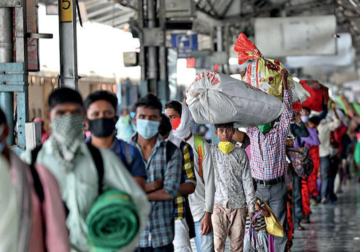
The country has been grappling with low consumption demand for quite some time and the loss of livelihoods for the migrant workers would undoubtedly aggravate the problem
By 2040, the proportion of the population below 34.5 years will fall to 50 per cent from 65 per cent today.
A lot of thinking should be done about how to reinvigorate agriculture because rural demand is important for reviving manufacturing sector. Agriculture is important also because 52 per cent of the population is still occupied in agriculture and it has a share of 17 per cent in the GDP.
The two countries are moving closer in the security domain.
There are growing tensions in New Delhi’s engagement within this arrangement and its other alignments.
The hypothesis of “jobless growth” has been central to recent debates around India’s economic development trajectory. This brief undertakes an evaluation of secondary data to test whether India is indeed experiencing jobless growth. The authors find that the characterisation of “jobless growth” is both reductive and empirically unsound, and India’s employment landscape has experienced notable expansion alongside robust Gross Domestic
The 2625 kg GSAT-7, developed at a cost of INR 185 crores, will be India's first dedicated satellite for maritime communications, providing UHF, S-band, C-band, and Ku band relay capacity over the Indian landmass and surrounding seas.
While India's economic presence in the Gulf region has transformed from merely an exchanges between merchants and human capital, as a geopolitical player, India's role has remained subdued.
In 2006, then Prime Minister Manmohan Singh named Maoist insurgency as “the single biggest internal-security challenge”[i] the country has ever faced. He would repeat the same warning in the succeeding four years.[ii] This paper argues that today, the insurgency no longer poses the same degree of threat to the Indian state. It outlines the trajectory of the Maoist insurgency from its roots in the late 1960s, to credible domination over
Due to the persistent adversarial nature of the Sino-Indian border environment, and because China is now a de facto maritime neighbour as well, India needs to examine its options of leveraging sea power. This brief analyses some fundamentals of sea control and sea denial, and examines some misconceptions about these. By using factors of time, force and space, the brief argues that while maritime economic warfare (explained as counter-value operat
India and Nepal are fellow riparian nations in South Asia and thus could potentially use their shared water resources as avenues for collaborative effort. Using water to generate hydropower for maximum benefit comes from a place of mutual interest, allowing for optimum leverage for the socio-economic development of both countries. This brief outlines a history of the India-Nepal hydroelectric power scenario, and offers recommendations for growth.
India’s online gaming sector is rapidly growing, surpassing other emerging digital sectors in the country. It contributes to GST revenue, creates jobs, and attracts FDI. The sector also promotes ancillary sectors, contributing indirectly to the economy. However, concerns persist around harms such as addiction, financial crimes like money laundering, and implications to national security. Regulatory uncertainty continues to hinder the sector’s
Forests help mitigate the impacts of climate change, provide economic benefits for the country, and meet specific facets of India’s sustainable development goals. It is essential, therefore, to revisit India’s forest governance and evaluate the country’s efforts at forest restoration and conservation. This brief examines the current state of India’s forests, explores the effectiveness of forest restoration and conservation measures, and r
Traditional Indian fermented foods represent a confluence of cultural heritage, nutritional functionality, and environmental sustainability, offering an effective dietary intervention amidst public health and climate-related challenges. Produced through natural or controlled microbial fermentation involving lactic acid bacteria, bifidobacteria, and yeasts, these foods—such as idli (steamed rice cake), dosa (rice and lentil crepe), dahi (curd),