-
CENTRES
Progammes & Centres
Location
16074 results found
India needs to embrace the idea of soft power, and abandon the misconception that 'soft' power somehow equates to a soft country, says Ms Mira Kamdar, a noted author. She believes there is hope, since the Indian people are not taking injustices lying down.
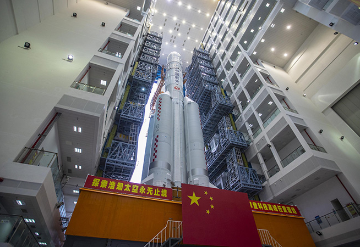
Commercial interests in the outer space domain calls for new innovative thinking if India has to be able to retain its presence. The Indian political leadership needs to take ownership of this domain and dictate new plans and priorities for the future.
Over and above the stated causes, reasons and justification, the Indian 'abstention' on the anti-Sri Lanka vote at the UNHRC this time was a 'message' in itself. Intended or otherwise, the 'message' was for the West-dominated 'international community' on the one hand, and the Sri Lankan stakeholders on the other.
With Narendra Modi pursuing a very active Indian Ocean region diplomacy, Maldives cannot be kept away from his outreach programme. Maldives is key to our strategic interests in the Indian Ocean and any instability or discord in its internal affairs would have a bearing on our security.
Modi does it again.
Across the world, workforces 'stranded' by technological, regulatory, or climatic change have become politically crucial to the rise of populism
Delivering the 30th Bhimsen Sachar Memorial Lecture for 2009 in New Delhi, the former Chief of the Army Staff highlights the flaws in India's strategic thinking and stresses the need for a more focused and clearly defined vision for the future.
Vietnam has its own difficult history with China. It is not surprising, then, that this emerging country is often seen as a linchpin in India's counter-encirclement and "Look East" policies.
With the objective of discussing India's strategy for oil and gas sector development, ORF, the International Energy Agency and the Korea Energy Economics organised a roundtable on "An Overview on India's Oil and Gas Upstream Sectors and Its Overseas Investment".
The Indian market has so far remained protected from the downside, with a rise of 20.1% over the past year, after Germany’s 32.4%, and the US’s 21.4%. Barring a slight overvaluation that may correct as the next quarter numbers deliver profits, there is little real risk to the India story.
India will be there at the G-7 to remind the West once again that it is playing an important role in the global oil market.
The Supreme Court has ordered the companies to pay the government not just the dues but a hefty penalty -- as well interest on both
India has to deftly navigate the TPP waters by making sure it does not isolate itself by staying out of the picture for too long. At the same time, actively committing to the TPP will be hard. India should pursue an incremental process, where it initially joins the discussions and then determines how well it is placed to enter as a member. India could bring much needed flexibility to the TPP and use it to boost its own ties with United States.
India's exports would go down if economic sanctions are imposed on Sri Lanka as sought by some people in Tamil Nadu, affecting farmers, manufacturers and suppliers in the State, says former President of the India-ASEAN-Sri Lanka Chamber of Commerce.
While viewing China through the prism of economic rivalry is unhelpful, so is judging it based on relations with neighbouring countries. Doing so is distracting, and makes India look insecure, with a developing country mind-set rather than that of aspiring superpower.
Earlier this month, the RIC forum meeting in Beijing supported India's aspirations to play a greater role in the UN. Recently, the Chinese spokesperson Hua Chunying too made some small change in its stance on UNSC expansion and India's aspirations. But still, it is not clear whether it is a distinct shift in China's policy.
Despite the worldwide call for a change in water management paradigm in favour of demand management and ecosystem restoration (also known as Integrated Water Resource Management), India still adheres to its archaic notions of water resource development.
India has long used its navy to build ties with maritime nations in the Indo-Pacific, but this exercise steps up collaboration by tying up with ASEAN as a group.
Started in 2009, the India-Bangladesh Security Dialogue provides a platform to discuss issues pertaining to bilateral relations and security cooperation.
India and China will need each other's markets and labour in the future. With rising wages, India can become an important outsourcing partner for China and more Indian finished goods can be sent to China. It could mean faster poverty reduction in India if growth with equity is the chosen path.
Burnishing their credentials as humanitarian champions is the name of the game, but their approaches differ
Trudeau may have rolled the dice but India will now have a big role in determining how it falls.
Senior journalists from India and China discussed various important issues affecting the India-China relations and the role of media in both the countries in giving a right perspective to issues and help improve relations further. The platform was the India-China Media Exchange, organised by ORF in Delhi in association with the Global Times Foundation.
China is now India's single largest trading partner and a big growing export market for Indian goods
India and China should begin a full-fledged dialogue on water resources in order to address the suspicion that China is diverting river water away from India, according to former Union Minister Jairam Ramesh.
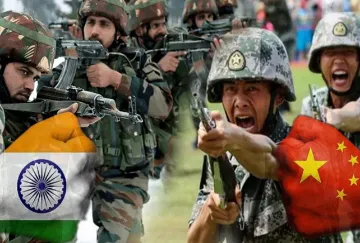
Notwithstanding the friendly rhetoric and promises of Chinese investment, India and China still have big problems between them. The biggest, as Narendra Modi's remarks at the press interaction noted, is the border.
Like several other countries in the Indo-Pacific, India is also hardening its policy posture vis-à-vis China.
India must contextualise France in a region-specific sense because in the Pacific the French are associated with colonial past and present.
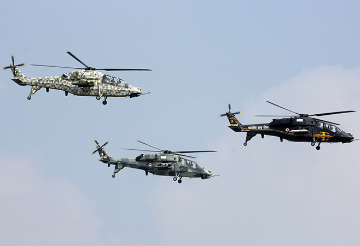
The strong strategic and political foundation as well as the trust between India and France provide for accelerated defense and security ties in the coming years.
After over a decade of declared intentions, India has finally decided to put money on the strategically important Chabahar project. It's a sad story of how bold intentions of leaders were stalled by the different perspectives in different ministries of the Government itself.
Dr P R Kumaraswamy, Associate Professor, School of International Studies, Jawaharlal Nehru University (JNU), New Delhi, initiated a discussion on ¿India, Iran and the US: The Problematic Triangle¿ at the ORF Chennai Chapter of the Observer Research Foundation on 22 December 2007.
India can leverage its traditional closeness to the Palestinians as well as its current friendly ties with Israel to help advance the peace process, even if in a small way. But this requires care and finesse, which is unlikely to be found in the parliamentary din.
Prime Minister Manmohan Singh's forthcoming visit to Japan for the annual summit comes at a time when both countries are faced with serious territorial frictions with China. Mr Singh and his Japanese counterpart Mr. Shinzo Abe will review China's assertive maritime postures and other major developments in East Asia.
Both Tokyo and New Delhi want to create a stabler Asian order by redefining partnerships in the region. Can India and Japan take the lead in this regard and form a concert of nations that would bring about balance of power in the Asia-Pacific?