-
CENTRES
Progammes & Centres
Location
15584 results found
Given his limited choices in stabilising Afghanistan, which include supporting a national election, US President-elect Donald Trump will find India to be a reliable and trusted partner in this process
The visit of Mr. S Jaishankar, India's Foreign Secretary, to Kabul this week came at the fag end of his trip to all the other South Asian neighbouring countries. During this brief visit, he met with Afghan President Ashraf Ghani and his Chief Executive Abdullah Abdullah and reaffirmed India's commitment to stay the course in Afghanistan.
The Indian Consulate in Jalalabad was the target of a suicide attack on August 3. The attack, though did not harm the consulate or any Indian personnel, resulted in the death of 9 bystanders.
The recent developments in the Afghan reconciliation process have evoked a new sense of optimism regarding a peaceful solution to the conflict in the country. First, there was the release of 26 prisoners, in batches, by Pakistan and then the two-day talks in Paris,
The key is to achieve peace within the Islamic Republic of Afghanistan — a system that is defined by its core values related to human rights, women’s rights, democracy, rule of law and political inclusion.
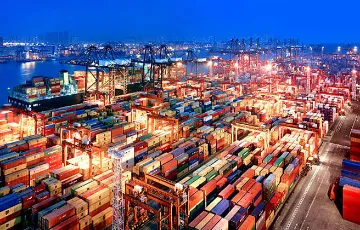
Mediterranean Shipping Co. has introduced a container service between India and Africa to "improve transit times and enhance delivery."
Given Africa’s unusual pattern of structural transformation, India could be a natural partner as far as the search for new development models is concerned.
Prime Minister Narendra Modi's muscular outreach to the world has evoked intense curiosity. Foreigners are lining up to check if we are ready to walk the talk. Does reality match the hype? It helps that India has a global reputation for gorgeous shopping ? the jewelry, the silks, the pashmina, fashion wear, all available at competitive prices.
India will have to learn the fine art of staring down the dragon to preserve its political space, while embracing China for some important economic opportunities. At Doklam, it did the former; will a different India turn up at BRICS?
Modi’s remarks aimed to put across an India that was ready to synchronise itself with the Trump administration’s goals, but the US president made it clear he wanted India to commit to “free and fair trade”.
Modi needs to emphatically clear the air to control the ramifications of Trump’s prattling.
It would be unwise to expect that Trump’s tweet represents a major policy shift. That Pakistan has been playing the US on the issue of support to the Taliban is no secret. If anything, Trump’s remarks are a manifestation of American frustration in getting Pakistan to behave.
The Poonch incident two weeks ago and in Uri indicate there is no fight left in the militants in the Valley.
Indian Navy requires at least 30 submarines to fulfil its commitments. But the Navy currently has only 13 subs - that too fairly old diesel electric conventional submarines . Shockingly, only half of them are operational at any given time.
Despite the optimism surrounding the potential dividends from India’s youth population, demographic ageing is underway. All but five of India’s 28 states have fertility rates below replacement levels, with the share of older adults growing faster than all other age cohorts. However, existing policies, laws, and schemes targeting older adults have fallen short. Poor drafting, limited implementation, and a disproportionate focus on youth needs
Be assertive close to home. But India should not shrink from distant waters, either.
The short-term military enlistment scheme, Agnipath, announced in June this year, is a radical departure from India’s past recruitment policies. This brief examines the military recruitment practices of other militaries such as those of the United States, China, Russia, and the United Kingdom. It finds that these Western militaries' adoption of short-term enlistment is driven by imperatives which may not apply in the Indian context. Ind
What India can learn from its recent successes in extradition, is to see the best practices it adopted, and implement it in its pending extradition requests.
A lot will depend on how the TNA and the NPC proceed during the upcoming fishers' talks in Colombo. For any fishers-negotiated solution to be effective, it has to have the cooperation of the Tamil Nadu and Northern Province Governments across the Palk Straits.
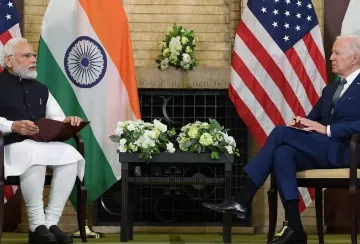
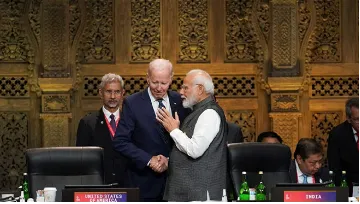
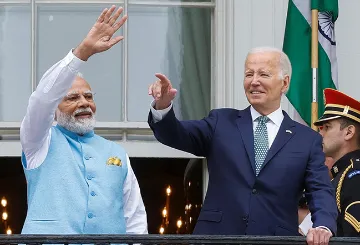
India-US defence ties are driven not only by business and commercial interests, but by the logic of geopolitics. Sustained bipartisan support in favour of burgeoning India-US ties is necessary.
The Observer Research Foundation’s first Tech Huddle was held on 23 November 2023 and focused on the governance of artificial intelligence (AI) in India, highlighting the rapid growth and adoption of AI as well as the complexities associated with developing regulatory frameworks for it. AI governance is in its infancy, both globally and in India, and grapples with issues such as the explainability of AI systems as well as the embedded biases, s
The importance of Air Defence (AD) in modern warfare has never been in doubt. It remains relevant, as “Operation Sindoor” demonstrated. AD systems have historically played a key role in the Order of Battle (ORBAT) of both India and Pakistan; they were put to the test during their recent military confrontation. This brief provides an overview of India’s and Pakistan’s AD systems, highlighting the relative strengths of the two countries’
The government should immediately stop this aviation pricing strategy if it wants to remain being seen as serious about raising investor confidence. One wonders, if the move by Air India has the prior approval and blessing from the Civil Aviation Ministry.
Making the NSA the chairman of the Strategic Policy Group of the National Security Council could be part of an effort to paper over the real problems relating to the dysfunctional defence system.
The al Qaeda video showing its current head Ayman al-Zawahari declaring a renewed bout of jihad in the Indian subcontinent has triggered widespread alarm in the region, especially in India. The alarm over a video may seem exaggerated but there are enough reasons for India to worry.
There are two epicentres of terrorism today. One is in the AfPak region, a byproduct of the Cold War. Another epicentre which has risen in the recent times is in West Asia, which in some ways represents the first post-Cold War conflict between various competing forces.
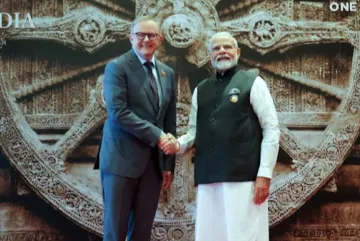
The visit demonstrated the diversified and comprehensive nature of the India-Australia partnership.
India’s engagements in the Indian Ocean reveal a tactically proactive but strategically defensive mindset
The tremors from the convulsions wracking the Arab world are being felt in India too, in the amplitude that the Hazare drama is acquiring. This may not be grasped immediately as independent India has an autonomous record of organising non-violent political and social protests
It has historically been assumed that while the nature of war remains the same—i.e., violence inflicted on the adversary to bend them to one’s will—the character of warfare changes with technology, organisation, politics and culture. This notion has changed. Over the past decade, the nature of war has also changed, with increased use of non-contact and non-kinetic modes of warfare expanding the battlefield spatially and temporally.
We will see the rise of a New World Order driven by national interest, reliability of partners, and of course, economic factors. India has to use a “Gated Globalisation” framework to negotiate this change.
The budget growth, clearly aimed at countering the challenge along the Sino-Indian border, is still marginal.
New Delhi and Canberra are likely to conclude the much-awaited Mutual Logistics Sharing Pact — as well as other agreements covering science and technology and public administration.
India’s imperatives in the East and West are not the same. But, both are important.
At a decisive meeting on the future of LAWS, countries such as Pakistan and Cuba have called for a pre-emptive ban, while others like US, Germany and Russia disagree.
If the U.S. partners with India for more efficient industrialisation and supports an "India exception" in global climate talks, it could be the kind of investment that cements ties between these two countries. From the perspective of a stable international order, it would be a big deal; from the perspective of climate talks, it is the only realistic path forward.
India’s desire to reconfigure the global balance of power is predicated on its ability to become an indispensable element in the global economic order. Thus, it is not surprising that the new foreign trade policy seems to shed the reticence of the past.