-
CENTRES
Progammes & Centres
Location
15597 results found
This brief seeks to apply ancient Indian strategic thought to the country’s approach towards its immediate neighbourhood. Employing a Kautilyan perspective on India’s allies within the broader framework of foreign policy end goals, it proposes a non-zero-sum view towards four of its neighbours: Bhutan, Bangladesh, Sri Lanka and Nepal. The brief classifies these neighbours based on the attitudes they exhibit and presents a nuanced approach tow
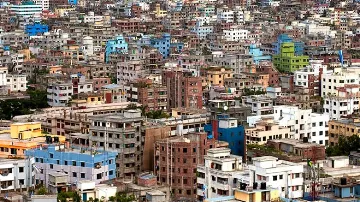
The Land Boundary Agreement between India and Bangladesh will strengthen cooperation on border management. The two countries should not only cooperate with each other in controlling cross-border crimes, but also work on improving the lives of the people on the border by encouraging cross-border trade.
The health of adolescents is crucial to achieving India’s Sustainable Development Goals (SDGs), and the Government of India has spotlighted adolescent health in various programmes and policies. However, substantial health challenges continue to affect Indian youth. This paper describes the health profile of adolescents in India and, in particular in Uttar Pradesh, one of the country’s least performing states in the domain of health outcomes.
Ensuring contestability and fairness in India’s digital market—one of the world’s most prominent—is critical to ensuring consumer welfare. This paper outlines a legal and regulatory framework that can ensure contestability and fairness in the Indian digital market. The paper identifies the following elements of this toolkit: (i) competition law; (ii) ex-ante regulation for digital gatekeepers; (iii) laws for increased transparen
When talking about Intelligence agencies, the first thing that comes to mind is secrecy ? the services must, it is widely concurred, operate in secret so as to be highly effective.
People living far away from zones of global conflict may underestimate their stake in the violence but it’s important to learn from the current moment of reckoning faced by the West.
A three-day conference on India-Myanmar relations generated a lively dialogue over questions surrounding the possible challenges and opportunities that India would face while redesigning her Myanmar relations and the Look East policies.
Liberalisation has given birth to two Indias. One which is prosperous and living first world lifestyles and the 'other' in which people are living without human dignity and suffering multiple deprivation. Regional disparities have also led to disparate standards of living.
With the UNHRC vote only days away, it was not a total give-away by India. The Prime Minister's statement in the Parliament implied that the tinkered second draft of the US Resolution too did not meet Indian expectations.
There is a strong case to be made for a deeper EU-India partnership against the backdrop of global uncertainties and ongoing wars, an assertive China, and the likelihood of a more transactional United States (US) under Trump 2.0. Meanwhile, the EU-India Roadmap to 2025 has run its course, and the EU-India summit of 2025 could be an opportune moment to release a fresh blueprint for cooperation. As the new European Commission’s agenda springs int
The rapid pace of digitalisation poses new national security risks for countries like India, a country with over 700 million internet users. The multilayered digital ecosystem comprising of infrastructure, devices and applications is complex, and security threats evolve at a breakneck pace. This makes it difficult for states to develop an effective response to individual or organisational security threats. India therefore has often had to resort
While talk of an alliance may be premature, there is clearly an increasing convergence of interests between the two strategic partners.
That Trump travelled to India without any substantive deliverable is the real story here
Global powers like the United States and China have spared little effort in attempting to shape the digital age in their image. At the same time, other powers like Japan and France, and emerging ones like India aim to play a part in building the global digital ecosystem. These latter three share similar values: democracy, freedom of speech, open access to digital resources, and sovereignty. They all desire to keep the digital commons intact and n
New realities confront New Delhi and Beijing.
This research provides an empirical analysis of India’s limited, but transformative position in the global nuclear order. By examining India’s bid for a Nuclear Suppliers Group (NSG) membership, this paper makes three major arguments. First, India’s attempt to acquire veto power status through the NSG challenges classical revisionism in international relations theory. Second, India’s rise through the NSG is based on selective coalition-bu
Defence has emerged as a key area of cooperation between India and African nations
During the meeting between the home secretaries of India and Bangladesh held in October this year, Bangladesh agreed to sign an extradition treaty and there has been major progress on this regard.
This paper outlines the responses of the US Congress and European Union (EU) parliament to the Indian government’s abrogation of Article 370 of the Constitution and the surrounding events, including the communications lockdown in Kashmir. It notes contrasting responses: the US Congress showed a binary reaction of moderate and extreme calls to action, and the EU parliament honed a more expansive approach to address India’s apparent “democrat
The Indian Navy has a bevvy of planned engagements this spring,. including with the UAE and France.
Most central banks across the globe are today seized with the idea of cryptocurrency, with countries like Sweden and China already embarking on their pilot projects. This paper argues that most of the proposed architectures for a Central Bank Digital Currency (CBDC) are not designed to mimic the paper currency in its digital form. It proposes an architecture that largely retains all the properties of a paper currency, with only one limitation—i
Evidence from several countries suggests that last-mile connectivity solutions—the transport options available to commuters from the origin of their journey to the point of accessing a public transit system—enhance citizens’ mobility and increase metro rail ridership. This brief evaluates India’s operational metro rail transit systems to identify the missing links in the provision and effective implementation of last-mile connecti
India is ready to take on a larger global role by being more nimble than ever in playing the great power game.
Russian President Vladimir Putin is scheduled to visit India in December 2025. The outcomes of the annual leaders’ summit will be largely determined by how India untangles the trade spat with the United States.
Pacific Small Island Developing States (PSIDS) are highly vulnerable to disasters emanating from the impacts of climate change, geopolitical tensions, and fluctuations in global energy markets. To overcome this, the PSIDS have committed to ambitious carbon reduction targets, and to adopting renewable energy and low carbon emission initiatives. However, they must contend with critical barriers, such as the lack of finance, capacity, and te
This report examines India’s dependence on undersea fibre optic cables for its financial well-being. It explains the complexities involved in the laying and maintenance of these cables, lists the vulnerabilities of the existing network, and makes a series of recommendations to progressively address them. These include a phased increase in the capacity of space-based internet services. The report suggests that the opportunity provided by the rec
The two countries’ geopolitical compulsions, especially regarding containing china in the indo-pacific, have translated into closer trade ties
America’s global hegemony is the sum total of its domination in various regions of the world like Europe, Middle East, or East Asia. Today when the Americans look at East Asia, they see a hugely enriched and militarily powerful China increasingly challenging them.
Manoj Joshi, “A Survey of India-US Defence Cooperation,” ORF Special Report No. 224, March 2024, Observer Research Foundation.
India has been witnessing rapid urbanisation in the last decade, particularly in its large and medium-size cities. As more and more people move towards cities and towns, it is imperative to build an understanding of how cities are geared in terms of growth and inclusion. In what ways do India's marginalised communities get excluded from the country's growing urban spaces? This paper studies how individuals and groups are included inor exclude
Last week India hosted two important visitors – Russian foreign minister Sergey Lavrov, and the US special presidential envoy for climate John Kerry. These were routine visits, one to lay the groundwork for a potential Russian presidential visit to India and the other to assess Indian intentions on climate
With a trade deal unlikely, New Delhi must calibrate the costs and benefits of the U.S. President’s political tour
A one-on-one Trump-Putin meeting being proposed by sections of the Trump Administration would be a big win for Putin who desperately wants recognition as a global statesman
Their collaboration highlights the power of strategic alliances and technological synergy
Amidst geopolitical shifts and multipolarity, New Delhi’s ties with Berlin could be vital in shaping a new global order
The different service arms of China’s armed forces are all undergoing substantial transformation, including exploring the possibilities of integrating Artificial Intelligence (AI) to boost their combat power and effectiveness especially in a time of war. This paper evaluates the significance and potential of AI in improving China’s military capabilities. Chinese official documents and their enunciation of military doctrine indicate that the c
Public angst against Aadhaar is not because of the technical effectiveness of the system, but the manner in which it is proposed to be used.
In an era of Asian strategic uncertainties and global power transition, India-Japan defence and security linkages have become particularly significant.
With surgical strikes becoming a tactical success the real triumph will be in achieving a strategic shift in Islamabad