-
CENTRES
Progammes & Centres
Location
15590 results found
Whether India deals with ISI or its 'plural' ISIS, the fundamental 'inimicalness' of the Pakistani state towards India will remain the same.
The Pashtun Tahafuz Movement is difficult for India to support because the movement owes its success to the absence of foreign funding or support.
Khan’s possible ouster is unlikely to bring any radical change in India-Pakistan relations. The bilateral relationship has plateaued since PTI came to power.
Pakistan's rational options now are severely limited. However, expecting the rational from Pakistan might be expecting too much. Here's what India needs to be prepared for.
India's interest lies in peace, not in coddling Pakistan, not necessarily in pursuing "most favoured nation" status, trade and visa issues with that country, but in ensuring it remains irrelevant in Kashmir and realises it is irrelevant. This will not happen by our mere say-so.
Pakistan has alleged harassment of their mission's staff. Its reaction may have something to do with the internal domestic scene and the forthcoming elections.
In contemporary conflicts, information warfare (IW) has shifted from a supporting role to the forefront, shaping perceptions, manipulating strategic narratives, and distorting democratic discourse. Since India’s Balakot airstrikes of February 2019—in retaliation for the Pulwama terrorist attack in Jammu and Kashmir that killed 46 paramilitary personnel—Pakistan has institutionalised IW as an element of its statecraft, targeting India. This
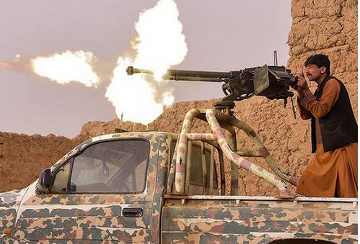
Pakistan started developing the Nasr in the mid-2000s and the first report about the missile came out after a test firing in 2011.
Islamabad will deploy all political and diplomatic tools to lobby in the West. But it senses failure
While these will not offer Pakistan a lot of leeway directly, they will give it more space to bring up issues that align with its own interests and deflect attention from India’s concerns
The COVID-19 pandemic has highlighted two features of the Nepal-India economic relationship: Nepal’s ballooning trade deficit, and unrestricted cross-border movement of people of both countries. Attributing the trade deficit entirely to supply-side constraints is neither accurate nor conducive to the overall health of the relationship. This brief suggests ways towards more sustainable trade relations between India and Nepal, among them, India r
World's two major democracies are getting better at riding through the bumps
Paradiplomacy as it is conducted by sub-state governments introduces the idea of decentralisation of political power to make regional governments prominent actors in the international sphere. This paper examines the scope for subnational diplomacy in India, as the country seeks to appreciate the significance of federalism and regionalism in promoting local interests, as well as identity, in current international politics. Regional governments ope
The concept of ‘gentrification’ has been studied extensively in urban agglomerations, specifically in tier-I and tier-II cities. ‘Gentrification’ is largely understood as the displacement of people belonging to certain classes in an area due to the influx of investment and affluent classes into that area. In India, settlements are based on religious and social vectors of caste, rather than economic vectors of class. With settlemen
Pakistan created the Taliban in the first place to capture Afghanistan politically. It is Pakistan's dangerous, anti-Indian ambitions in Afghanistan that are recoiling on it today, with the Pakistani Taliban as an off shoot of the country's chosen tryst with its anti-Indian destiny.
Interest of the people should take precedence in foreign policy formulations which have a direct impact on their lives. This was the overwhelming sentiment expressed by the people living on either side of the India-Bangladesh border during a field visit early May this year.
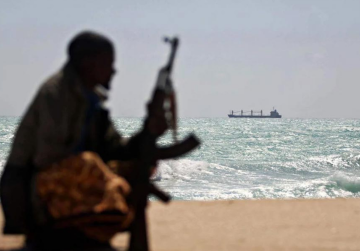
Piracy in the Arabian Sea has been coming dangerously close to the Indian shores. Piracy and sea terrorism also affect the security and commercial interests of major powers like China who seek to ensure continued supply of energy across the Arabian Sea. The pirates collect logistical data and raise funds for Al-Shahbab, in exchange for protection.
Since 2015, China has been undertaking a thorough restructuring of its military, under the leadership of President Xi Jinping. This has involved significant changes in the operational structure of the People’s Liberation Army (PLA), with the modernisation and optimisation of the military to bring about better jointness and overall efficiency. This paper examines the PLA reforms as they pertain to training and jointness in the Tibet Autonomous R
It seems that the distinctive workforce model that the sharing economy touts as vital to its existence may eventually be the reason for its downfall.
What does the future hold for this long-standing relationship?
Prime Minister Modi has come to symbolise an aspirational India who has been chosen as "an agent of change rather than continuity." Experts think it is unfair to judge him in such a short time. His success depends on whether the rhetoric of the elections would translate into governance.
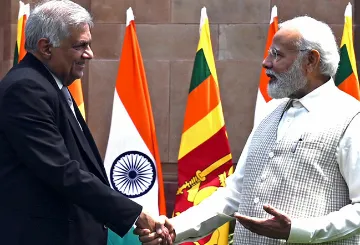
During his visit, PM Modi and President Mohamed Muizzu reviewed the entire gamut of relations and agreed to strengthen the multifaceted relationship by implementing the Joint Vision Document
To stop the coronavirus, the government will have to be there for its people in unprecedented ways.
Recent years have highlighted the global headwinds against China's increasingly aggressive moves in the Indo-Pacific region. Vulnerabilities associated with an overdependence on the country for several critical goods, including electronics, have exacerbated prevailing anti-China sentiments. This has provided the impetus for diversifying electronics supply chains, an opportunity India is well positioned to leverage. This brief assesses Ind
This paper examines the various constraints faced by India’s small and marginal farmers, which severely affect the productivity of their lands, and thus their incomes. These obstacles cover the gamut of farming activities, from production to storage, and accessing markets. A recent government survey has said that four of every ten of the country’s farmers disliked farming, and would prefer another occupation if given a choice. While the gover
This brief assesses the recent trends in India’s defence exports and analyses the institutional and policy frameworks that have enabled a change in the country’s approach towards defence exports, resulting in an upward trajectory. It offers specific policy recommendations to allow India to pursue its target of US$5 billion in defence export revenue. However, a discussion on the types and forms of weapons, platforms, systems, or sub-systems ex
Government agencies at the city, state and central level are paying greater attention to sustainable transport as the way forward for India’s mobility sector. However, for sustainability measures to have lasting outcomes in policy and practice, institutional reforms are urgently needed. The National Urban Transport Policy, which governs India’s urban mobility policymaking, was amended in 2014 to create city-specific, low-carbon mobility solut
New Delhi has enough regional ructions without another tense relationship to manage.
Brigadier V R P Sarathy (retd) initiated a discussion on Political Developments in Pakistan and Impact on India on Saturday 22, 2007 in ORF Chennai. He started his discussion on Pakistan's political development with Stephen P. Cohen's words: 'Pakistan is cursed by history but blessed by geography - always at the right place at the wrong time'.
The bilateral ties have had their share of irritants on issues initiated after the Trump administration took office.
The Bay of Bengal has emerged as a key arena for Sino-Indian competition due to its proximity to vital sea lanes, rich resource potential, and strategic geography. This paper analyses how China and India employ port development initiatives in the Bay littorals—Bangladesh, Sri Lanka, and Myanmar—to secure their economic interests, extend geopolitical influence, and mitigate strategic vulnerabilities. Through case studies, the paper highlights
The Electric Vehicle (EV) segment in India has gathered momentum in recent years, but a mismatch in intent and action has resulted in limited on-ground adoption of EVs. However, the expected growth of the automobile sector (especially in the personal-mobility space), due to the ongoing COVID-19 pandemic and people’s increased understanding of vehicular emissions, creates immense scope for the exponential growth of the EVs industry in India. Ess