-
CENTRES
Progammes & Centres
Location
15597 results found
Over the years, there has been an evolution in India’s policy towards non-proliferation-related export controls and the associated regimes. During the Cold War, India considered itself a target; beginning in the 1990s, its policy began to shift in keeping with economic liberalisation at home and changing global perceptions about the threat of proliferation. India’s nuclear weapon tests in 1998 gave it political space to claim credit for its i
North Korea's nuclear weapons capability and cooperative ties with Pakistan is a cause of concern for India. Amid reports of North Korea-Myanmar missile nexus, it becomes important for India not only to take stock of the situation but also to engage more with this reticent state.
The First R K Mishra Memorial Lecture was delivered by Major General Mahmud Ali Durrani. He was Pakistan's National Security Adviser till January 2009. A former Ambassador to the United States, General Durrani has been closely associated with Mr RK Mishra, and Observer Research Foundation, in promoting peace and dialogue between India and Pakistan
As long as both sides focus on reassuring their domestic constituencies rather than contradicting each other’s version of events, the chances of conflict are paradoxically lower. The problem is that in this crisis like any other, facts inevitably intrude.
As the decade long UPA tenure comes to a close, it is quite clear that Prime Minister Manmohan Singh and Union Commerce Minister Anand Sharma have not been able to persuade the Congress Party to see the strategic virtues of trade liberalisation.
Re-kindling “the special and privileged nature” of the strategic partnership of India and Russia at BRICS
It has never been a better time and never before has India come with this much strength to the negotiating table. In the end, reaffirmation and recalibration of Russia' role in India's future was prominent and the short and successful summit was capped by perhaps another nuclear submarine for India and a doctorate for Prime Minister Singh.
Saudi Arabia and India recently signed a defence cooperation agreement, signalling a shift in ties. This issue brief looks at the importance of Indo-Saudi relations from a geopolitical perspective, outlines the trajectory of their bilateral defence partnership, and emphasises the symbiotic nature of their relations and the increasing scope for greater cooperation.
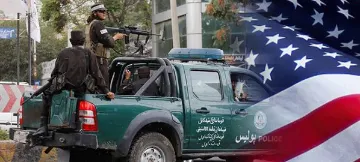
While there is common ground between India and the US in Afghanistan, the intricacies are complex, and for now only provide an ecosystem for New Delhi and Washington to work together on containing the Taliban.
The 4th India-Arab Partnership Conference, organised late last month as part of the Modi government's efforts to elevate the level of engagement between the two sides, echoed the new government's agenda of economic reforms and deeper economic engagement globally and regionally.
India should look at ways to become an active party in arms trade treaty debates if it has to prove its credentials in global governance. While advancing its global governance role, India will have to also ensure that its arms procurement is not adversely affected.
Anti-Satellite (ASAT) technology continues to proliferate in terms of both weapons and dual-use technologies. The three major powers-the US, Russia and China-have proven ASAT capabilities while several other space-faring nations are working on securing such assets. This Paper assesses the implications for India. It argues that ASAT technology will give the country significant asymmetric capabilities and prove to be an effective deterrent against
Proactively taking advantage of China’s involvement in the Taiwan Strait to fight China in multiple theatres is something Indian military planners should think about.
The financial crisis across the globe and the ensuing responses by nations and non-state actors has dominated both public consciousness and political debate in the recent past. The discussion on suitable stimulus packages, the causes for the financial disorder and future restructuring of the financial systems has often been dominated by the rhetoric of specific constituencies serving individual interests even as it loses sight of the substantive
Drawing a parallel with the SAARC, Dr. G. Sundaram, former Indian Representative to the EU, said the EU has overcome many issues of the kind of SAARC, and managed them better.
Some may look at it as the BJP trying to shape the 2024 agenda. But the euphoria is an attempt to project India as a global power seeking symbolic parity with major powers.
This brief reviews the crucial role of India in global climate politics and highlights the country’s partnerships on sustainable energy in Africa through the India-led International Solar Alliance (ISA). The brief finds that, beyond contributing to climate change mitigation, India—through ISA, in particular—is helping ensure energy security and sustainable livelihoods in sub-Saharan Africa by providing poor communities access to natural, ec
India has had modest success in its efforts to internationally isolate Pakistan as a state-sponsor of terrorism. More effective in this regard has been Pakistan’s own duplicity vis-à-vis the West. Indian discourse has not resonated abroad because it relies too heavily on respect for vague global norms rather than adherence to specific national interests, which are more easily comprehended by foreign governments. New Delhi’s previous failures
Prof. Arvind Panagariya of Columbia University argues that India has not actually emerged, as US President Barack Obama said during his visit to India, but it is in fact rising. He presented his assessment about India as a rising power during a discussion at ORF.
Worsening climate change will have impacts on global politics, creating new vulnerabilities as well as opportunities. India, given its emerging power status and high vulnerability to climate impacts, holds a key position in global climate action. This brief looks at the ways in which India has used climate policies to gain leverage. India has sought to incorporate the geostrategic uses of climate change into a wider shift in its foreign policy, i
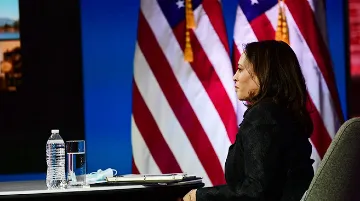
While Indian-Americans are delighted, many of them nevertheless see candidates through the lens of their attitude towards India
The kidnapping of Indians in Iraq in June this year and the increasing number of Indians reportedly joining the Islamic State (IS) has elevated the degree of threat to India posed by the Sunni insurgent group.
Delhi sides with the U.S. and Japan vis a vis China in this strategic strait. But it needs substantial improvements.
Recent changes have provided an opening for both sides to recalibrate ties.
Sri Lanka¿s new Foreign Minister, Lakshman Kadirgamar, has indicated the importance, and relevance of India to the Sri Lankan context, by visiting New Delhi within days of his being sworn in. His visit to India even before the conclusion of the Indian electoral exercise was testimony to the mood in Colombo for increasing New Delhi¿s role and involvement in the Sri Lanka peace process.
India has decided to adopt a wait and watch approach to the ongoing negotiations that aim to revive the trans-Afghan gas Pipeline (TAP) project. The proposed US$ 2.5 billion gas pipeline project is expected to transfer of 30 billion cubic meters of natural gas
Despite the challenge posed by the war, the India-U.K. relationship has been on an upward trajectory
A strategic partnership of two great democracies will counter the rising influence of techno-authoritarians.
India and the United States (US) have been cooperating in the health sector since the late 1960s. The cooperation has intensified in the past decade, riding on institutional structures established following the launch of the US-India Health Initiative in 2010. It has seen further expansion since the COVID-19 pandemic, and today covers a wide range of areas including disease prevention and combating infectious diseases, maternal and child
This primer offers a comprehensive overview of the current state of the India-United Kingdom (UK) bilateral relationship. It describes India-UK cooperation in the key policy areas of trade and investment, security and defence, technology and innovation, and migration and people-to-people ties. The paper also explores the divergences and tensions in this multifaceted partnership while forecasting a bright future for the bilateral.