3485 results found
In September this year, the Government of India banned the manufacture, sale and distribution of 328 Fixed-Dose Combination drugs (FDCs) after a protracted legal battle with manufacturers. The ban followed a report by a Supreme Court-mandated experts’ panel that not only was there no therapeutic justification for the ingredients in these drugs, but they can in fact pose health risks. This paper argues that the move against “irrational” and
Bangladesh is known as a moderate Islamic country. There is a strong and committed secular section, but this is dwindling in numbers
This paper examines the moral, ecological, and developmental imperatives of trans-species coexistence in urban India in the context of the 2025 Supreme Court rulings on Delhi’s stray dogs. Using the “prudent predator” thesis of Lawrence Slobodkin, it argues that humanity’s ecological imprudence, manifested in unrestrained urban expansion and biodiversity loss, threatens both planetary resilience and human prosperity. Drawing on Arne Naess
The reported ban on two television news channels in Uttar Pradesh has exposed the lack of rules when in face-offs between politicians (or perhaps, ruling politicians) and the media. There were earlier reports that the Central government had requested Google to take down posts that criticised it.
Restricting the flow of information, either by stopping broadcasts or banning physical books, is today an analogue problem. Given the porous digital borders, the government would find it difficult to block the documentary.
Trump's move is likely to be temporary, as he is keen to show that he has upheld his election commitments.
The benefits of strengthening physical connectivity in a geographically contiguous region are increasingly being recognised. These links are expected to increase economic activity and people-to-people interaction, leading in turn to regional and sub-regional integration. In this backdrop, the Motor Vehicle Agreement (MVA) signed among Bangladesh, Bhutan, India and Nepal is expected to facilitate cross-border movement of vehicles, thereby reducing
Saying that there is a proven link between the two types of terrorists - sectarian and Taliban -- Maj. Gen. Mahmud Durrani stresses the need for carrying out educational reforms and popularising a counter-narrative to Taliban's interpretation of Islam.
As part of a three-year research project undertaken by ORF and PRIO to study and analyse urban governance, urban security and environment related trends and concerns in selected regions of India, an international conference was organised on "Emerging Challenges in an Urbanising India: Governance, Security and Climate Change".
Waste-to-energy projects in India have historically been city-centric. As cities are well-served by LPG and CNG distribution systems, the Bio-CNG produced has to be used for either fuelling urban public transport, or moved to rural areas at considerable cost. Distributed production and distribution of compressed biogas (CBG) from municipal organic waste in rural and peri-urban areas could be a cheaper option for local consumers. Such prod
This brief discusses the challenges faced by urban local bodies (ULBs) in India in accessing urban climate finance (UCF), and proposes solutions based on successful strategies used by some of them. The hurdles include institutional barriers and limited capacity. The brief finds that ULBs that have met with success in accessing UCF overcame the obstacles through early sensitisation programmes and global network connections. It offers plausible sol

The Sundarban ecoregion, straddling India and Bangladesh, is home to the largest contiguous mangrove forest in the world. Parts of the forest are designated as World Heritage Sites in both countries due to their rich biodiversity. The natural areas of the Sundarban are influenced by human use and, in recent years, increasingly by climate change. This paper explores an institutional arrangement that could help identify and implement the options th
Stringent new capital requirements will choke off financing that’s urgently required to build infrastructure in the developing world.
Goals of universal financial inclusion have acquired new wings in India, with the mobile phone now seen as a catalyst in realising such aspirations. This brief analyses India’s performance in leveraging mobile phones for financial inclusion. It throws light not only on the various factors that have propelled the use of mobile banking, but also those that have served as obstacles for such use. The brief also proposes a strategy that has been dev
The unguarded optimism about reconciliation with the Taliban may seem misplaced, but the proponents of the concept are increasing in number. The success of a negotiated peace deal with the Taliban, however, will hinge on the sustainability of the power-sharing arrangement that emerges as a result of conciliatory talks. Whether the Afghan government, or the international community will be able to devise an effective peace-building strategy in the
Aiming to secure their marine resources in the Bay of Bengal, India and Bangladesh settled their maritime boundary in 2014. Despite the delimitation, however, fishers from both countries continue to commit unlawful forays into each other's sovereign waters, leading to the enforcement of punitive measures against those accused or convicted. Such incidents not only jeopardise the fishers’ livelihoods, but repeated occurrences also nettle relation
The traditional urban narrative does not conceive of the relationship between food and city in direct terms. In this narrative, urbanity can be industrial, technological, cultural and innovative—and by extension, its spaces can host factories, institutions of all kinds, governments and corporations, and entrepreneurs. But urbanity cannot be agricultural—and by extension, its spaces cannot host fields, seed banks, poultries, dairies and anythi
Though Foreign Secretary Sujata Singh's Bangladesh visit was kept low key, the timely interactions she had in Dhaka helped India shed its image of a reluctant neighbour besides helping her make a realistic assessment of the situation there and evaluate possible fallouts on regional stability.
The Rohingyas are among the world’s most persecuted communities, who, until a mass exodus in 2017, mainly resided in Myanmar’s Rakhine State. In 2017, about 712,179 Rohingyas made their way to Bangladesh, taking the total number of Rohingya refugees in that country to 855,000.[1]The overcrowding caused by this influx at the Cox’s Bazar refugee camps has led the Bangladesh government to consider temporarily relocating the Rohingya refugees t
Cities across the globe are increasingly using materials such as concrete, which store more thermal energy than natural materials and absorb sunlight rather than reflecting it, warming their surroundings. This ‘urban heat island’ (UHI) effect has consequences on health, ranging from heat exhaustion to cerebrovascular events and circulatory failures resulting in death. Compounding the challenge is that the impact of extreme heat on health is u
Despite sharing a close historical relationship based on the Soviet Union’s support during the 1971 Liberation War, Bangladesh had for long been out of the scope of Russia’s foreign policy priorities. This is best exemplified by the fact that no Soviet/Russian foreign minister had visited the country until September 2023. However, amid Western sanctions due to its war in Ukraine and tensions with the US, Russia is seeking to reinvigorate ties
Gender-responsive budgeting (GRB) is a targeted fiscal instrument that several developing countries have cemented into their growth plans. GRB is used to ensure that policy prescriptions to alleviate gender inequality translate into outputs by linking them to budgetary allocations. Although the concept was introduced in India, Bangladesh and Rwanda at around the same time (the early 2000s), the three countries have followed different routes and a
A deal with Taliban will bring war to rest of the world.
Growing urbanisation and its resultant problems and issues have drawn the attention of international organisations, national governments and the civil society. The United Nations (2012) has reported that while "unprecedented increase in urban population will provide new opportunities to improve education and public services in Africa and Asia,...
The 2011 anti-corruption movement in India—characterised by a huge trust deficit in the political class—was the culmination of several such localised movements that marked the birth of a new civil society in contemporary urban India. This paper studies the profusion of middle-class-led associations in Mumbai fighting for good governance, and their increased political mobilisation in the city. It argues that a new civil society bypasses electe
Wetlands are important ecosystems that provide benefits such as flood control, water purification, and biodiversity conservation. In India, however, wetlands are threatened by pollution, encroachment, and rampant real estate development. This brief assesses the East Kolkata Wetlands to illustrate the challenges of preserving urban wetlands in India. It also presents recommendations to establish more comprehensive wetlands management and conservat
President Barack Obama's State of the Union address to the US Congress begins with America's recent military engagement in self congratulatory terms. Among the more modest claims is: "For the first time in two decades, Osama bin Laden is not a threat to this country".
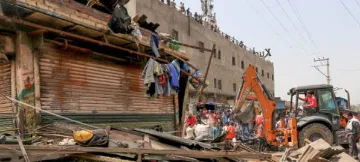
At a roundtable on the situation in Bangladesh, experts underlined the need for ensuring a credible election in Bangladesh for the country's stability and the strengthening of India-Bangladesh relations.
This paper argues that India’s housing strategy should not be confined to merely creating affordable housing stock to tackle the shortage, as such an approach is myopic. Instead, a sound housing strategy must be informed by an adequate understanding of the multiple facets of housing poverty, including the factors that are responsible for the proliferation of slums. The blueprint offered in this paper understands an effective housing scheme as a
Urban India is mimicking the social and cultural structures of inequality thereby also creating fault lines for future conflicts
Even a flawed Afghan government will be better than the Taliban rule, but the US appears to accept any deal in a hurry to get its "boots on the ground" out of Afghanistan.
New Delhi is set to take on a greater role in Afghanistan’s peace process.
It's time policy mandarins remove their blinkers and jettison their vested interests to learn the sharp and focused lessons that history of science teaches so beautifully