3485 results found
Living conditions in fast-growing rural areas across India are deteriorating due not only to the impact of urbanisation but the lack of capacity of the local governments to manage such transitions. This brief makes the case for changing the administration status of such areas from “rural” to “urban”, establishing urban governance mechanisms therein, and making them resilient. For identification of such areas, the state government’s opin
India ranks 10th out of 46 top medical tourism destinations in the world, owing to its affordable healthcare facilities and capabilities in specialised treatment. This paper is focused on medical tourism as a pillar of India-Bangladesh partnership. Notable numbers of Bangladeshis seeking medical care visit India annually; of the typical destinations of these “medical tourists”, Kolkata, the capital of West Bengal, is among the most preferred.
Amid the ongoing fundamental changes in the international order, such as the growing bipolar competition between the US and China and the promotion of multipolarity, middle powers may take more ownership of conflict points such as Afghanistan. To comprehend this possibility, it is important to trace the evolution of middle powers in the Persian Gulf. This paper looks at the complexities of the Gulf middle power states, with Afghanistan as the the
India and Bangladesh’s relationship has been growing steadily over the past few years, especially since Bangladesh Prime Minister Sheikh Hasina came to power in January 2009. In 2019, Indian Prime Minister Narendra Modi described the relationship as being in its “golden era (Sonali Adhyay).” Indeed, Bangladesh is at the centre of India’s flagship ‘Neighbourhood First’ and ‘Act East’ policies, and has been crucial in ensuring peace
Analysts attribute the fall of Kabul to the Taliban in August 2021 to various factors. These include geopolitical shifts, and the Taliban’s tactics of warfare. However, fewer attempts have been made to understand the Taliban’s victory through internal mobilisation. This brief attempts to fill the gap, and examines the role of identity, grievance, and greed in the Taliban’s mobilisation and its contribution to a successful insurgency. It out
Emphasising that majority of Taliban cadre can be won over for establishing peace in their war-torn country, Afghan government spokespersons said the peace initiative would become successful once ordinary Afghans realise that international forces are not going to remain in the country indefinitely.
Prime Minister Narendra Modi's visit to Bangladesh after the land boundary settlement is a step with far-reaching strategic implications. The two countries can now take their bilateral ties to a much higher level.
Modi's visit to Dhaka is likely to focus on greater economic cooperation and engagement. Some of the major highlights of the visit will be on rail, road and water connectivity as well as coastal shipping services.
Today, India is poised at the moment and GDP that China was in in 2007. Does it have the same gumption?
While India was part of the Moscow Format talks, it’s also a member of the new Middle East Quad.
The bulk of the new banking consumers are digital natives and don’t think of branches as an interface for financial transactions
Bangladesh has seen massive demonstrations in favour of the Rohingya refugees, particularly from Islamist parties and organisations whose sympathy is driven by religious affiliation.
Myanmar's unsettled scores on the border front once again took an ugly turn when its border guards police exchanged crossfire with its Bangladesh counterpart for three days from 28 May. A Bangladesh border guard personnel was said to be killed.
International trade contributes to economic development, employment generation, industrial growth, and infrastructure expansion. This is especially true for emerging economies such as India, whose bilateral trade with the United States (US), its largest trading partner, is valued at US$41.2 billion. Recent US tariff hikes have adversely affected key Indian industries, including electronics and electricals, gems and jewellery, mineral fuels, and c
Globally, there is an upsurge of sectarian movements and informal community-based organisations that affect the daily lives of the urban poor in the way they provide for their need of tangible goods and services.
Big ticket reforms promised by Mr. Narendra Modi are likely to resume stalled projects and revive business climate. However, if India is to return to its erstwhile double digit growth, the importance of banking sector reforms cannot be overstated.
The day and age of centralised and linear town planning approaches are over. Conceptually, the urban planners, architects, designers, builders and policy makers have to make a conscious efforts to humanise urban planning to make it part of the larger ecosystem of social sciences.
The Australian presidency of the G20 has witnessed a focus on the fundamentals: trade, tax issues, infrastructure, employment and banking.
Lieutenant General Iqbal Karim Bhuiyan's appointment as the new Chief of Bangladesh Army on June 25 has evoked a keen interest in India and elsewhere. There are two reasons for this interest in an other-wise routine succession--General Bhuiyan succeeded General Abdul Mobeen on his retirement.
The government has to ensure that rural roads are constructed and not just "state of the art" modern highways. The interests of the rural people have to be protected, and the government has to regulate and monitor the private sector's participation.
The government has been firefighting since FY 2019 using mostly Band-Aids of the cheapest kinds.
The Delhi Government's Bhagidari programme with all its pitfalls and challenges comes as a refreshing idea in the context of urban governance. Given its potential to transform state-ctizen interface, there is need to give it statutory backing. Also, there is enough space for forther improvement of the programme.
Emerging technologies have the potential to reshape our world. These innovations, also called disruptive technologies, have started to seep into the area of finding solutions for mobility. Is existing infrastructure prepared for such technological advancements? These and related themes were discussed in a roundtable organised by Observer Research Foundation (ORF) on 8 February 2016. The roundtable, Urban Transportation and Disruptive Technologies
A suicide terrorist attack on 26 August in the capital city of Nigeria turned global attention on a little-known terrorist group which has potential of emerging as a threat to Western interests in Africa.
Bangladesh's stake in the Bay of Bengal has increased following the order of the International Tribunal on the Law of the Seas (ITLOS) in the dispute regarding delimitation of the maritime boundary with Myanmar.
As global and urban populations continue to grow, and climate change threatens food security, it is imperative that cities—often the largest food consumers—contribute to its production through urban agriculture. Urban agriculture comprises food and non-food products grown for self-consumption or sale. Entrepreneurs, non-governmental organisations, and citizens worldwide are adopting new technologies to optimise production amid space c
The demand for basic needs has outpaced supply in many cities of the world. This fact is observed in the urban housing sector. High economic growth along with urbanisation has created a huge demand for housing, and according to recent estimates, there is a massive shortage of dwelling units in many urban areas of the world.
Preparation of a town/city plan is a comprehensive exercise involving collection, tabulation and analysis of data on numerous urban development indicators. The enormous amount of time, labour and resources involved in this process usually go to waste as compliance to plan proposals is often quite minimal.
The Modi Government is reportedly trying to bring a legislation which will overhaul the antiquated bankruptcy law. Now whether the government will succeed or face the same obdurate tyranny of numbers as recent other reform bills remains a matter of conjecture.
In the Afghanistan peace process, Pakistan's significance lies more in its capability to play a destructive role than a constructive one. It is capable of scuttling the peace process and can stoke violence by supporting groups like the Haqqani network and engineer attacks against the government or foreign troops in Afghanistan.
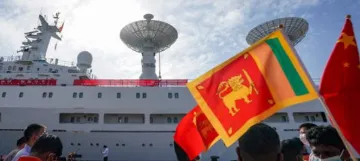
As tensions between Kabul and Islamabad threaten the fragile peace process in Afghanistan, the Taliban's role as a proxy for Pakistan's interests has come back into sharp focus again.

India's interest lies in ratifying the Land Boundary Agreement with Bangladesh because this would not only boost the image of the country but also establish India's reliability in delivering promises. Political parties need to rise above their narrow and short-term political interests and see the larger picture.
Interest of the people should take precedence in foreign policy formulations which have a direct impact on their lives. This was the overwhelming sentiment expressed by the people living on either side of the India-Bangladesh border during a field visit early May this year.
India's potential engagement with Taliban officials marks a significant policy shift amid geopolitical realities, raising concerns for national security.
Experts at the event opined that it is a win-win situation for India and Bangladesh to have a functional river, rail and road network.