3485 results found
With six months left for parliamentary election in Bangladesh, politics is likely to warm up, charting a new course in the process. Opposition Bangladesh Nationalist Party's (BNP) landslide victory in five city corporation elections suggest that the party has gained strength after facing a humiliating defeat in the 2008 parliamentary election.
Politics in Bangladesh got a new twist this week following the formation of a new poll time government. The main purpose behind the formation of this government was to ease up the political crisis regarding the nature of government to supervise the general elections.
BRICS is in transition and cannot afford to lose growth momentum. Multilateral institutions such as a BRICS Bank can aid in sustaining directed, equitable and resilient growth.
There is a need for a threadbare analysis of smart city model in the Indian context to build urban infrastructure.
This institution can play a key role in funding SDGs
Bangladesh was one of the few countries in the world to sustain a positive economic growth rate during the COVID-19 pandemic. Today, however, it is experiencing symptoms that could stall such impressive record: rising divergences in the government’s fiscal balance; the precarious Balance of Payments situation; rapidly declining foreign exchange reserves; demand-supply gaps in the energy markets; and inflationary tendencies. The exogenous shocks
A private sector-oriented Global Green Bank is required to overcome the market gaps that prevent Global North capital from flowing to the best decarbonisation investment opportunities among Global South enterprises. The Global Green Bank should operate as a world-class investment firm, capable of developing innovative financial solutions and investing through externally raised investment fund-of-funds and its own proprietary book. Such a Global G
India must persist as future of South Asia is embedded in a firm Delhi-Dhaka engagement.
The Land Boundary Agreement between India and Bangladesh will strengthen cooperation on border management. The two countries should not only cooperate with each other in controlling cross-border crimes, but also work on improving the lives of the people on the border by encouraging cross-border trade.
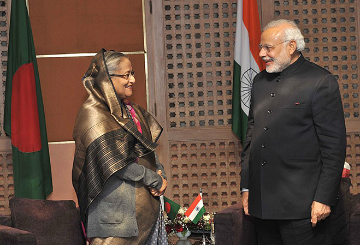
During the meeting between the home secretaries of India and Bangladesh held in October this year, Bangladesh agreed to sign an extradition treaty and there has been major progress on this regard.
The unspeakable tragedy of the floods in Pakistan, on a scale unknown to man, has dwarfed much else in the region: 100 shot dead in three days of political, ethnic and sectarian violence in Karachi,
Most central banks across the globe are today seized with the idea of cryptocurrency, with countries like Sweden and China already embarking on their pilot projects. This paper argues that most of the proposed architectures for a Central Bank Digital Currency (CBDC) are not designed to mimic the paper currency in its digital form. It proposes an architecture that largely retains all the properties of a paper currency, with only one limitation—i
India has been witnessing rapid urbanisation in the last decade, particularly in its large and medium-size cities. As more and more people move towards cities and towns, it is imperative to build an understanding of how cities are geared in terms of growth and inclusion. In what ways do India's marginalised communities get excluded from the country's growing urban spaces? This paper studies how individuals and groups are included inor exclude
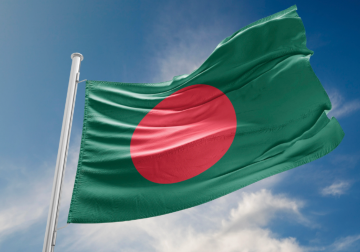
Bangladesh’s sensational growth story masks some concerning structural weaknesses that are now coming into play.
There has clearly been a Modi effect in the assembly polls, but but whether or not there is a Modi wave in 2014 will depend on just how the BJP uses the momentum it has now gathered. And the stunning performance of AAP in Delhi signals the arrival of the urban discourse into national politics and the breakdown of identity politics of yore.
The trends emerging from Odisha and Chhattisgarh following the latest kidnappings of popular officials confirm to a certain global pattern - desperation leads to unpopular acts. These measures suggest they become considerably weaker and are making desperate attempts to wage easy propaganda.
A select group of urban sector professionals in the government and the civil society acknowledge that the problems of inequity observed in almost all Indian towns and cities could be overcome by adopting a balanced and participatory approach to urban development.
More than six months into his tenure, Afghan President Ashraf Ghani is possibly as far from achieving a breakthrough with the Taliban. There is no unanimity in the Taliban for peace talks. And Pakistan's failure to bring the Taliban to the table could possibly be a reflection of its limited influence over the group and a bigger obstacle to the talks may be the Taliban itself.
The change in leadership in Kabul has provided a new opportunity for the US and Afghanistan to work together. Media reports suggesting a larger role for the United States post-2014 than originally envisaged have been doing the rounds for the better part of the past six months.
The security situation in Afghanistan is deteriorating and there is an overall sense of anxiety about a possible economic collapse and a Taliban takeover. The role of Pakistan and China will add to India's challenging task to ensure stability in Afghanistan in the next few years.
Much has already been written about both the drawdown of US troops from the region, and the recent Iranian nuclear deal and the possible impact it could have on Iran-US relations.
A decade after the 'Twin Towers' came crashing down in New York, the US has given its blessings for the Taliban to open its political office in the distant West Asian State of Qatar.
For the first time, Taliban and Government representatives met publicly on June 27 in Japan, signalling another round of parleys between the belligerents to find a negotiated end to the insurgency.
As Africa urbanises amid a warming climate, climate-smart food systems offer a path to resilience, sustainability, and shared prosperity.
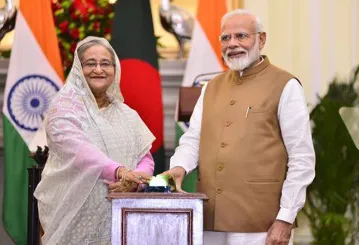
India and Bangladesh relations got a major boost following the signing of two agreements, an extradition treaty and a liberalised visa agreement between the two neighbouring countries.
The visit demonstrated the diversified and comprehensive nature of the India-Australia partnership.
This report examines the role of the United States Agency for International Development (USAID), the National Endowment for Democracy (NED), and their grantees—the International Republican Institute (IRI) and the National Democratic Institute (NDI)—in shaping political outcomes in Bangladesh. The analysis is set in the backdrop of the ouster in 2024 of Prime Minister Sheikh Hasina’s government. The report examines allegations of covert infl
At a decisive meeting on the future of LAWS, countries such as Pakistan and Cuba have called for a pre-emptive ban, while others like US, Germany and Russia disagree.
The global effort to meet the targets set by the Paris Agreement on Climate Change and the Sustainable Development Goals will depend crucially on reforming the structure of development finance. Mobilising private capital will be an essential part of this effort, and existing development finance institutions, led by the complex of multilateral development banks (MDBs), will have to re-orient their strategies and functioning to prioritise this mobi