3485 results found
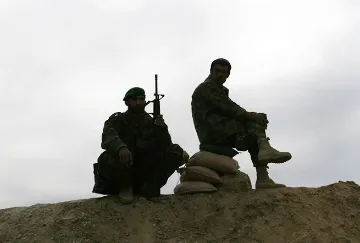
We could soon see America leave Afghanistan's brutal war half-finished. The implications of this will be dreadful for ordinary Afghans. This is no good news for India either.
Pakistan's Inter-Services Intelligence, which is threatened by the formation of the Narendra Modi government in Delhi, have been reactivating networks of LeT and Jaish-e-Mohammad in Kashmir since May/June 2013.
The purpose is to create, through law, a permanent threat to hang over every single Muslim head in India
The Teesta is a major source of sustenance for India and Bangladesh as agriculture has evolved in the catchment areas of the river in both the countries.
While there is common ground between India and the US in Afghanistan, the intricacies are complex, and for now only provide an ecosystem for New Delhi and Washington to work together on containing the Taliban.

Though the relationship between India and Bangladesh is at its best and the two countries currently share great warmth in their relations, India should take some more steps for the benefit of the people of Bangladesh to sustain the warmth, opined members of a delegation of journalists from Bangladesh.
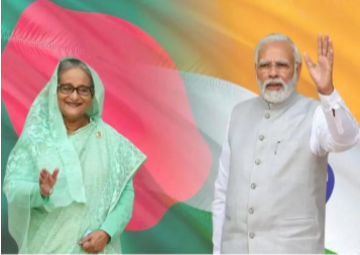
The visit of Prime Minister Sheikh Hasina had put relations on a higher plane and the overall situation in Bangladesh had turned for the better in 2006
India will gain very little by taking the lead in this venture. It already holds the rather envied position as the strongest economy within the region. SDB can hardly be expected to raise its global image or position.
The Manmohan Singh government has placed high stakes on a new diplomatic breakthrough with Bangladesh, and therefore should constantly look for ways to top up cooperation for fear of reviving Sheikh Hasina's retrograde opponents
The fourth India-Bangladesh Security Dialogue, organised by ORF in association with the BEI, Dhaka, stressed on the need for the Indian government to be more proactive in the promotion of its ties with Bangladesh.
Banking to be inclusive would require greater financial literacy and gender equality. All banks should include women, especially poorer ones, in their financial services. Perhaps later on, more banking licences would be granted, perhaps even to big industrial groups.
The new political leadership in Delhi has given a ray of hope for the prospect of regional cooperation. In this regard, it is very important for India to understand how it is perceived by neighbouring countries in the South Asian region, says Bangladesh's Deputy High Commissioner Mahbub Hasan Saleh.
A diplomatic visit highlights the cautious engagement between New Delhi and Kabul.
Noting that India, Bangladesh and Nepal are transiting poor economies, Jayshree Sengupta, Senior Fellow, ORF, says there is an urgent need to focus on holistic development in these countries and enhanced connectivity between them to improve economic relations.
India's obsession with Pakistan is making it overlook its relationship with other neighbours, observed Bangladesh scholar Rounaq Jahan during a discussion on Bangladesh at Observer Research Foundation.
Started in 2009, the India-Bangladesh Security Dialogue provides a platform to discuss issues pertaining to bilateral relations and security cooperation.
Bangladesh Prime Minister Sheikh Hasina's visit to India in January 2010 and the Joint Communiqué issued jointly by both the countries infused a renewed vigour in the bilateral relationship which, till then, was floundering.
US special representative Zalmay Khalilzad’s visit, a mere formality, should act as a wake up call for Delhi.
Keeping in mind the historical and civilisational ties of India and Bangladesh and their geographic proximity, ORF-Kolkata undertook a year-long study on India-Bangladesh connectivity, using extensive field visits and interviews with relevant stakeholders. The findings of the study were collated in a report, titled, India-Bangladesh Connectivity: Possibilities and Challenges, and released just before the visit of Prime Minister Narendra Modi
Participants at a Consultative International Workshop on India-Bangladesh Connectivity: Possibilities and Challenges, organised in Kolkata, emphasised the need for a common transport policy for the entire region.
At the release event of the report on India-Bangladesh Connectivity: Possibilities and Challenges, participants stressed the need for leveraging the positive political climate and emphasised pro-active role of state governments in cross-border connectivity.
This brief analyses the efforts of India and Bangladesh to strengthen their defence cooperation, in the context of the series of agreements and Memorandum of Understanding (MoU) signed between the two countries during Prime Minister Sheikh Hasina’s visit to India in April 2017. Some quarters in both countries are sceptical about the agreements, citing the ineffectual Treaty of Friendship, Cooperation and Peace—often referred to as a ‘defenc
The main objective of the Dialogue was to explore the security perspectives of India and Bangladesh, with special focus on the threat of terrorism in the region
Indian diplomacy seems to be drawing a blank when it comes to regional cooperation involving fine diplomacy and seasoned statecraft. The recent events relating to India's attempts towards getting natural gas from Bangladesh and Myanmar and the negative response from Bangladesh suggest that it is unlikely to obtain any gesture of
This Issue Brief seeks to highlight key issues which the Narendra Modi government should prioritise in its relations with Bangladesh. It also suggests some additional steps that can be taken to strengthen relations between the two countries.
India has a stake in Bangladesh not only for the security of its eastern borders but also for other strategic advantages. Therefore, it cannot afford to let go of the recently achieved opportunity to break away from the past trajectory and establish new contours of engagement with Bangladesh. In many ways, this is a rare opportunity for both the countries to talk with each other and resolve differences.
Considering the great improvement in India's relations with Bangladesh, Prime Minister Manmohan Singh, during his visit to Dhaka, should unilaterally offer to convert half of the $1 billion soft loan given to Bangladesh earlier into a grant and make the rest interest-free as a gesture of goodwill and friendship.
Farooq Sobhan, President of the Bangladesh Enterprise Institute and former Foreign Secretary of Bangladesh, addressed the ORF Faculty on March 12, 2008. In his speech, he stressed on building a strong relationship between India and Bangladesh by encouraging greater connectivity and investments. Both countries, he felt, should leave behind the baggage of mistrust and neglect and recognise that they can gain much through a closer relationship.
This brief offers a way to rethink the ongoing dispute between India and Bangladesh over the former’s plan to build a high dam on River Barak (known as Surma-Kushiyara and Meghna in Bangladesh) at Tipaimukh in the state of Manipur. It identifies the origins of different sources of water for Bangladesh’s Haor, the region that is widely feared to be under threat by India’s planned dam. The brief recommends the conduct of a comprehensive study
As the Indo-Pacific region takes centrestage in international affairs, various stakeholder countries are engaging in different forms of economic and strategic cooperation. While such cooperation is implemented largely through bilateral or multilateral forums, certain countries are partnering to promote infrastructure connectivity in third countries across the region. This brief explores one such partnership that holds promise—that of Indi