3485 results found
A delegation of visiting Members of Parliament from Bangladesh, taking part in an interaction with academics, media-persons and ORF faculty, hoped that the new government in India would take the relations between the two countries to a different level.
It would be useful if India adopted a more generous approach towards resolving some of the contentious issues which have hindered a stronger bilateral relationship
Its 11th General Elections have in fact left Bangladesh poorer in terms of its democratic processes, diversity and freedoms.
Delivering the 4th RK Mishra Memorial Lecture, Bangladesh's Foreign Minister, Dr Dipu Moni, called for a Ganges-Brahmaputra-Meghna Basin Regime, going beyond the boundaries of Bangladesh and India, to address the common realities of our region.
Rather than rushing to deport people, the new Modi government needs to carefully weigh a solution that will benefit all stakeholders. After all, friendly relations with its neighbors is in India's interests.
Bangladesh have witnessed changes in the last eight years, but they were not enough, according to speakers at a conference on India's relationship with Bangladesh.
Since August, there has been a continuous flow of Rohingya refugees into Bangladesh from Myanmar. The number has now crossed half a million.
Bangladesh's journey of democracy did not have a healthy start and it is still struggling with establishing a fully functioning democracy as is seen by the presence of confrontational politics and the dysfunctional parliament, according to former Bangladesh Major General Muniruzzaman.
Bangladesh, like many countries, is struggling with the challenge of the Chinese-origin Covid-19 as well as corruption charges against health officials.
Bangladesh needs to be commended for its efforts in fighting the rightwing militancy. The anti-militancy drive initiated by the Awami League Government in 2009 was further intensified in 2010
Bangladesh is one of the fastest growing economies globally. Over 90 percent of the country’s international trade is through the ports of Chattogram and Mongla, which also provide the neighbouring countries an access to the sea for trade and connectivity. This paper seeks to assess the significance of the two seaports in advancing Bangladesh’s domestic trade development, and their role in facilitating maritime commerce in the Bay of Bengal re
Though the Hasina Government is pursuing an active counter-terrorism programme and has succeeded in controlling the activities of various radical organisations in the real world, it has failed to curb their activities in the virtual world.
Sheikh Hasina has guided her country’s policy wisely and adroitly, making Bangladesh the best performing economy in Asia.
Securing Bangladesh's energy supply in the face of its growing needs has been the primary motivation for the country to sign the recent agreement with Russia for cooperation in the peaceful use of nuclear technology.
The so-called crack-down on religious extremist elements ordered by Prime Minister Khaleda Zia of Bangladesh has been selective.
Media in Bangladesh recently reported that China is all set to win the contract of the coveted deep-sea port in Sonadia, a small town of 9 sqkm offshore of Cox's Bazaar in Chittagong division.
The future of Bangladesh’s RMG sector is intertwined with the resumption of economic activities in Europe and the US, and a surge in demand.
On 5 January, parliamentary elections were held in Bangladesh. They were boycotted by the opposition Bangladesh Nationalist Party (BNP)-led 18 party alliance, allowing the Awami League to win the election with two thirds majority and with very little opposition.
The settlement of the maritime dispute between India and Bangladesh has ended the energy politics in the Bay of Bengal region. The verdict from The Hague-based Permanent Court of Arbitration (PCA) has removed obstacle for Bangladesh to exploit the rich hydro-carbon reserves in the Bay of Bengal.
Recently security agencies arrested 12 activists of the banned militant organisation Harkatul Jihad in Bangladesh. These arrests revealed that the group was preparing merger with the South Asia chapter of the international militant organisation Al-Qaeda.
India-Bangladesh relations got a major boost with Foreign Secretary Nirupama Rao's three-day visit to Bangladesh in June this year. This has also brightened the prospects of visit of Indian Prime Minister Manmonhan Singh to Bangladesh.
Indian High Commissioner to Bangladesh Pankaj Saran had a narrow escape as his car was attacked in Khulna. Initial investigation showed that the bombs were of low intensity.
Bangladesh witnessed the worst kind of political violence in the past few weeks following a series of protests called by the Opposition Bangladesh Nationalist Party (BNP) and its ally Jamaat-e-Islami (JI).
The ongoing upazila elections in Bangladesh are a move to deepen democracy at the grassroots. Since the election came just after the parliamentary polls that took place in January and was boycotted by main Opposition Bangladesh Nationalist party (BNP),
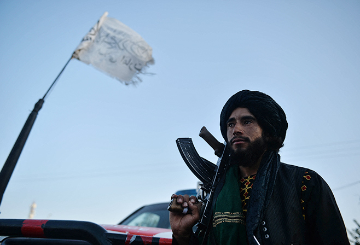
The violent incident on the streets of Dhaka involvingJamaat-e-Islami (JI) activists on September 19 has ignited fear among the people of Bangladesh that the country might again slip into a reign of chaos and unrest.
After a year of comparative stability in 2014, politics of hartal (street agitation) is back in Bangladesh. The country is almost paralysed for almost a month following strings of hartal staged by opposition Bangladesh Nationalist Party (BNP) for its campaign to oust Sheikh Hasina led Awami League government.
Last week Bangladesh celebrated the Bengali New Year, the biggest festival of the country with much fanfare. Celebration of Bengali New Year has special significance for the country as it marks the values for which Bangladesh fought for -- its culture and the liberal values.
In a rare move, the Bangladesh government has taken up the task of correcting the history by trying the 'war criminals' of the 1971 Independence War. In the nine-month-long freedom movement, 2.5-3 million people had died.
Bangladesh, once described as 'basket case' by veteran US strategist Henry Kissinger, has gathered new prominence in US' South Asia policy. The visit of US Secretary of State by Hillary Clinton in May this year that resulted in signing of a joint statement
The political situation in Bangladesh is reverting to the bad old days of hartals and blockades. Major countries which could influence the Sheikh Hasina government, including India, seem reluctant to pressurise her. India has been clearly backing her for the time being, knowing that the alternative could be worse.
The recently-concluded elections to three city corporations of Dhaka North, Dhaka South and Chittagong put forward some interesting trend about the present political situation in the country.