-
CENTRES
Progammes & Centres
Location
18346 results found
This paper highlights the risks that emerging economies are exposed to given the extended use of Unconventional Monetary Policies in advanced economies. It also explores how financial resilience of emerging economies can be increased to ensure stable economic growth.
The new generation challenge for our diplomats and policy makers today is to capture the American mindspace. This is a task that requires subtlety, but its crucial asset is the human capital connect that we have established with the US.
Since France has said that it will not be continually involved in African intervention, the solution to security problems in Africa must come from the Africans themselves. The establishment of a pan-African force to react to crisis with support from Europe has been suggested by France.
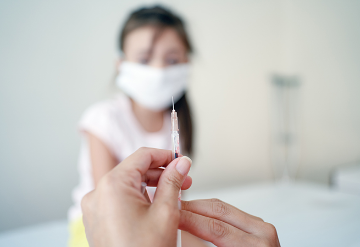
Beware the vaccine diplomacy model of China, focus on rapid vaccination at home.
By not backing the political demand of the RJD ally for the exit of then Election Commissioners, B B Tandon and N Gopalswamy, the Centre and Prime Minister Manmohan Singh have silenced avoidable criticism of the constitutional body entrusted with the task of ensuring common man¿s continued faith in parliamentary democracy.
The Nepalese government¿s offer of surrender and rehabilitation to Maoist insurgents¿announced by Foreign Minister Kamal Thapa on December 18, 2003¿¿whose deadline concluded on the eve of the eighth anniversary of the Maoist ¿People¿s War¿, on February 12, 2004, has met with partial success.
Cash transfers are popular globally as an instrument for combating poverty and achieving broader development goals. Both conditional and unconditional cash transfers that target women in low- and middle-income countries can enhance household well-being, food security, education of children, family health, and women’s empowerment. In India, the provision of unconditional cash transfers to women is being driven by the expanding influence of femal
The UPA's cash transfer scheme, delivering over Rs.3.2 lakh crore in subsidies and welfare programmes to the poor directly to their bank accounts, if executed well would not only reduce poverty faster would curb a lot of the wasteful spending that has fattened vested interests at all levels.
Cultural entrepreneurship promotes a country’s heritage, resources and creative talents through products, services, and experiences. It shapes the country’s cultural economy; enables economic growth, innovation, and sociocultural development; and, when exported, contributes towards building soft power. India, with a millennia-old heritage, indigenous knowledge systems, and practices, has the potential to become a leading cultural and
Capacity building is a central feature of India’s outreach to Africa. Over the last seven decades, the Indian government has provided numerous scholarships to African students through the Indian Council for Cultural Relations and the Indian Technical and Economic Cooperation scheme. India has also established several technical institutes throughout the continent. However, assessments of India’s capacity-building initiatives remain limited. Th
There is an urgent need to accept the reality of cattle trade across the Indo-Bangladesh border and the challenge is to bring about a change in the mindset of people on this issue, according experts and former policy makers.
The Centre's Notification of the Cauvery Award should encourage Karnataka and Tamil Nadu to work with the Centre and the other two riparian stake-holders to revive the proposal to build an additional reservoir to store the excess waters, to be shared among them.
Chemical-Biological and Radiological (CBR) threats are being increasingly perceived as the new face of terrorism. The possibility of non-state actors employing non-conventional weapons using CBR materials.
The quinquennial National Congress of the Chinese Communist Party (CCP) is typically the venue for political leadership changes and any restructuring of the country’s military apparatus. However, the 20th CCP Congress in October 2022 saw Chinese President Xi Jinping consolidate his control over the state and military. This brief seeks to understand what Xi’s third term as CCP chief and Central Military Commission chair will mean for t
His role is not just about tri-service cooperation, but also to ensure that acquisitions do not exceed capital allocations
Indian Vice-President Hamid Ansari's recent State visit, coming after the visit by another important Minister (for Commerce and Industry), Anand Sharma, to Bangladesh, has highlighted New Delhi'sefforts and sincerity at improving the burgeoning relationship with its neighbour even more.
There is a need to fix the BRICS, by altering growth strategies, reducing external dependence, securing domestic demand and investments, providing jobs to the unemployed, and aiming at lowering untenable inequality.
The BRICS is growing more relevant and increasingly institutionalised. Economic growth rates continue to outpace the rest of the developing world. According to the UNDP, Brazil, China and India's combined GDP will be greater than the combined GDP of the US, the UK, Canada, France, Germany and Italy by 2020.
In two sets of visits to the Central Asian region in 2013 and 2014, Xi Jinping set a scorching pace for Modi to follow. Unfortunately for India, even a super-star Prime Minister cannot do the impossible. He lacks the vast investible resources that China has already deployed and is deploying in the region.
Days before the historic talks between the separatist amalgam, the All Parties Hurriyat Conference under the leadership of Maulana Ansari, and the Government of India, there is widespread speculation as to the outcome of the same. After all this is the first time
The labour laws certainly represent a small step but the introduction of even small reforms in labour legislations was long awaited to keep at bay the rising discontent among domestic as well as foreign entrepreneurs from India's manufacturing sector.
While the debate on federalism is likely to continue before a consensus can be arrived at for amending the Constitution to strike a fresh balance between the States and Centre, it is worthwhile to explore possibilities for pushing the developmental agenda meant essentially for the people.
There is need for greater transparency in the Free Trade Agreement negotiations. There could be more information sharing with civil society groups and the general public so that the content of the negotiations would get public approval faster, making it easier to conclude the FTA.
During the Cold War, India navigated its external relations guided largely by the doctrine and practice of non-alignment. In these contemporary times, the COVID-19 pandemic is likely to inaugurate a period of heightened geopolitical rivalries, with the United States and China as the principal poles. India will be differently positioned in this post-Covid “new normal” than it was in the era of the Cold War and therefore will need differe
New Japanese Prime Minister, Yoshihiko Noda, known for his low profile political career, is now being called upon to manage his party (Democratic Party of Japan) that is driven more by internal power struggle than policies per se.
The new RBI Governor would have to restore the confidence of foreign investors in the economy's growth potential. Foreign investments are needed for infrastructure and industry. The Governor will also have to attract more FIIs. The choice before him would be: whether to control inflation or to promote growth.
When Dr. Hassan Rouhani takes charge as the new President of the Iranian republic on 4th August 2013, there are two most important challenges before him -- the mismanaged economy and the intractable nuclear negotiations that seem to have hit a road block.
India has made progress in digital health, including in telemedicine and creating platforms such as Co-WIN for the COVID-19 vaccination rollout. These initiatives demonstrate the benefits of technology in enhancing the availability and affordability of, and access to healthcare services. This report examines the challenges that continue to stall the reduction of maternal deaths in India. It uses the case of Madhya Pradesh, the sta
The changing world order in the post cold war era has heralded the rise of economic globalization which has been dominated by the desire for symbiotic cooperation and economic intercourse between states.
Any border settlement between India and China will be unsettling for important constituencies in both countries. If Modi has to get an agreement through Parliament and, before that, the Sangh Parivar, Xi needs to take his Politburo, if not his Central Committee with him. Both know that they can only do it now when they are at the height of their powers.
By sacking three crucial ministers, proroguing Parliament and telling the nation that she was ¿willing to discuss with the LTTE, a just and balanced solution within the parameters of unity, territorial integrity and sovereignty of Sri Lanka¿, President Chandrika Kumaratunga may have precipitated a politico-constitutional crisis with far-reaching consequences.
In an email interview with ORF Pakistan Studies Programme, well-known expert Hassan Abbas discussed a variety of issues about Pakistan. Dr Abbas, a fellow at Harvard University's Kennedy School of Government,
The emancipation of the Dalit is an even more recent phenomenon in North India. Hence the inability to stomach any comical casting of the solitary Dalit icon, B.R. Ambedkar.
The electoral system of India has flaws and there is an 'anti-democratic conspiracy of silence' to hide it, Uttar Pradesh Congress Committee chief Mr. Salman Khurshid said during a talk on 'Has the Indian Electoral System Failed?' organized by the ORF Mumbai chapter of Observer Research Foundation on January 24,
Under the 2008 Constitution, President Nasheed is to be succeeded by Vice-President Mohammed Waheed Hassan, who would complete the remaining two-and-half years of the presidency, until elections in October 2013.
There has been a relative decline in the far reaching capabilities of the US