-
CENTRES
Progammes & Centres
Location
18354 results found
India needs to cement its position as a geopolitical actor of consequence versus China.
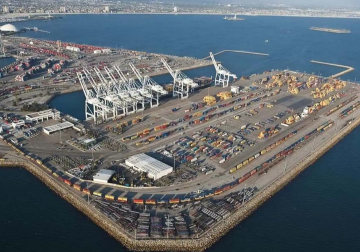
Sri Lanka’s Parliament postponed discussion of a bill regarding Colombo Port City, but it is expected to pass.
The fifth meeting of the Forum on China-Africa Cooperation in Beijing was used by China to reinforce its engagement with Africa. It is significant that despite it being only a ministerial conference, six Heads of State and two Prime Ministers attended the opening session.
New Delhi has made it clear that it does not see China as a "threat" to India. The official position reflects a correct assessment of our security environment. China poses a challenge, not a threat, to India.
The Chinese growth story, triggered and driven by its industrial growth, is truly amazing. But now that industrial growth is slowing down because of higher wages and higher standards of living, to remain competitive China would have to outsource its production to cheap labour countries or move to another growth area - services.
While one could consider the establishment of a space station by China as a potential for collaboration, it would be more prudent of India to consider the military implications of such a move. A manned space station provides a greater thrust to PLA's combative capability.
It is making giant strides where the US refused to go
Unclear if Biden administration will go for ‘semi containment’ or selective engagement
Recently China reiterated its interest in constructing a deep seaport in Bangladesh. The Chinese interest in the project reportedly arises because of two reasons. One, to further strengthen its presence in the South Asia region,
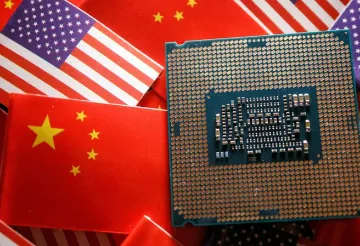
But Covid is likely to accelerate technological decoupling with the US
Though the Comprehensive Economic Partnership Agreement between India and Japan is an achievement in Indo-Japanese bilateralism, much more needs to be done at the people-to-people level to broaden and strengthen the growing relationship.
Despite our hopes, China India relations are unlikely to see any dramatic upturn. China wants an all or none political relationship with India. This means that India must send the Dalai Lama away even though India has repeatedly and loudly pronounced that it has accepted Tibet to be an integral part of China.
If Indian economy begins to take off and it is able to overhaul its dysfunctional military system, India can emerge as a formidable second pole of the Asia-Pacific region, maybe just a shade inferior to China.
Japan's recently approved Defence White Paper has pointed out discomforting Chinese maritime activities in the region, military modernisation and the opacity about China's goals as challenges to Japan's national security.
China today is different! Quite different to what I saw seven years ago. The economic boom has not only changed its socio culture, at least in the Eastern and Southern part of China, but also the peoples' attitude, style of governance, and geo political outlook. That is the impression I gathered when I visited China recently.
Incidents of sudden disappearance of celebrities have been common in China. But Qin Gang’s case is special. Not only has he disappeared but his public records are also being erased.
In 2015, China decided that officials at all levels, courts and procuratorates should take a public oath of allegiance to the constitution.
Noted China scholar Dr John Lee pointed out that Beijing viewed the improvement in the relations between India and other countries in Southeast Asia as an intrusion into the traditional sphere of the influence of China.
China's ability for air and sea power projection in its neighbourhood is significant and growing, and its first aircraft carrier is another indicator. The carrier would provide China the ability to project its power even farther.
India must urgently explore a variety of options to restore deterrence vis-à-vis China. This first thing is to back Japan. India also has to work on a range of options including economic and hard options. It must also take a fresh look at reinvigorating its ties with Vietnam, Japan, Australia, Singapore and the littoral states.
To draw lines on the map along the ancient trade routes of China and to claim that they marked an exclusive zone of trade and dense economic relationship centering around and led by China will beg a number of questions. Does it mean that countries within the zone will sever their trade and economic relations with countries outside the zone?