-
CENTRES
Progammes & Centres
Location
18621 results found
The DeFi landscape is complex, encompassing digital assets, blockchain technology, and tokenization. Despite skepticism, it holds potential for financial inclusion, improved taxation, and democratizing investment in private markets.
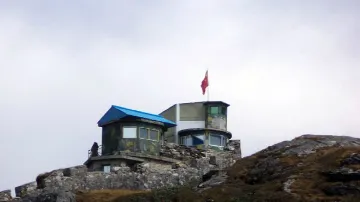
Some voices in India had advocated a tough response to the Chinese. This would be untimely and irresponsible. In retrospect, the handling of the situation which involved a symmetrical non-threatening military response by Indian forces, along with patient diplomacy has paid off.
Various Indian states have attempted to implement their respective deradicalisation programmes to counter radicalised thought amongst those identified as being at-risk, as well as those contemplating on joining, or are returning after having joined terror groups. Maharashtra and Kerala, for example, claim that their programmes are a success. Yet little is known regarding the structure of these deradicalisation programmes, their implementation, th
Though the Planning Commission went by the Tendulkar formula, Rs 32 and Rs 24 look extremely low at today's prices and high inflation, and especially if we take into account that these amounts include other items of daily life like education and health.
Justice for the Palestinians and security for Israel are more elusive than ever
In the past decade, Japan made certain critical changes in its defence and security policy. These include enhancing the country’s defence capabilities, introducing the right to collective self-defence, abandoning the ban on arms exports, strengthening its alliance with the United States, and promoting its vision of a ‘Free and Open Indo-Pacific’. Japan has introduced these changes incrementally, as a response to changing strategic circumsta
While Russia and Ukraine are showing conciliatory signs, primarily in an attempt to win Trump over to their side, a peace deal is still unlikely
Mumbai's public healthcare sector is approaching exhaustion. The Municipal Corporation of Greater Mumbai (MCGM), despite its untiring efforts to provide affordable healthcare through its general hospitals and peripheral centres.
The manner in which to determine the relationship between India and Africa is two-fold: micro analysis and macro analysis. This includes focusing on economic and energy diplomacy, political and security engagement and pan-African projects and strategies, says Dr. Arndt Michael of the University of Freiburg, Germany.
This paper explores the status and the need for the United States (US) to have a port-led strategy in place. Further, it argues that a strong port-led strategy straddling economic concerns with security imperatives on the back of its vast coastline and unmatched global network of overseas bases for the US could strongly support its Indo-Pacific strategy. A close examination of existing port-focused strategies by the US, particularly its Navy, and

Nepal's former Prime Minister Sher Bahadur Deuba has stressed on the need to develop "a joint approach" with India to exploit the huge hydro power potential of the country. He said Nepal has the potential of generating over one lakh megawatts of power.
In Devas Multimedia Pvt. Ltd v. Antrix Corporation Ltd, the Supreme Court of India has upheld the National Company Law Appellate Tribunal (NCLAT) order winding up Devas Multimedia Ltd on the grounds of fraud. Antrix is the commercial arm of the Indian Space Research Organisation (ISRO), and Devas is a multimedia services company. The decision comes at a crucial time, as foreign investors of Devas are endeavouring to attach Indian assets
The use of drones or Unmanned Aerial Vehicles (UAVs), both for military and civilian purposes, has increased in India in the past decade. At the same time, counter-drone systems are also being developed to address the threats posed by UAVs. How effective are these counter-drone mechanisms? This brief explores this question, and offers suggestions for India to reduce the growing threat from drones. Any evaluation of the efficacy of anti-drone syst
If one thing needs to change after the coronavirus, it’s the relationship between the state and migrant workers.
While pursuing growth of the sector, the environmental sustainability and social equity aspects must also be understood using science, technology, finance and innovation
The story of the Maotai town in the Guizhou province in South China is an interesting case study of developmental economics - how a relatively underdeveloped region was turned into a rich town.
The Russia-Ukraine war has dealt a massive blow to a world already battered by the prolonged COVID-19 pandemic, and the Sustainable Development Goals (SDGs) appear farther from reach. The current global scenario demands greater international cooperation for development. Yet, development aid is increasingly getting more securitised, and the imperative is for the international community to leverage cooperation during the current Decade of Action fo
Along with proposing new measures and initiatives, the Narendra Modi government should focus on completing the already proposed projects that would benefit the region like the implementation of the Kaladan Multimodal transit project with Myanmar.
Constructing a border of cooperation with Bangladesh should liberate India from one of major geopolitical constraints imposed on it by the Partition of Bengal. When he travels to Dhaka in the near future, Modi is in a position to unveil a genuine strategic partnership with Bangladesh.
Whatever be the academic arguments, the die has been cast in Dhaka for a definitive contest between the forces of progress and regression. The outcomes are likely to have a lasting impact on the subcontinent's political future and India's regional security environment. It is time Delhi's political classes paid some serious attention to the developments in Bangladesh.
Commander of the US Seventh Fleet, Vice Admiral Scott H. Swift, feels that dialogues and frank discussions are the best solution to the ongoing disputes in the Indo-Pacific region.
Asim Munir’s power grab in Pakistan makes South Asia a more dangerous neighbourhood. The Pak military is no longer a state within a state. It is the state
There is a strong feeling that the signing of a Comprehensive Economic Partnership Agreement between Japan and India has not led to the full utilisation of the potential that exists for larger trade and investment. Further efforts should therefore be undertaken to realise those ends.
The reported ban on two television news channels in Uttar Pradesh has exposed the lack of rules when in face-offs between politicians (or perhaps, ruling politicians) and the media. There were earlier reports that the Central government had requested Google to take down posts that criticised it.
Elections will not be won or lost because of events in Sri Lanka, but Sri Lanka could be lost because of our electoral politics. Our PM's absence in Colombo at this juncture is akin to a public snub to Sri Lanka and the vacuum that we create and show little intention or urgency to fill, can only be filled by one country - China.
New Delhi declared unequivocal support for “all peoples striving for decolonisation”, only to keep conspicuously quiet.
Terrorism in Chechnya has three major trajectories ' first, the terrorist campaign of the Chechens and others who are a part of the international terrorist network and who derive legitimacy from Islamic fundamentalism and whose fight is not just against the alleged oppression of the Russian state, but also to establish Islamic rule in Chechnya and to facilitate its integration with the pan-Islamic world.
India, like much of the rest of the world, is faced with the twin but opposing conditions of economic potential and social concerns that need to be negotiated to realise the digital dividends from artificial intelligence (AI) and achieve sustainable and balanced growth. AI systems involve layers of technological dependencies that necessitate and enable social and institutional interdependency between stakeholders, enabling conditions, and resourc
India will assume the presidency of the G20 in 2023. One of the key policy challenges for India and other member states is how to regulate the global digital economy. Once a fringe policy issue, the global digital economy is now central to the G20 agenda, with significant implications for individuals, corporations, and governments. Bilateral cooperation within the G20 system can provide additional resources and capability to any presidency, which
India will become a digital society. It is also deploying all the right pieces and infrastructure for a digital economy. The foundation for both will be the cloud ecosystem, which, however, needs to be protected through a robust policy and legal framework.
Social media’s impact on mainstream media, and the way people communicate with one another and disseminate information, has become a subject of serious study for journalists, academics and policymakers alike. While it has been a significant equaliser as a vehicle by which the fundamental right to freedom of expression is guaranteed everyone irrespective of class, creed or geography, these very same platforms are also becoming spaces where—in
People in smaller cities of India were more hopeful about the prospects of Digital India than the people in big cities which are traditionally thought of as 'tech savvy', according to a survey conducted by Observer Research Foundation.
The Gulf states are investing heavily in sovereign, sustainable, and secure data infrastructure, recasting data centres as engines of economic transformation, security resilience, and geopolitical influence.
The Ministry of Electronics and Information Technology (MeitY), Government of India, released the draft Digital Personal Data Protection Rules, 2025 (DPDP Rules) in early January this year and invited feedback by 5 March 2025. On 18 February 2025, MeitY organised a consultative session on the draft DPDP Rules; the event, held in New Delhi, was attended by the Observer Research Foundation (ORF). Based on the consultative session and discussions wi

The Kashmir floods have exposed our communication faultlines. Why is there no disaster management plan in the case of a communication blackout? This is perhaps even more pertinent given that the remote corners of India, be they coastal, mountainous or otherwise, are not well connected to modern telecom networks.
E-commerce has made massive inroads in India’s retail sector: 220 million people are expected to shop online by 2025, and the industry is predicted to grow to INR 13,97,800 crore (US$200 billion) by 2027. Yet, about 90 percent of grocery retail trade in India are still driven by small-format traders and neighbourhood kirana (grocery) stores. The evolving retail scenario and changing consumer demands mean that these kirana stores must swiftly em
India has projected its soft power for centuries, long before the concept was even defined by political analysts. In the past decade, the country wielded its soft power in a more systematic way in the practice of diplomacy. Prime Minister Narendra Modi, in power since 2014, is becoming known for his passionate use of India’s soft-power assets through both an effective media management strategy and an intelligent use of social media. This Brief
When Lang Lang, a resident of New York, was invited by the White House for a piano recital at the banquet for Chinese President Hu Jintao in Washington DC on January 19, no one really bothered to check the music he would play.
The existing NOTA option is just symbolic because even if the majority of voters in a constituency detest the candidates, one of them will still be elected.
Despite the Chinese government's repeated stress on disaster reduction and regards it as an important factor to realise the overall goal of sustainable development, more needs to be done on disaster management and prevention.