3873 results found
This paper presents an approach towards promoting nutritional security on one hand, and water security on the other, in an integrated framework. Using econometric models, it delineates water use efficiency on the basis of calorific estimates of the productivity of agricultural water use in the context of various crops. Based on the estimated marginal product of water across the various crops, the paper finds that alternative crops such as maize a
Ethnicity, security and connectivity identified as the foundational pillars of the multifaceted bilateral ties between India and Myanmar — an event report.
This report of a conference, hosted by the NFG Research Group "Asian Perceptions of the European Union" at ORF and JNU on September 26-27, 2013, provides a summary of the key themes which emerged from the conference.
Even if Donald Trump does not win the presidency, it is unlikely that enthusiasm for supporting Ukraine would be high in the US’s political ranks
India's nutrition levels have been a matter of concern. Policymakers have to shift their approach to find a long-term solution for the problem
India's smaller neighbours are not as concerned about the reach, if any, of outside powers in the region. In this sense, the neighbourhood?s concerns about India are distinct from India's own concerns.
'Nuclear Security in India' Report, launched recently by former PM Envoy on Non-Proliferation Rakesh Sood, sets out a list of policy recommendations which essentially seeks to address the gaps that still remain in the overall architecture of nuclear security in the country.
In all the hype and hyperbole about what to do with coal blocks, the plain fact is that the real danger lies in our coal reserves turning valueless for the country, of no benefit to the owner - the people of the land. They will be value less if we don't extract them before they turn un-burnable by climate action a few decades from now.
Progress will probably require developing small, technical agreements given that big, all-encompassing agreements have proven too difficult under current international circumstances.
Better policing, if nothing else, could help eliminate the existing air of permissiveness and re-introduce a sense of security in women - and also in men - inside their homes and outside - than at present.
The launch of Japan’s Official Security Assistance (OSA) framework in 2023 signalled a step further in the departure from a strictly pacifist aid model toward a more proactive approach to security diplomacy. Rooted in the 2022 revision of Japan’s National Security Strategy, the OSA institutionalises Tokyo’s gradual reinterpretation of constitutional and normative restraints on military assistance, while maintaining an emphasis on transparen
Underlying all practical steps between India and France is a shared strategic vision, particularly driven by the strategic uncertainties around China’s rise and its growing assertiveness.
Health policy is classically associated with the allocation of resources for healthcare services and the affordability and effectiveness of interventions, and is thereby confined to national strategies. Over the last couple of decades, however, there has been growing awareness about the interlinkages of health policy with key aspects of international relations, including diplomacy, trade, and foreign policy. Similarly, health features as a promin
It is relatively easy to establish coalitions to work on non-traditional security issues, but nurturing a group to focus on security issues as the core is not easy, especially for countries like India.
In Delhi, the Army still honours its martyrs in the airport parking lot as, ostensibly due to security concerns, it doesn't have access to the reception area built last year.
It is time that the Modi Government carried out a comprehensive assessment of our internal security structures and put in place measures to enhance their efficacy. Also, the feasibility of the earlier proposal by the army for permitting lateral movement of its personnel into the CAPF needs to be re-examined.
China has enacted a National Security Law for the special administrative region of Hong Kong. The provisions of the law can be used to curb peaceful dissent and enhance Beijing’s control over the region. It has the potential to not only change Hong Kong’s legal and political autonomy, but also alter its status as a global financial centre. This paper offers an overview of the national security law and its implications for the ‘one country,
Though the devastating WannaCry ransomware attack was a failure on the NSA’s part, current UN cyber norms are far too weak to hold any international actor – let alone the US – responsible.
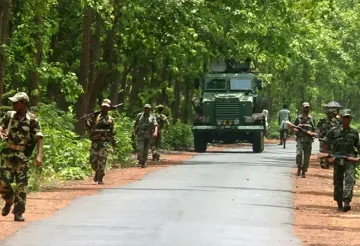
For India, there is much to be worried about, but there is also much to learn
The last thing Pakistan wanted was Narendra Modi back as India's PM. They'd have preferred the Congress which is seen as soft on them. But how did Indira Gandhi's party reach such a state?
A closer look at some of the security-related agenda items for the upcoming development and how they could impact bilateral ties.
Tamil Nadu has a history of Dalit-centric violence, which has erupted independently in the southern districts, and also the western Dharmapuri belt, where Naxalites have thrived and revived from time to time.
India has the longest coastline in the Bay of Bengal, making it critical for the country to manage maritime security challenges in this space. However, given the transnational nature of most maritime threats, India must cooperate with other Bay littorals and the major powers to address these issues. The Bay of Bengal is a vital part of the Indo-Pacific geostrategic construct, and a secure Bay is fundamental to a stable Indo-Pacific. By addressing
A cyber partnership can be critical for India to meet its immediate goals in securing its cyber infrastructure and expanding opportunities for the country’s tech sector.
Saudi Arabia and India recently signed a defence cooperation agreement, signalling a shift in ties. This issue brief looks at the importance of Indo-Saudi relations from a geopolitical perspective, outlines the trajectory of their bilateral defence partnership, and emphasises the symbiotic nature of their relations and the increasing scope for greater cooperation.
This paper explores how India has been able to achieve cooperation in the sphere of international development, but has been unable to replicate such success on issues of international security. It maps out India’s engagement on these two issues through four case studies and places them in the context of multilateral theory and international cooperation theory. It further considers factors within the game theoretic models of cooperation, includi
Professor Joseph Nye,Dean, John F Kennedy School of Government, Harvard University, who visited ORF recently, gave an e-mail Interview to Dr. Harinder Sekhon, Senior Fellow, on US foreign policy trends, especially in West Asia and the future of Indo-US relations.
New infrastructure built by India in Mauritius demonstrates New Delhi’s commitment to cementing its security presence in the IOR.
Indian agriculture cannot afford to rely on unsustainable ways. Sustainable agriculture, which applies less pressure on natural resources, is the need of the hour.
India should be prepared to face the prospects of unending jihadi attacks not only in Kashmir but also in any part of the country. Eternal vigilance is the price India has to pay.
Following the Wikileaks, now one can draw the conclusion that Pakistan would never give up supporting the terror groups like the LeT and would use them for creating problems for India, at least in Jammu and Kashmir.
While many countries still regard cyber security and space security as 'future challenges', or issues that will need to be dealt with in the coming years, India is already tackling them today.
Following up with the SIPRI-ORF-SWF seminar in New Delhi earlier this year, the Secure World Foundation organised a panel discussion in Washington on "India's Military Space Efforts and Regional Security Considerations".
A study conducted by Observer Research Foundation in 2014-15 found that India has a fairly strong nuclear security policy.
Delivering the 30th Bhimsen Sachar Memorial Lecture for 2009 in New Delhi, the former Chief of the Army Staff highlights the flaws in India's strategic thinking and stresses the need for a more focused and clearly defined vision for the future.