-
CENTRES
Progammes & Centres
Location
1774 results found
The current gap in global adaptation finance for developing countries is estimated at US$194-366 billion per year. This brief highlights the critical role of domestic public funding in driving adaptation initiatives. While international climate finance mechanisms exist, their effectiveness is limited by slow disbursement processes and regional disparities in fund distribution. Public finance management systems can act as catalysts for mobilising
Climate change, conflicts, and various crises have exposed the vulnerabilities of global food systems. Acute food insecurity and undernourishment have become more prevalent in recent times, and the imperative is to build more robust and sustainable food systems that do not adversely impact the environment. The COVID-19 pandemic has only underlined the importance of food security in times of crises. This brief explores the promise of clima
The most critical area for India's response to climate change must be adaptation. It needs to invest in actions against the imminent threats posed by climate change irrespective of how the global discourse progresses. Investments must be made through innovative channels, using a mixture of capacity-building programmes, awareness campaigns, traditional solutions, and new technologies.
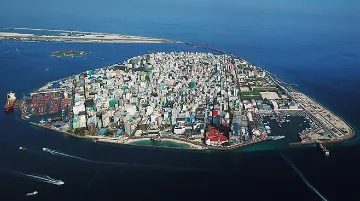
The human toll of the COVID-19 pandemic has been devastating. At the same time, measures to tackle the crisis have affected national economies and grounded global trade to a halt. Small Island Developing States (SIDS) such as the Seychelles are amongst the countries that have suffered some of the worst economic impacts of the outbreak. The current situation illustrates the global state of unpreparedness for a pandemic and points to similar inadeq
India has assumed the G20 presidency at a critical and opportune time in history, even as the half-yearly report card indicates that consensus-building in the grouping has been more difficult than India may have expected. This brief identifies six areas where India can manifest its capability to lead the building of an effective and plausible climate action plan. Globally, championing the tracking of per-capita emissions and fossil fuel-b
As part of a three-year research project undertaken by ORF and PRIO to study and analyse urban governance, urban security and environment related trends and concerns in selected regions of India, an international conference was organised on "Emerging Challenges in an Urbanising India: Governance, Security and Climate Change".
This brief discusses the challenges faced by urban local bodies (ULBs) in India in accessing urban climate finance (UCF), and proposes solutions based on successful strategies used by some of them. The hurdles include institutional barriers and limited capacity. The brief finds that ULBs that have met with success in accessing UCF overcame the obstacles through early sensitisation programmes and global network connections. It offers plausible sol

The Sundarban ecoregion, straddling India and Bangladesh, is home to the largest contiguous mangrove forest in the world. Parts of the forest are designated as World Heritage Sites in both countries due to their rich biodiversity. The natural areas of the Sundarban are influenced by human use and, in recent years, increasingly by climate change. This paper explores an institutional arrangement that could help identify and implement the options th
Budget cuts and internal priorities in Europe threaten India's access to climate funds and clean tech, urging stronger ties with BRICS, South Korea, and Australia.
Over the last few decades, a global climate finance architecture has emerged to channel domestic and international funds towards climate change mitigation and adaptation efforts. However, mobilising climate capital at scale has been a challenge, particularly in the Global South, since the current financial system is inept at including climate change metrics in its capital allocation and disbursement processes, and applying a climate justi
The African continent faces escalating climate threats, with rising temperatures, sea-level rise, water stress, and extreme weather events causing widespread negative consequences. This brief argues for the need to build a business case for greater adaptation investment in Africa. Climate change is already causing significant economic losses, with African countries losing 2-5 percent of GDP annually, while adaptation investments could yield retur
For poorer countries, funds for ‘adaptation’ make more sense than ‘mitigation’. A retreat from climate hotspots is to be explored
Cities across the globe are increasingly using materials such as concrete, which store more thermal energy than natural materials and absorb sunlight rather than reflecting it, warming their surroundings. This ‘urban heat island’ (UHI) effect has consequences on health, ranging from heat exhaustion to cerebrovascular events and circulatory failures resulting in death. Compounding the challenge is that the impact of extreme heat on health is u
From the Abu Dhabi conference, the urgent call for action should resonate loud and clear throughout COP28 in and create a dynamic and durable pathway
This paper analyses India’s participation in more than two decades of global climate politics. India has transitioned from a protest voice on the fringes of global climate policy to one that is actively shaping international efforts to combat climate change. Analysis of the drivers behind India’s negotiating positions on climate change thus far has focused on the competing motives of equity and co-benefits, which has however been insufficient
Climate adaptation has been at the forefront of UN climate negotiations over the past decade, given the increasing frequency of extreme weather events at the global, national, and sub-national levels. Climate vulnerability and risk assessments (VRA) are essential for adaptation planning, as they help identify areas, populations, and systems that are most at-risk from the impacts of climate change. They can also be used as a tool to develop adapta

As global food production faces the negative consequences of climate change, best practices in climate-smart agriculture (CSA) must be promoted to achieve food security. This requires adequate financial and human resources to be channeled to the upscaling of CSA activities in high-impact, priority areas. Considering India and Africa’s complementary sectoral priorities and their similar roles in evolving global food markets, various opportunitie
The alignment of G20 policies with the Sustainable Development Goals, and emphasis on energy security, is high on India’s climate agenda.
This report is part of the Observer Research Foundation’s “Financing Green Transitions” series which aims to find potential linkages between private capital, in all its forms, and climate action projects. The series will primarily examine domestic and international barriers to private capital entry for mitigation oriented climate projects, while also examining potential avenues for private capital flow entry towards adaptation and resilienc
To successfully combat climate change, there is an urgent need to finance mitigation and adaptation efforts at various levels. Green bonds are a relatively new funding instrument for green projects that have steadily become the first line of defence against climate change. India, in particular, has immense scope to diversify the green bond market beyond renewable energy. This brief analyses the policy structure of countries that have successfully
India spends over 2.6 per cent of its GDP to deal with challenges of climate change. Still, resource scarcity and other priorities make it a challenge to find matching financial resources for mitigating climate change. Green Bonds have the potential to significantly change the climate change landscape of India.
Forests help mitigate the impacts of climate change, provide economic benefits for the country, and meet specific facets of India’s sustainable development goals. It is essential, therefore, to revisit India’s forest governance and evaluate the country’s efforts at forest restoration and conservation. This brief examines the current state of India’s forests, explores the effectiveness of forest restoration and conservation measures, and r
Traditional Indian fermented foods represent a confluence of cultural heritage, nutritional functionality, and environmental sustainability, offering an effective dietary intervention amidst public health and climate-related challenges. Produced through natural or controlled microbial fermentation involving lactic acid bacteria, bifidobacteria, and yeasts, these foods—such as idli (steamed rice cake), dosa (rice and lentil crepe), dahi (curd),
The US Navy has already developed a generic "Road Map" against climate change while we are yet to assess the impact of such changes, let alone formulate doctrinal responses. Let us not get caught napping.
Britain's former Chief Scientific Advisor and Head of the Government Office of Science, Sir David King, has said that both India and China should take a leadership role at the global platform for Climate Change.
Worsening climate change will have impacts on global politics, creating new vulnerabilities as well as opportunities. India, given its emerging power status and high vulnerability to climate impacts, holds a key position in global climate action. This brief looks at the ways in which India has used climate policies to gain leverage. India has sought to incorporate the geostrategic uses of climate change into a wider shift in its foreign policy, i