7521 results found
In March, a "matrix" between the two Sudans set conditionalities and dates both countries must respect. It was an insurance against political vagaries and deep deficit budgets. But with oil revenues falling into Machar's hands, the entire ambit of monies and transit fee from Juba could come unstuck one more time!
Tensions between India and Pakistan or North Korean provocations or South East Asia's maritime problems should not be perceived as local. The tensions in the South China Sea can single-handedly destabilise the region and the world, argues Prof. Rory Medcalf.
The Ukraine crisis may have effectively ended the rapprochement between the USand Russia, and in turn affecting relations such as those of Japan and Russia. Prior to this crisis,and the subsequent Western sanctions on Russia, Tokyo and Moscow had been reaching out toeach other, and hope flickered for a resolution to the territorial dispute over the NorthernTerritories or Southern Kurils. This paper argues that with nationalist governments in powe
Despite being a victim of terrorism for decades, India has demonstrated remarkable consistency in the irrational and incoherent response of its policy makers, people and sections of its mass media to dramatic and outrageous terrorist violence.
Local militants of Afghanistan joining the Islamic State's (IS) and violent clashes involving "IS jihadists" in different parts of the country suggest a realignment of loyalties of local militants. Kabul and the region must not be complacent.
Largely ignored by intelligence and security agencies as a potential terrorist haven, Kerala has emerged as one of the key hubs of extremist and terrorist activities in the region.
Pakistan's Punjab is on the verge of becoming part of the expanding network of terrorist sanctuaries across Asia.
If India becomes a hotbed of conflicts - many think this may happen in the future - attracting FDIs will be a major problem. Even, our domestic investors are looking for investment opportunities abroad.
Increasing radicalisation and internal strife in Pakistan will destabilise the country and the region, said noted terrorism expert Major General Afsir Karim at a discussion in Observer Research Foundation on Jan. 23 in New Delhi.
The threat that is pre-eminent today is terrorism. And none of the counter terror efforts will succeed unless global powers deal effectively and consistently with the epicentre of terrorism -- Pakistan.
The Thai authorities continue to face difficulties in their efforts to bring the activities of the jihadi terrorist elements under control in Southern Thailand. The current wave of jihadi terrorist violence in the three Muslim majority southern provinces, which started in January last year, has already cost over 800 lives of Government servants, innocent civilians and suspected Muslim militants.
The Annexure gives available details of terrorist incidents reported from southern Thailand since October 25, 2004, when 85 Muslim youth arrested by the Thai security forces during a demonstration outside a police station died due to suffocation while they and many others were being transported to their place of intended detention.
In the aftermath of the serial train blasts in Mumbai on July 11, the question uppermost in public mind has been, ''Why has India become the most affected target? Are we in a no-win situation against terrorism?''
The question of Palestine has been on the global agenda since 1947. It predates the current phenomenon of global terrorism and is not synonymous with it. It is nevertheless the principal cause of instability in West Asia.
Pakistan's President General Pervez Musharraf is under pressure.For the first time since he seized power on October 12,1999, there are indications that he and some of his Lts.General, who constitute the real source of his power and not the people, are not on the same wavelength.
Security Guards belonging to the Indian Central Reserve Police Force (CRPF) foiled a daring attempt by a group of six terrorists to penetrate a Hindu place of worship at Ayodhya, a holy town of the Hindus in the state of Uttar Pradesh in North India, on July 5, 2005. The site at which the place of worship is located has been a bone of contention between sections of the Hindus and the Muslims for many years.
Investigations into the recent terrorist attacks and the subsequent chain of arrests and seizures in different parts of India, particularly rural Maharashtra, have revealed a growing alliance between jihadi groups operating from Pakistan and Bangladesh with ideologically extreme groups in India.
That is the latest position of the Government of Begum Khaleda Zia, the Bangladesh Prime Minister, in the face of growing international pressure spearheaded by the member-countries of the European Union (EU) to act against terrorist groups operating from Bangladeshi territory.
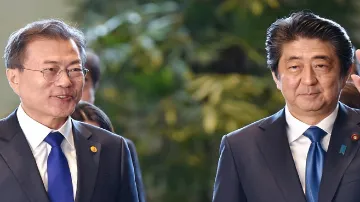
Japan's Prime Minister Shinzo Abe should take care when detailing the reasons why constitutional reforms are needed. While talking about the external threats, he should be very careful not to unnecessarily cause provocations to either China or North Korea.
There is hope among the politicians of various political groups in Kashmir as well as the people of Kashmir that Narendra Modi as Prime Minister would take some decisive action in keeping with their expectations. Modi himself has moderated his stand to that there should be a discussion on Article 370.
Inaugurating a workshop on 'Role of Universities in Public Policy-Making', hosted by Observer Research Foundation (ORF), New Delhi, University Grants Commission Vice-Chairman Prof V.N. Rajasekharan Pillai, on April 19, 2005, urged Vice-Chancellors and educationists to recreate linkages between universities and Government, research organizations, administrators and society, in order to render universities more relevant and help in enacting effecti
The Mullahs have found a fresh issue on which to trap General Pervez Musharraf. It has both religious connotations and a real possibility of a confrontation in which the General is bound to capitulate. The issue deals with school textbooks in Pakistan. A section of the society in Pakistan feels that textbooks cleared by the Federal Education Ministry's Curriculum Wing are regressive in nature and run counter to the objective of a progressive nati
ORF Kolkata organised its 2nd annual Inter-University Debate Competition on 7 November, 2015. Students of the Tezpur University won the competition that saw participation of representatives from eight universities from eastern and north-eastern Indian states.
The timing of the flare-up is worrying for a region already beset with instability, from the civil war in Myanmar to maritime tensions in the South China Sea
The relationship between Australia and India is poised at an historic moment. Consciously overcoming a challenging period, leaders of the two countries have realised new levels of mutual trust and confidence that are in turn generating policy momentum.
General elections of 2014 could well be the most interesting election they will witness in their lifetime. Several developments suggest that the elections could mark a big shift of the political paradigm and, in that sense, they could well mark the true beginning of 21st century politics in the country.
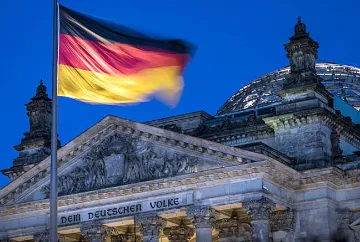
Berlin might not yet be ready to provide the kind of leadership that some expect, but the real "German question" seems to be whether Europe can really stomach German leadership. Given the uneasy reactions to Merkel's handling of the Eurozone crisis, the answer is clearly no.
It would be a mistake to assume that the US has changed its policy towards the region. It may have changed its style or the way it wishes to handle India and Pakistan but not its overall interests. The US wants to have a stronger presence in India without losing the hold it has on the military rulers in Pakistan.
Pakistan is an important player as far as determining the outcome of a post-2014 Afghanistan is concerned and should be engaged with. But to expect it to play a productive role or to expect Afghanistan and Pakistan to reconcile their differences and jointly work towards stability is a tall order.
ACT 1: March 2002. Abu Zubaidah, a Palestinian member of Al Qaeda, was arrested in Faislabad in Pakistani Punjab by the Pakistani authorities and handed over to the USA's Federal Bureau of Investigation (FBI). He was the operational chief of Al Qaeda; his arrest was a major breakthrough, we were told. This is hardly supported by the report of the 9/11 Commission.
How big a catch is Abu Faraj al-Libbi, a 40-year-old Libyan married to a Pakistani, fluent in Urdu and Arabic and suffering from lucoderma, whose arrest was announced by the Pakistani authorities at Islamabad on May 4,2005?
While the UP Sunni Central Waqf Board is well within its right to appeal to the Supreme Court against the Allahabad High Court verdict, the VHP's reaction does not represent the people's will at all.
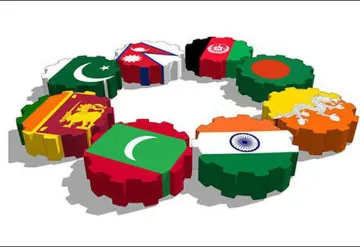
This weekend at Goa Prime Minister Narendra Modi and his foreign policy team will undertake a significant manoeuvre with SAARC grouping gasping for breath
Islands have long fascinated explorers, with colonial powers claiming distant territories to expand maritime dominance. Overlooking key trade routes and straits, island territories provide diplomatic leverage and military reach. The Andaman and Nicobar Islands (ANI), strategically located near the Malacca Strait, exemplify this advantage for India’s influence, prosperity, and maritime security. Major powers continue to rely on island networks t
The violent uprising of the people of Andijan in Uzbekistan on May 13,2005, seems to have been crushed for the time being by the Uzbek authorities with heavy force, resulting in the death of at least 20 civilians. The anti-Government elements, which organised the uprising, claim to have captured 30 Uzbek soldiers and to be keeping them in their custody.
The Libyan case is vastly different from that of Syria. The maverick Libyan leader Muammar Gaddafi had few friends in the Arab League. Unlike Libya, Syria is a critical element of the regional balance of power in the Middle East.
Saeed Naqvi, Distinguished Fellow at the Observer Research Foundation, traveled to Bahrain, Eastern Province of Saudi Arabia, Baghdad, Najaf, Amman, Cairo, Jerusalem and Ramallah after the Arab Spring broke out. Earlier, he visited Tunisia, Iran, Yemen, Somalia, Sudan, Western Sahara and Libya. In this paper, he shares his first-hand experiences and discussions with leaders and diplomats, many of whom have requested anonymity. This paper follows
To understand the strategic significance of the second summit meeting between Prime Minister Narendra Modi and US President Barack Obama, it is necessary to look beyond the very important and tangible outcomes that the two leaders have unveiled.
This paper analyses the domestic compulsions in Australia, India, Japan and the US that are influencing their positions on the Quadrilateral Security Dialogue (Quad). The paper notes that as the four countries are becoming increasingly aware of the risks posed by China’s rise over the last few years, they have sought to converge to the Quad. For Australia, the concerns are over trade dependency on China, and China’s sharp power projection and
Whatever be the demands of the Baloch nationalists, the situation now is that of a growing humanitarian crisis that the rest of the world chooses to ignore. Continued indifference will not help the problem go away but will only exacerbate it further and make it more intractable.
Kunduz has a large ethnic mix of Pashtun, Uzbeks, Tajiks, and others - all of whom wish to hold the province. The recent move to capture Kunduz by the Taliban is significant in many ways. It is the first major engagement by the Taliban after Mullah Akhtar Mansour succeeded Mullah Omar.
Though it will be difficult for the Central Government and the States to agree upon certain foreign policy issues, they should work together on issues of national importance-such as terrorism and foreign policy-in order to enact policies that benefit its citizens.
From the available facts of the jihadi terrorist carnage at the North Ossetian town of Beslan in Russia on September 3, 2004, the following reconstruction is possible:
The West has finally woken up to something that strategic analysts in India have been saying for decades: Saudi Arabia funded the Pakistani nuclear programme. In this connection, we have three questions to analyse; First, how valid is this information? Second, how is it then that Saudi Arabia gets away with so much? Third, why is Nato and Israeli intelligence taken seriously but not the Indians?
In January 2000, the Government of National Capital Territory of Delhi initiated a 'Bhagidari Programme' as an attempt to resolve the various problems being faced by the city's residents. Smt. Sheila Dikshit, the Honorable Chief Minister of Delhi, visited the Observer Research Foundation campus on April 10, 2008 to make a presentation on the programme. The discussion was facilitated by Ambassador M. Rasgotra. This discourse is an abridged documen