7499 results found
While the need is clear, realizing such cooperation will mean addressing several key challenges.
Recent geopolitical disruptions and India’s geoeconomic and geopolitical ambitions necessitate the building of new, more reliable multimodal trade corridors. This report examines the strategic importance for New Delhi of the ten-year agreement on Chabahar Port in Iran, and how it aligns with India’s ‘Connect Central Asia Policy’ and historical ties with the region. The Chabahar Port, along with the International North-South Trade Corridor
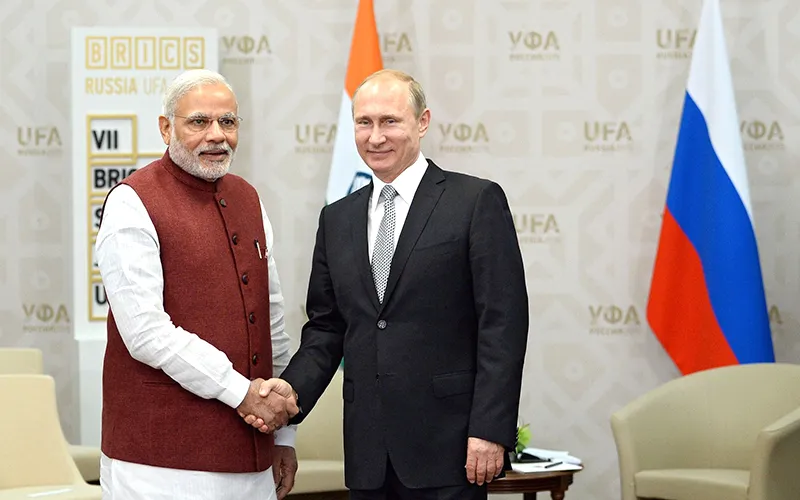
Russia’s policy towards South Asia has been the subject of much speculation lately. With closer cooperation between Russia and China and the former’s warming up to Pakistan, it is becoming increasingly evident that Russia is moving away from its India-centric approach in the region. This brief studies the changes, and continuity, in Moscow’s foreign policy towards South Asia as it transitioned from the Soviet Union into the Russian Federati
China’s role in reshaping the political milieu in many countries is causing a sense of unease
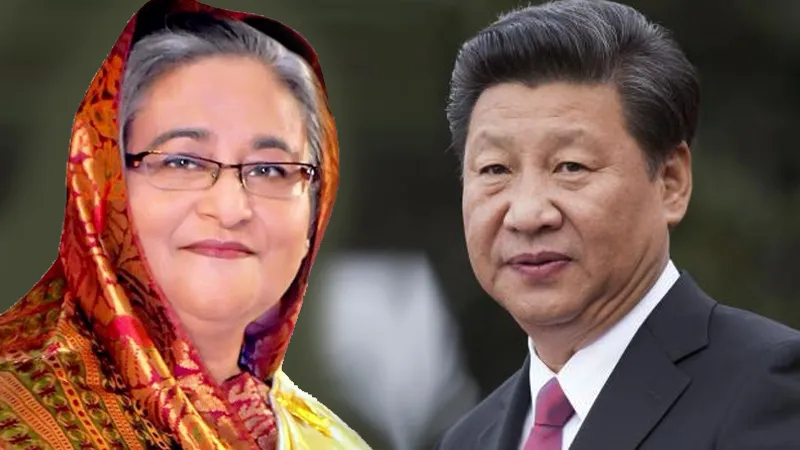
It is hoped that Prime Minister Sheikh Hasina’s visit to India not only heightens bilateral relations between the two countries but also benefits the entire region
It is India that is not only challenging China when it comes to the major ideas of our times, but is also standing up and confronting China to preserve its vital interests.
Countries like India that have relied on the extant order for furthering their economic and security agendas will have to rethink their own roles and priorities
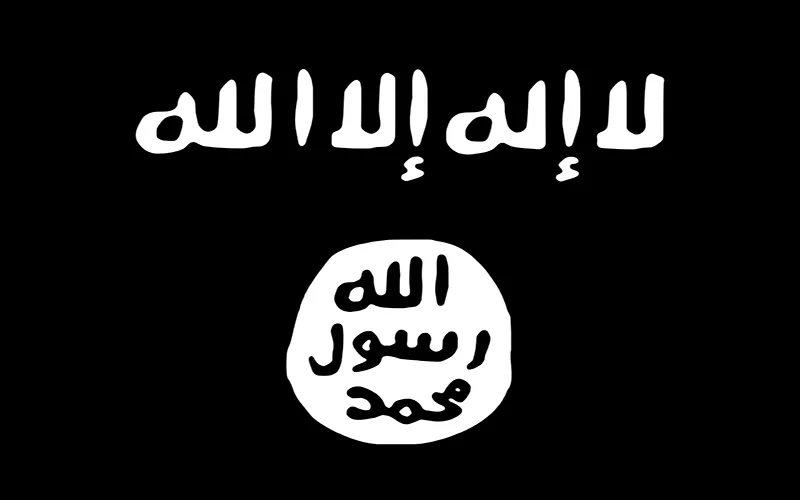
With the territorial defeat of ISIS in Iraq and Syria, analysts are pondering the kind of organisational form the group would take next. The influence of the so-called Islamic State in South Asia may be minimal, but India, Bangladesh, Pakistan and Afghanistan, have all had the shadow of ISIS’ global footprint land on their doorstep. This brief sheds light on how the influence of ISIS spread across South Asia, specifically after 2014, when pro-I
As global geopolitics enters a multipolar era, there is a need to assess the extent to which strategic concepts from the bipolar era remain valid and useful. In this brief, the notion of a ‘strategic triangle’, which became prominent during the Cold War, is extended to a ‘great-powers tetrahedron’ for Asia in the 21st century. The brief describes this notion and examines four triangular relationships involving India, China, Russia, and t
On the sidelines of the trilateral Northeast Asian Summit in Tokyo, Chinese Premier Wen Jiabao and South Korean President Lee Myung Bak visited some of the worst affected areas in Fukushima and freely moved with the victims and publicly tasted vegetables and fruits to dispel the public fear about radiation.
In the 1971 war against Pakistan, had Indian forces managed to push beyond Turtok and capture Thang, the subsequent Pakistani adventure in Kargil in 1999 or the threat to Siachen would have been infructuous.
In the backdrop of the Russia-Ukraine war, this paper explores the changing dynamics of the European Union (EU)-Central Asia relationship. It emphasises the growing significance of the Middle Corridor—also known as Trans-Caspian International Transport Route connecting South East Asia with Europe—as a potential alternative route for both the EU and Central Asia, particularly in the context of compliance issues, with sanctions on Northern Rout
Qatar is creating a large footprint for itself in the West Asian Qpolitical landscape. The Gulf state was previously known primarily for its oil and gas reserves, and compliance with US interests in the region. However, Qatar has in the recent past made significant efforts to assert regional pre-eminence through an aggressive foreign policy. Emir Shaikh Hamad bin Khalifa Al Thani, who recently handed over the reins of power to his son, Tamim bin
This brief analyses the correlation between gender-based inequities and malnutrition. It highlights the case of South Asia, and uses as a backdrop the compounded challenges resulting from the COVID-19 pandemic. The authors review existing literature on the subject and cull patterns, with the aim of outlining recommendations for countries in the region for bridging interrelated gaps in gender parity and nutrition.
India’s relations with West Asia is among the country’s successes in foreign policy under Prime Minister Narendra Modi. One country conspicuous in its sub-par engagement with India, however, is Iran. This brief makes a case for a reset in Iran-India relations under Iran’s newly elected president and PM Modi’s third term. It examines the options and opportunities available to the two countries, and explores the recent changes in the region
Gender inequality is a major cause and effect of hunger and poverty, with women and girls comprising 60 percent of the global hungry. Women face multiple challenges (such as limited access to education and employment opportunities) that curtail their economic autonomy and weaken their bargaining position within the family, consequently impacting household food security. The pandemic has worsened this situation. It is crucial to apply a ge
MBS’ tour is an important one as it goes beyond the bilateral ties and at a time when anti-Saudi sentiment is at an all-time high in Washington, it has sent an important signal that Riyadh is intent on diversifying its partners.
There is a shift in rhetoric from former Defence Secretary Chuck Hagel's statement that the US has been "clear and consistent" on not taking positions on "competing territorial claims" to Ashton Carter's clear insistence on American action in the event of assertive activities of one country.
Given that Pakistan has close ties with North Korea, it may not be difficult to visualise that the North Korean intercontinental ballistic missile technology may well find its way into Pakistan. Such an introduction would seriously affect the delicate strategic balance of South Asia and start another round of arms/ missile race.
Realpolitik may have trumped the Biden administration’s rather vocal positions on principles in the region
As the American presidential election draws closer, both candidates-Barack Obama and Mitt Romney-are well aware that domestic issues would be the major factors determining the poll results. Policies, related to immigration, taxation,...
The narrative of the world being divided into power blocs like those during the Cold War era has been punctured
This is a transformative period in the US-India relationship. New Delhi should be more self-confident in its ability to shape the trajectory of this engagement
The demand for an Asian NATO remains negligible in Southeast Asia. This is because most countries are convinced that a multilateral security architecture will only elevate regional insecurities, and make them subservient to great power contestations
India does not have much time left to set its priorities right, whatever they be. If nothing else, it cannot afford to 'tire out' its neighbours, who can then choose their own, individual course.
So far, Iran’s response to U.S. provocation has been rhetorical but President Rouhani has little room for manoeuvre
Executed properly, Aadhaar could become a central pillar of India’s ‘neighbourhood first’ policy.
The revival of the trilateral mechanism between China, Japan and South Korea only forms the first important step in the long journey to reconciliation in Northeast Asia which calls for mutual understanding and accommodation of each other's interests, and statesmanship of the highest order on the part of the leaders at the helm.
The US appears to lack a coherent strategy for the Asian region.
The exact nature of what these events lead to is shrouded in uncertainty. Trump though has unambiguously exacerbated the crises by pushing a region, thus far teetering on the edge, off the cliff.
Obama has had to modify his China policy in response to a more aggressive China. But present challengers are set for big changes in America's Asia policy
A year since the announcement of the new South Asia strategy, an attempt to break from the recurrent continuum has been evident. At least on two of the three accounts — with respect to Pakistan and India, the Trump administration has spurred a break from the past.
Trump's Asia visit highlighted key economic and security deals with allies, offering India valuable lessons on leveraging market, money, and minerals to secure comprehensive deals and strengthen strategic ties with the US
How South Asian countries will cope with the Trump administration, even as they balance China and India, is yet to be seen
Central Asia is the next favoured destination of radical Islamists and terrorist groups. Several terrorist networks are said to be already active in the region and recent suicide bombings in Uzbekistan in the cities of Tashkent and Bukhara, in March and July, 2004 suggest that al-Qaeda and its allies are looking for safer havens in the wake of the increasing pressure on their networks in the Middle-East and South East Asia from the security force
There is a preponderance of storms around the Black Sea. Its ancient beaches are littered with shipwrecks from the classical world. Some American geologists insist the great Biblical flood occurred there.