12138 results found
Karachi, on an average, witnesses close to 800 killings per year, mainly the result of ethnic/political violence. This year, the city has been extremely violent. More than 800 people have lost their lives till the first week of August.
The King strikes,' headlined the New Indian Express" of Chennai its story on the coup staged by King Gyanendra of Nepal after sacking his own hand-picked stooge Prime Minister Sher Bahadur Deuba on February 1, 2005.
King Gyanendra of Nepal has dismissed the Sher Bahadur Deuba government and taken power into his own hands. This was not an altogether unexpected development, however unwelcome it might be to the democratic forces in Nepal or to the well-wishers of Nepali people in the rest of the world. By whatever name one may call it, it was a royal coup.
Thailand appears to be heading for a royal change of guard at the very top. The widely revered and ailing 87-year-old king, Bhumibol Adulyadej or Rama IX of the Chakri dynasty, has not been seen in public for quite some time. Bhumibol is the world's longest serving monarch, having ascended the throne in 1946.
In West Asia, regional powers increasingly fear that the external dynamics of the regional political landscape coupled with the restive internal dynamics of Turkey, Syria and Iraq could potentially unify fractured Kurdish movements and destabilise the region at large.
Land acquisition remains at the centre of many controversies and public policy paralysis in India. There are very few public policy issues in India that rival land acquisition in terms of its complexity, challenges and significance to country's growth and transition to more urbanised and industrialised status.
The United Nations Security Council, the UN's most powerful body tasked to maintain international peace and security, is failing in its mandate. Its rigid institutional setting, the privileged status of core UN members, and the continuing lack of voice of many countries, have increased the risk of dramatic and systemic failures and shaken the legitimacy and centrality of the UN in the international system. This paper proposes a new solution in th
The US wants to thwart China’s technological ambitions as much as Beijing wants to foster them. The US delegation that went to China earlier this month, clearly signalled that it was not in it for just the trade.
There are clear limits to informal summitry, as India has found out since Wuhan. Despite all the rhetoric and symbolism on display at Mamallapuram, the substantive outcome remains clouded in mystery.
Afghanistan is facing its most complex humanitarian crisis yet, resulting from the cascading impacts of four decades of conflicts and endemic poverty, and in more recent years, climate change, the COVID-19 pandemic, and chronic foreign aid dependency. Today, 97 percent of all Afghans live below poverty line, and one in every three Afghans (or 14 million) face severe hunger. This report seeks to understand the complexities of Afghanistan’s human
The Russia-Ukraine war has confounded observers, as much as it did the Russians themselves. Since erupting in late February, the war has not shown signs of abating any time soon. This brief argues that by its very nature, the war has lessons not just for the adversaries, but also the NATO alliance that is backing Ukraine, and even geographically distant China and India. For one, the war has both elements of the old eras—such as the mass
COP29 announced the full operationalisation of the Loss and Damage (L&D) Fund, a long-awaited step for developing countries, including small island states, least-developed countries, and African nations. This milestone marks persistent advocacy for climate justice. However, the fund’s current framework has notable gaps. This paper highlights key concerns in the existing framework, including the lack of a clear and comprehensive definition,
The Madrid Bombings is a clear indication of how horribly skewed and wrong the War on Terrorism has been. It would be convenient to accuse the United States for the manner in which the War was planned and executed as a personal agenda of an American President whose sole footnote in history has been to sow the seeds of a global religious divide.
King Abdullah bin Abdulaziz of Saudi Arabia is to be complimented for his vision and initiative. The vision that something was seriously amiss within the comity of Muslim nations, and the initiative to call them together in an extraordinary summit of the OIC (Organisation of Islamic Conference) to cogitate on the seriousness of the situation and to come forth with meaningful remedies.
Skyscrapers are typically constructed to meet the housing needs arising from increased urbanisation, but they may also fulfil national ambitions to display economic might. This paper examines the advantages and disadvantages of building skyscrapers to establish key learnings for India.
How did Ukraine’s presence influence the Vilnius summit? Why did Turkey lift its opposition against Sweden?
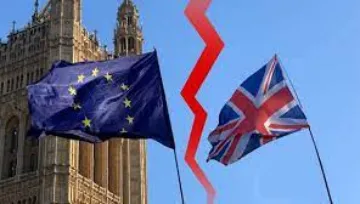
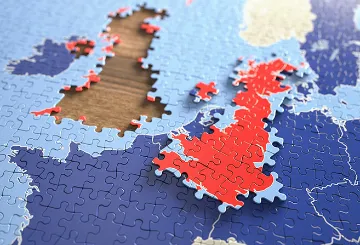
The anger of White Britain is a reality and Brexit in more ways than one was a response to this fury but things have continued to grow worse for this demography
In the backdrop of the Russia-Ukraine war, this paper explores the changing dynamics of the European Union (EU)-Central Asia relationship. It emphasises the growing significance of the Middle Corridor—also known as Trans-Caspian International Transport Route connecting South East Asia with Europe—as a potential alternative route for both the EU and Central Asia, particularly in the context of compliance issues, with sanctions on Northern Rout
In 1991, President George H.W. Bush proclaimed that the victory in the Gulf war presented an extraordinary opportunity to settle the Middle East conflict. This led to the Madrid conference, secret parleys between Israeli and PLO negotiators in Norway and then to signing of what came to be known as the Oslo accords in a grand ceremony at the White House in 1993.
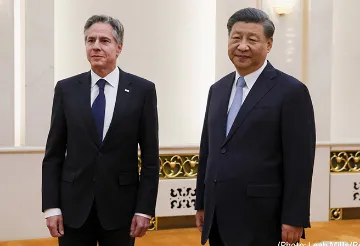
Blinken’s visit may be another way of signalling to China that it shouldn’t exploit any crisis to escalate new ones, at least until the US elections are over
The use of oral history of Partition days was critical in learning about the compassionate stories of how innocent people were saved by both the religious communities, because they are individual experiences. Such individual experiences have not been sufficiently documented in written scholarship.
To what extent could Vasili Mitrokhin be considered a trustworthy source with access to sensitive details regarding the KGB's operations abroad, when he was in service?
By opposing 'unilateralism in international affairs' and evincing a 'common interest' in the evolution of a multipolar world based on 'cooperative security order' while in Moscow this week, Prime Minister Vajpayee has addressed issues going beyond bilateral ties and regional politics in South Asia. To the extent, Vajpayee and India have been consistently focussing on multipolarism, particularly after the US war in Afghanistan, and on Iraq.
The strong showing of the six religious party¿s alliance, Muttahida Majlis-e-Amal (MMA) in the October 2002 general elections in Pakistan has led to apprehensions among the tribe of Pakistan watchers worldwide about the inexorable slide of a nuclear-armed Pakistan towards ¿talibanisation¿.
Looking at a decade of India-Bangladesh partnership
Upon the creation of Pakistan in 1947, millions of refugees and migrants from India made Karachi their new home, settling alongside the native Sindhi population. They identified themselves as mohajirs and have since been part of the long process of assimilation into Pakistan’s multiethnic, multilingual, Islamic republic. The political mobilisation of the group has led to the formation of a number of Mohajir parties, the strongest of which remai
Vladimir Putin and Xi Jinping have not really been travelling a lot since the Covid pandemic but they manage to find time for each other amidst the fragmentation of the global order
Despite the complexities, the international community must play its role by pushing for the sustainability of this deal
Conventional theories have become insufficient in explaining the complexities of terrorist action. This brief offers an integrative approach that borrows from psychology, inter-group conflict theory and neuroscience to understand the mind of a terrorist and, by extension, inform counterterrorism strategies. It provides evidence against popular beliefs about terrorists as principally being religious extremists who lack a moral compass and belong t
In government, Prime Minister Narendra Modi needs to disrupt the lethargy of the Lutyens communication machinery by introducing some of his young campaign team into the mix. He needs to reinvent and revitalise #NaMo in his new role as PM.
Narcoterrorism—or the trafficking of illicit drugs by terrorist and insurgent groups—has long threatened India’s national security. Security agencies are attempting to address this challenge, which involves various groups like Khalistani terrorist organisations, Kashmir’s separatist militants, and insurgent groups in the Northeast; their efforts have achieved mixed results. This brief examines recent trends in drug trafficking and narcote
With the Cauvery Water Disputes Tribunal announcing its final award, water, in general, and inter-State river water issues, in particular, are once again in the national focus. There are varying concerns about the socio-political fallout of the Tribunal award in the riparian States, with Karnataka and Kerala expressing unhappiness to differing degrees, and Tamil Nadu and Puducherry, respectively, expressing 'relief' and 'satisfaction'.
Urban roads enable mobility, the delivery of services and transportation of goods, and empower social interaction. In many countries like India, they also provide space for micro enterprises as well as community activities that may be religious, social, or political in nature. It is, therefore, necessary to provide adequate land space for the construction of roads in Indian cities. Furthermore, due care needs to be taken for the quality of constr
Key defence agreements will result in a shared, stable and more routine model of cooperation
The agriculture sector’s contribution to India’s GDP and employment makes it crucial to the country’s growth. At the same time, the sector’s massive greenhouse gas emissions pose a threat to India’s green transition. The ongoing farmers’ protests also highlight the need for a climate-smart agriculture strategy that will address fundamental issues like income support. This brief outlines a framework for India’s “new green revolutio
Xi Jinping's foreign policy gives acute emphasis to the development of silk roads. The closer Moscow and Beijing get, the more Russia will have to adjust to China's interests. It is important to understand that while Moscow depends heavily on Beijing, the situation is not true in the reverse.
India’s northeast region (NER) features prominently in its Indo-Pacific vision and strategic calculations. The vast natural resources of NER and its geographical proximity to neighbouring countries in the Indo-Pacific region make it attractive for increased involvement of industry and the development of trade linkages. Socio-cultural affinities found across the borders of the region also carry potential for synergy in cooperation endeavours. Th
Prime Minister Manmohan Singh concerned about the looming energy crisis, is determined to expand the contribution of civilian nuclear power to India¿s energy budget. For this it is necessary to remove the shackles imposed by the United States and its friends on international nuclear transactions.
The Bohai Shipyard, located in Huludao in Liaoning province, China, is the country’s only shipyard engaged in the construction of nuclear submarines. The yard has expanded since its inception and is poised to grow further in the coming years. With some of the new facilities having already been commissioned, there has been a considerable increase in the throughput of the yard. This report examines the augmentation of facilities at the Bohai ship
Indo-US relations that have witnessed a remarkable transformation in recent years, both in tenor and substance, are under intense scrutiny on the eve of US President Barack Obama's forthcoming visit to India. While relations between the two democracies have moved from one of 'estrangement' to a relationship of 'engagement' at many levels, there are outstanding issues that need to be addressed. This Issue Brief explores the prospects for cooperati
If Narendra Modi becomes prime minister, he will join a select band of predecessors who can be called "outliers" - a scientific term used to describe phenomena which are outside the normal experience.
Two years since the start of the COVID-19 pandemic, an estimated 14-24 million people have died worldwide due to the coronavirus or the chaos of lockdowns and other impacts. To a great extent, much of this current state of the world is due to human health being profoundly misunderstood and neglected in international relations and national politics. This brief discusses two principles that can help understand why this pandemic is not at an
The affordable housing challenge plagues cities across India. Although city administrations have framed various strategies to tackle the issue, weak implementation, flawed policies, and an inherent lack of capacity to find longterm solutions have allowed slums to proliferate as an alternative. This paper examines the affordable housing issue in Greater Mumbai. Since affordability is not absolute but relative to the development stage and income di
This brief explores some of the deeper, and more troubling, effects of the pervasive spread of the logic of technology on social, cultural, and political life. The author critiques the predominant tech-utopian perspective, which frames ever further and faster technological development as critical to continuing social progress, using Neil Postman’s concept of the ‘technopoly’. The brief uses as an example the influence of the logic o
In 2022, the Government of India is set to introduce the new Foreign Trade Policy (FTP) that will provide direction to the country's broader trade policy regime in the succeeding five years. This FTP will be more difficult to draft than the previous ones, for various reasons including the increased global pressure to address trade policy uncertainties, the need for alignment with the self-reliance mission, Atmanirbhar Bharat Abhiyan, and the tenu
Countries are searching for ways to ensure economic security and technological sovereignty amid growing competition over scarce resources. Among these resources, playing an increasing role are critical minerals, including rare-earth elements, that underpin semiconductors, green technologies, and next-generation industries—thereby powering economic growth. Recognising the importance of critical minerals, it is vital to examine how resource-scarc