-
CENTRES
Progammes & Centres
Location
674 results found
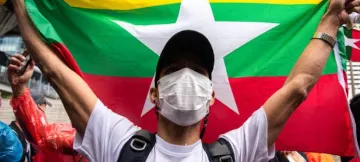
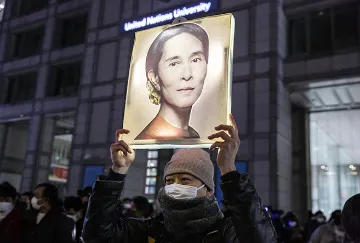
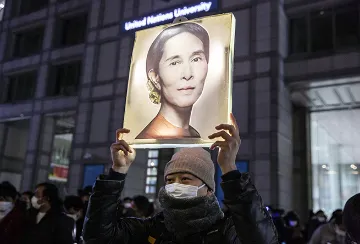
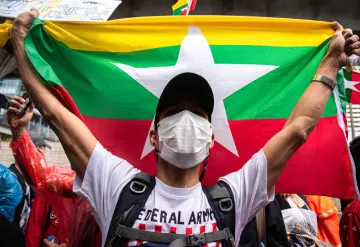
Over three years since the February 2021 coup in Myanmar, the Association of Southeast Asian Nations (ASEAN) has made little progress in helping resolve the crisis despite releasing a ‘Five-Point Consensus’ (5PC) in April 2021. The political crisis that followed the coup poses a challenge for the ASEAN, which must now deliberate on ensuring not only the early implementation of the 5PC but also whether, and how, it should continue to abide by
The National Democratic Alliance (NDA) Government headed by Mr. A. B. Vajpayee had made India increasingly invisible in its neighbourhood. It was content to play second fiddle to the US in Nepal and Sri Lanka, let Norway, the European Union and Japan play a more active role in Sri Lanka, maintained a silence on the growing confrontation between President Abdul Gayoom of the Maldives and the pro-democracy activists
If the purpose of privacy is to preserve democracy, then data protection laws must reflect this purpose.
In Maldives, the fledgling democracy is now getting exposed to the inevitability of an issue-based confrontation between the Legislature and the Judiciary. But the stake-holders need to handle the issues and the attendant controversies with the knowledge, accommodation and sensitivity that they demand.
Since the toppling of the Taliban government in 2001, India and Afghanistan have witnessed a significant strengthening of their bilateral ties. As Afghanistan's stability is important for India's own, New Delhi has readily supported the growth of democracy in its neighbour, battered as it is by many years of conflict and instability. This paper maps out the nature of India's relationship with Afghanistan, focusing on the two nations' economic, po
Through its actions in Ukraine, Russia has challenged the global order in fundamental ways and India’s foreign policy won’t be immune from its reverberations
India, the world’s largest democracy, and the United States (US), the world’s oldest democracy, are heading to elections this year. The elections come when both democracies are increasing their cooperation in South Asia (SA) to maintain a ‘free and open’ Indo-Pacific and push back against an assertive and aggressive China.
Much of PP&R's engagement with civil society remains limited to event-oriented modes. There is a fundamental problem in the extant approach.
Given the geopolitical and security interests, India cannot afford to ignore or isolate Myanmar.
Once synonymous with inefficiency and slothfulness, India's public service delivery system is finally being overhauled and put on the path of reforms. Ironically, these reforms are being spearheaded by a set of state governments. This paper attempts to capture the key trends of this impressive development which has far reaching consequences for democracy and governance in the country.
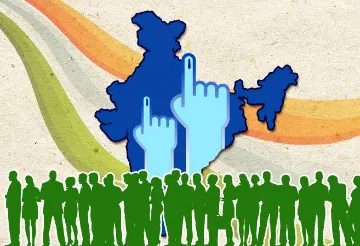
As voting begins, the world’s biggest democracy should realize that its rise isn’t inevitable and will require greater courage from its next government.
On 6 November 2003, US President George W. Bush made an 'excellent¿ and ¿noble¿1 speech (much acclaimed by analysts and the media) at the 20th anniversary of the National Endowment for Democracy, whereby he launched a new ¿forward strategy of freedom in the Middle East'.
It may not be the story that Paul Bremer or Iyyad Allawi would want to muse over for their grandchildren: ¿I was among the handful there...¿ Yet, that¿s truth about power-transfer in Iraq, America¿s testing-ground for western democracy in the feudalistic Gulf Arab region living in a decadent past.
With the first-ever local council elections concluding without incidents, Maldives has completed the first phase of multi-party democracy introduced with the presidential polls of October-November 2011.
THE DISTURBING aspects of Arab democracy, wrote a columnist in Haaretz recently, "are its implications for Israel." These were listed: advent of democracy in Arab countries would make Israel lose its unique character and the "shared values" with America emanating from it; given the freedom of choice, Arab voters might elect Islamist "extremists"; Arab opinion, as per the most recent Arab Human Development Report
The comfort levels between the West and the UNP, with shared perceptions of liberal democracy and market capitalism is mutual
The impact of terrorism on the oil and tourism industries and on financial institutions and "Democracy, Terrorism and the Internet" received considerable attention at the International Summit on Democracy, Terrorism and Security held at Madrid from March 8 to 11,2005.
At the international summit on Terrorism, Democracy and Security held at Madrid from March 8 to 11,2005, which I attended, the foremost concern in the minds of the participants was the likelihood of an act of catastrophic terrorism involving the use of weapons of mass destruction (WMD).
To mark the first anniversary of the spectacular terrorist strikes in Madrid by jihadi terrorists with definite sympathy for Al Qaeda, even if not satisfactorily proved links to it, the city is hosting what has been projected as an International Summit on Democracy, Terrorism and Security from March 8 to 10 to discuss, inter alia, the causes and the underlying factors of terrorism, methods of confronting it and the democratic responses available
Three weeks well into the constitutional deadlock that has stalled governmental functioning an parliamentary proceedings alike, there is no end in sight still to the political crisis overwhelming the Maldivian archipelago. The infant democracy, which otherwise used to be inward-looking until the politico-constitutional changes of 2008, cannot allow to fail itself - and its political leaders cannot try to have it both ways, either.
With the Election Commission formally notifying the presidential polls for September 7, Maldives is gearing up to prove to itself and the rest of the world that democracy is very much at work in the Indian Ocean archipelago.
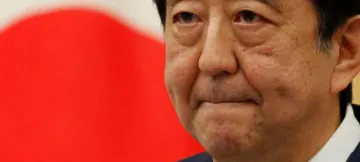
With only a week left for the scheduled second-round polling in the presidential elections on Saturday, 28 September, it may be time the stake-holders in Maldives arrived at an interim consensus, keeping the healthy and constructive future of the infant democracy at heart.
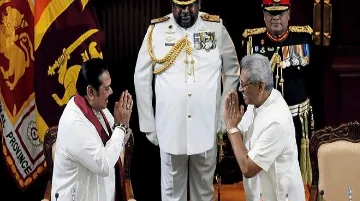
Not all seems to have been lost to the infant Maldivian democracy. Arch-rivals in the still -unfolding national political drama have come together again, to re-vote two Bills to ensure mandatory assent after President Waheed Hassan Manik had returned them.
The latest in the series of crises that have hit the young Maldives democracy is the arrest of Chief Justice of the Criminal Court, Abdullah Mohammed, and the involvement of the Maldivian National Defence Force in executing the arrest request from the police.
For a nation celebrating the golden jubilee of the country's Independence, Maldives has been at sixes and sevens through the previous year. And for a people who have taken politics and democracy with all its dynamism and vibrancy,
The landslide victory of Aung San Suu Kyi's National League for Democracy (NLD) in the November 8 elections is a harbinger of changing times in Myanmar. Winning clear majority, bagging more than 2/3rds of seats, the NLD has been placed in a position to steer reforms in the country.
Even before the Opposition National League for Democracy (NLD) could celebrate its victory in the recently-concluded by-elections, Myanmar is facing its first test as a nascent and evolving democracy.
The reforms in Myanmar took yet another symbolic step in the past few weeks with Aung San Suu Kyi, the leader of the National League for Democracy (NLD) and the nation's crusader for democracy, set foot for the first time outside the country in over 24 years.
The country has already seen three years of Thein Sein government, a critical phase in the history of Myanmar, which back then was on the throes of transition to democracy.
The Nepalese revolution is only the latest manifestation of the power of the people in compelling dictatorial forces to yield. In February 1986, the Philippine people had brought down a dictatorship and restored democracy in their dramatic four-day People Power Revolution.
Despite former king Gyanendra's attempts to revive the golden days of monarchy in Nepal, it will not be an easy return given the monarchy's past role in muzzling the voice of democracy.
This paper analyses the debate surrounding federal restructuring in Nepal and the position taken by various political stakeholders. It argues that an early political consensus on federalism is imperative; otherwise, the country may slip into greater ethnic conflict. Nepal is currently experiencing perhaps one of the most turbulent phases in its contemporary political history. In 2008, Nthe 240-year-old institution of monarchy—for long seen a
Pakistan's Prime Minister-designate Shaukat Aziz has been elected to the National Assembly with a thumping majority. His victory is being projected as a peaceful transition of power¿from Jamali to Shujaat to Aziz-- and as a sign of democracy maturing in Pakistan.
Bhutan's honeymoon with democracy seems to be facing its first challenge, that too from unexpected quarters. For a nation that boasts of measuring its national wealth in terms of Gross National Happiness (GNH) and not conventionally in GDP.
Many historic moments have come and gone in Pakistan's 65 years, but never before has a democratically elected government completed a full term. As a "new" Pakistan readies for election, the question is - will Pakistanis make democracy work?
It may not have been pretty, but the finish-line is within sight for the Zardari-led coalition government in Pakistan. And the first democratic transfer of power is a significant milestone in the growth of democracy in the country.
Facts on the ground suggest that Army Chief, Qamar Javed Bajwa, and his army are interested only in the formal trappings of democracy.
People have voted against the military’s political favourites but General Munir still gets to cook up the next coalition government
Get away from the barter system of vote bank politics. Politicians need to rise above petty politics and show they haven't got feet of Vernacular clay. This will be the first step to prove to the world that we are a mature democracy.
The rise of Narendra Modi from the Gujarat chief ministerial chair to that of the prime minister of the world's largest democracy within a short period of 18 months as a phenomenon is being studied, analysed and written about across the world but there is more to come.
India’s concerns on Maldivian democracy and on the China front would remain, as standalone issues.
China's assessment of its threat environment has evolved under President Xi Jinping, who underscores the imperative of bolstering traditional and non-traditional security. The Chinese Communist Party believes that inimical forces will attempt to overthrow it by penetrating the ideological sphere. Additionally, following the tumultuous presidential succession in the US in 2021, China has sought to cast doubts on the virtues of democracy, and is le
Democracy is about winning elections, forming stable governments, governing efficiently and ensuring justice.
Pressure that both sides face from the United States and the West gives their partnership new depth.