-
CENTRES
Progammes & Centres
Location
695 results found
When two top American diplomats speak out in quick succession about the international system, the world will take note. The op-ed by U.S. Secretary of State Condoleeza Rice in the Washington Post titled "The Promise of Democratic Peace," and the policy speech four days later by Under Secretary of State for Political Affairs Nicholas Burns at the European Institute titled "A Renewed Partnership for Global Engagement" fall into this category.
Trump’s unique ability to marginalise the US’ partners and placate its adversaries shapes the Ukraine war.
India has been witnessing rapid urbanisation in the last decade, particularly in its large and medium-size cities. As more and more people move towards cities and towns, it is imperative to build an understanding of how cities are geared in terms of growth and inclusion. In what ways do India's marginalised communities get excluded from the country's growing urban spaces? This paper studies how individuals and groups are included inor exclude
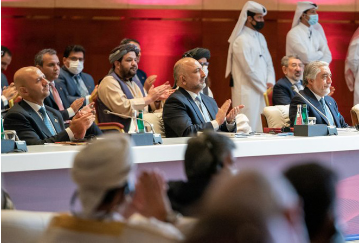
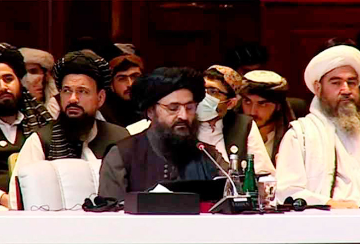
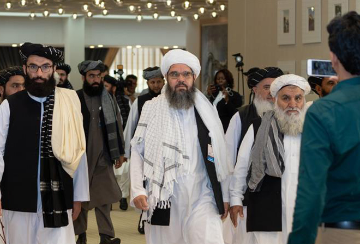
More than six months into his tenure, Afghan President Ashraf Ghani is possibly as far from achieving a breakthrough with the Taliban. There is no unanimity in the Taliban for peace talks. And Pakistan's failure to bring the Taliban to the table could possibly be a reflection of its limited influence over the group and a bigger obstacle to the talks may be the Taliban itself.
Nawaz Sharief's election for an unprecedented third time as Pakistan's prime minister has been welcomed by the Afghan government. Afghan President Hamid Karzai congratulating Sharief called upon the new Pakistani government to enhance cooperation in order to work towards a peaceful resolution to the conflict in Afghanistan.
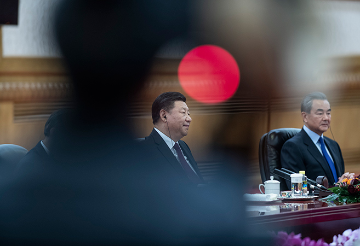
In the midst of growing political instability, emerging complexities in the peace process, and significant aid cuts, the coronavirus outbreak is intensifying the struggle on all fronts in Afghanistan.
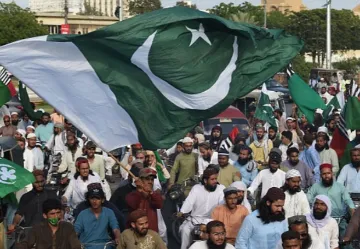
The recent developments in the Afghan reconciliation process have evoked a new sense of optimism regarding a peaceful solution to the conflict in the country. First, there was the release of 26 prisoners, in batches, by Pakistan and then the two-day talks in Paris,
Vision of a peaceful, united and prosperous Africa set out in Agenda 2063 could be achieved through sound planning and other roundups
As geopolitical tensions rise, African nations are increasingly aligning with Chinese President Xi Jinping’s Global Security Initiative. The framework, which promotes non-interference, respecting sovereignty, and development-focused security, is appealing to African countries as an alternative to Western-led interventions. Through military cooperation, peacekeeping missions, counterterrorism assistance, and non-conditional security aid, among o
Even after the decolonisation of Africa, the continent was unable to formulate, let alone implement its own agenda because of its deep political and economic vulnerabilities. This situation has changed in the last two decades, and today, Africa is witnessing political and economic resurgence. Its leaders realise that the time has come for African development to be owned and driven by the African people themselves. There is a new enthusiasm for th
At the end of a French delegation's visit to Pakistan recently, the Pakistan Foreign Office put out its usual statement. It referred to Pakistan as an anchor of peace in the region and said that the leader of the French delegation, former Premier Senator (Francois) Poncet, had commended Pakistan's role in promoting peace and stability.
It has historically been assumed that while the nature of war remains the same—i.e., violence inflicted on the adversary to bend them to one’s will—the character of warfare changes with technology, organisation, politics and culture. This notion has changed. Over the past decade, the nature of war has also changed, with increased use of non-contact and non-kinetic modes of warfare expanding the battlefield spatially and temporally.
By announcing the American decision to ¿nominate¿ Pakistan as a ¿major non-NATO ally¿, US Secretary of State Colin Powell may have done a calculated disservice to the ongoing peace process between Islamabad and New Delhi. His reference to greater military-to-military cooperation with Islamabad may have stirred,
Joe Biden’s decision may have the potential to drag the Trump administration into the conflict.
Naxalites of the Communist Party of India-Maoist and Communist Party of India -- Marxist-Leninist (Janashakthi) trashed the peace process in the southern Indian state of Andhra Pradesh on January 17.
Despite being on the backfoot as the country’s civil war intensifies, the military regime is showing no interest in a democratic transition that may be the country’s only hope. India must explore various options for a peaceful resolution to the crisis and provide humanitarian assistance to displaced people
Securing Bangladesh's energy supply in the face of its growing needs has been the primary motivation for the country to sign the recent agreement with Russia for cooperation in the peaceful use of nuclear technology.
In the prevailing era of strategic uncertainty, Special Forces (SF) provide the most reliable means to a government for the application of military force to achieve national security objectives. The SF components of a nation¿s military and other security forces are force multipliers in times of both war and peace.
The Chinese navy is leading the dramatic shift in the political goals of China's armed forces. Besides territorial defence, the Chinese armed forces now also aim to protect Beijing's expanding interests beyond borders, influence regional security politics and contribute to international peace.
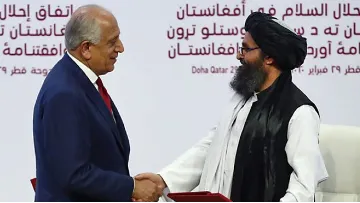
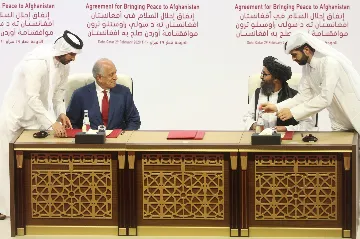
This special report was written before the 2020 United States presidential elections. Under the incoming Biden administration, the US military withdrawal from Afghanistan is likely to be more gradual and “responsible”, despite the President-elect being in favour of American troops exiting the war-weary country soon. In retrospect, Donald Trump’s insistence on pulling out all US troops from Afghanistan by Christmas 2020 was not misguided, si
Elected to the UNSC, Bahrain must reconcile Arab solidarity with its partnership with Israel under the Abraham Accords.
This brief employs text analytics to assess the extent to which speeches at the United Nations General Assembly (UNGA) on matters of peace and security find resonance in resolutions passed by the UN Security Council (UNSC). These two are among the six main organs of the UN system: the UNGA is the main deliberative and representative body; and the UNSC is tasked with maintaining global peace and security. This brief studies four contemporary issue
This year marks the 15th year since India and the European Union (EU) agreed on a Strategic Partnership in 2004. Over the years, despite robust bilateral relations between individual European states and India, the EU-India relations have largely been in the area of potential rather than accomplishment. This brief evaluates the emerging security partnership by focusing on three key areas, viz. peacekeeping, nuclear issues, and maritime security. I
‘Us vs. Them’ narratives fuel conflicts and make them thrive. This brief examines the role of such narratives in impeding the path to peace and stability in Kashmir, especially in the current era of so-called ‘new militancy’ that is aided by social media. This brief explores how India should build a broad, collective identity in Kashmir—one that will supersede radicalism and a desire for secession. It outlines a history of past and curr
Peaceful international partnerships in crucial sectors, like healthcare, continue to inspire India’s global vision.
China's rulers have a problem. They are not sure if they can continue to portray the image of a country interested in a peaceful rise without this coming into direct conflict with a desire to reassert newly defined core interests.
With the traditional liberal order appearing agile, new questions on international security and peacemaking have come to the fore. In the current context, global players are according Afghanistan greater strategic importance. As NATO troops continue to make headway in that region into the safe havens of ISIS, and with US posturing purportedly getting more robust, China’s role in Afghanistan merits scrutiny. Even though China’s involvement, mi
Pakistan, Russia & China to hold consultations on Afghanistan to explore ways reconcile & restore peace in war-torn country & other weekly roundsups
India-China relations appear to be showing signs of easing, particularly with successive high-level exchanges between the two governments since late 2024. Given the positive momentum in bilateral ties in the past few months, there is cautious optimism in certain quarters that some kind of détente might be on the anvil. Against this backdrop, this brief surveys a sampling of current domestic discourse in China around issues related to India. It f
Territorial disputes between China and Japan over the Senkaku/Diaoyu islands in the East China Sea and between Japan and South Korea over the Takeshima/Dokdo islands in the Sea of Japan have,particularly in the second half of 2012, given rise to concerns about peace and security in North East Asia. Territorial disputes between China and Japan over the Senkaku/Diaoyu islands in the East China Sea and between Japan and South Korea over the Takes
China’s growing military profile in Africa is following its economic footprint in the continent as exemplified by the Chinese “logistics support base” in Djibouti. It is moving towards an ever more expansive definition of its global interests, as its business in Africa pushes it to create new mechanisms for securing those interests, including its own growing military footprint abroad. This brief examines the changing nature of China’s inv
Arguably the most significant global phenomenon of the past four decades has been the economic and strategic rise of China. Today analysts are confronting questions of whether China will replace the United States as the world’s biggest power, if it will do so peacefully or through confrontation and conflict, how it will subvert the existing system of global rules and institutions, and whether a new form of bipolarity would emerge to accommodate
There can be no peace unless the Taliban and Afghan security forces de-escalate
With Gaddafi around, there will be no peace in the Arab region. Africa will also be badly affected. That is why Gaddafi's Foreign and Interior Ministers and several Libyan Ambassadors deserted him. What high moral dictate or compelling necessity led to India's neutral stance in the vote on Security Council Resolution 1973?
Sudan has remained embroiled in a devastating civil war for more than two years, causing an estimated 62,000 deaths and the displacement of approximately 14 million people. But what are the root causes of the war and why has a political resolution remained elusive?
The internal dynamics of Jammu and Kashmir have assumed significance in the context of the ongoing India-Pakistan normalisation process, on the one hand, and the Centre's continuing efforts at peace-building with non-militant political groups in the State, on the other. Often, efforts aimed at understanding the complexities of the issues are bogged down by the past, or are confined to the 'Indian angle'. There is very little reference to Pakistan
Not only would CPEC run roughshod over the sacred Panchsheel principle of "mutual respect", it would also destroy any chance of a peaceful settlement of the Kashmir dispute.
Dr. Manmohan Singh's invitation to Pakistani President and the Prime Minister has a special relevance for a number of reasons. And Dr. Singh definitely deserves kudos for pushing the envelope for Indo-Pak peace, in spite of not being on the strongest political wicket himself.
Safe countries bestow multiple social and economic benefits on the individual and larger community. Therefore, crime levels must be controlled. While India is a relatively peaceful country by global standards, there is significant scope for improvement in terms of policing, the national criminal justice system, and how data on crimes is collected and analysed. Amid India’s rapid urbanisation, it is crucial to study the various facets of crimina
The mass arrival of refugees could well cause the international community to contemplate a model where European troops take care of different sectors to keep the peace in the Mediterranean. But since European intervention will smack of re-colonisation, the ball will be tossed upto the UN Secretary General to devise a muscular UN Force.
The citizens’ right to protest is a pillar of Indian democracy. While citizens are allowed to peacefully assemble, however, protests and demonstrations sometimes take a violent turn; recent examples are the Jat protests in Haryana and the Kashmir unrest following the death of militant leader Burhan Wani, both in 2016. During such occasions, it is the prerogative of the Indian state to deal with the violent civil protests in a manner that ensure
Although it may look like a "sudden development", Chinese observers pointed out that a "quiet but significant" shift in China-India relations had already been underway in the past few months.
The rapidly changing battlefield—framed by emerging transnational threats and the rising influence of public opinion—has transformed military diplomacy; today the focus is shifting from traditional combat to joint multinational operations and non-combat activities. Since the early 21st century, China has modernised its People’s Liberation Army (PLA) and expanded military diplomacy to protect the country’s interests. Using civil-military f
As an emerging power in the current multipolar global order, India can use the Shanghai Cooperation Organisation (SCO) to protect, promote, and project its geostrategic and geoeconomic interests. The SCO is also a platform for India to reaffirm its commitment to revive and deepen its centuries-old civilisational, spiritual, and cultural ties with other member countries. This paper explores India's priorities at the SCO, chiefly connectivity, coun
One of Tunisia's leading politicians, Sheikh Rashid al-Ghannouchi, says the Middle East is not in crisis, but rather at a "crossroads." The Middle East can indeed achieve stability and peace through a process of democratic reconciliation and consensus. But the road will be long and involve building institutions, healing old wounds and forging compromises.
While Russia and Ukraine are showing conciliatory signs, primarily in an attempt to win Trump over to their side, a peace deal is still unlikely
Prime Minister Manmohan Singh has given enough reasons for President Pervez Musharraf to feel at ease. His unambiguous expression of not letting the peace process between the two countries flag should lay to rest speculations and allegations in Pakistan about India's commitment to peace in the region.
Does the United Nations really matter when it comes to war and peace in the 21st century? To ask this question when long promised reform of the UN seems at hand ¿ the report of the High Level Panel appointed by Secretary General Kofi Annan will be out on Thursday ¿ and India is stepping up its efforts to become a part of an expanded UN Security Council sounds heretical.
The United States (US) is recalibrating its strategy in the Indian Ocean, driven by the region’s rapidly evolving geopolitical and geostrategic landscape. The US approach has moved from unilateral dominance to a more collaborative strategy that emphasises shared leadership through a technology-driven security paradigm. This paradigm supports a rule-based order where regional stakeholders are empowered to adopt more significant roles. The founda
Domestic climate of social peace and stability needed to turn the tide