710 results found
With the news of back channel negotiations between the Taliban and the United States coming to light, the Karzai government's fear of the hijacking of the reconciliation process with the Taliban by foreign partners might not be ill found.
The next steps towards peace with Pakistan need to be thought out carefully to prevent the dialogue process from getting derailed or losing steam - two possibilities which seem to be staring in the face of policy makers on either side of the border.
There is disquiet among India’s policy making circles that are being done to address a domestic constituency in aftermath of surgical strikes in PoK.
Noises of peace are once again emanating in Maoist insurgency hit-Nepal. The Maoists have expressed their desire to sit at the negotiating table, while, at the same time, creating a blood bath in different parts of the Himalayan Kingdom.
The basic purpose for Obama to have undertaken the nocturnal visit to Kabul is to show the Republicans as the misguided war mongers who thrust two wars on a nation in recession. True, Afghanistan was a war of choice but now unpopular at home. He would like to appear to be the leader who called back the troops.
Though India and Pakistan have been working on improving bilateral trade, the recent meeting of Experts' Group on Trade in Petroleum and Petrochemical Products come in the wake of the ongoing energy crisis in Pakistan.
In the Afghanistan peace process, Pakistan's significance lies more in its capability to play a destructive role than a constructive one. It is capable of scuttling the peace process and can stoke violence by supporting groups like the Haqqani network and engineer attacks against the government or foreign troops in Afghanistan.
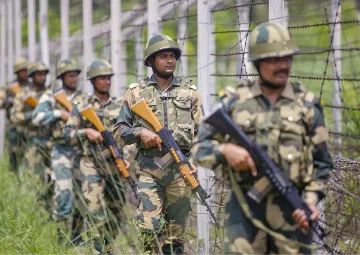
The continuing ceasefire violations on the India-Pakistan border could become a stumbling block in the renewed attempts by the leadership of the two neighbours to improve their relationship.
As the world today looks up to India as a net security provider, Delhi needs to recast its peacekeeping strategy by modernising its decision-making structures, expanding domestic defence capabilities, and strengthening its military diplomacy.
The significance of the agreement brought out between rival Afghan presidential candidates, Abdullah Abdullah and Ashraf Ghani, should not be overlooked. It has ensured that Afghanistan's democratic transition does not come to a premature halt. A timely resolution of the immediate predicaments could guarantee that it remains a durable one.
One of the critical issues that seem to have missed the Indian-Pakistan peace process is terrorism. Pakistan has quietly managed to keep the issue on the backburner by raising the issues of Baglihar dam and Kashmir.
New Delhi and Islamabad dominated dialogue have failed to come up with any solution to vexed issues like Kashmir. May be sub-regions like Punjab and other border provinces like Rajasthan-Sind.
While Moscow's core demands remain unchanged, its secondary demands have evolved. Among other things, it no longer objects to Ukraine joining the EU.
The Third R. K. Mishra Memorial Lecture was delivered by His Excellency Mr. Hamid Karzai, President of the Islamic Republic of Afghanistan, on October 5, 2011 in New Delhi. Outlining his vision for a peaceful and stable South Asia, President Karzai stressed that all the regional players would have to work together towards achieving this goal. This is the text of the lecture and proceedings of the event.
India must remain engaged with the multiple processes underway on Afghan reconciliation
The so-called ‘War on Terror’ launched by the United States following the September 11, 2001 attacks in its soil has had far-reaching implications to the pursuit of peace across many parts of the world. One of the crucial areas where the war is being fought is Afghanistan, which has been both a breeding ground of terrorism and a victim of violent terrorist attacks itself. This brief analyses the role played by Japan, a major ally of the US, i
Pakistan¿s port city of Karachi has been buzzing with military activity beginning September 2004. There have been two important events: first the inauguration by President Musharraf of the third IDEAS-2004 defence exhibition at the Expo Centre, Karachi.
The message in the murder is the obvious one. Kashmir’s terrain has changed, all the past verities no longer prevail. In the new situation, you are either for us, or against us, there is no middle ground.
South Asia's Weekly report with news of peace brokering in Afghanistan among other news
New Delhi must stop viewing its foreign relations with Colombo from the Chennai prism alone just as it was a mistake to view our relations with Bangladesh through Kolkata's priorities. Tamil aspirations in Sri Lanka are important but there are other abiding interests too.
The current impasse in the peace process in Sri Lanka should worry friends of the nation, including India. Starting haltingly in the post-war months, the negotiations between the Government and the Tamil National Alliance (TNA) has been deadlocked...
Reports that Chinese President Xi Jinping had proposed trilateral talks involving the shared Indian neighbour at a meeting with visiting Sri Lankan counterpart Maithripala Sirisena should make New Delhi sit up and take notice.
The just-concluded parliamentary polls in Sri Lanka may have a lesson or two for political parties in India, which too is facing elections in the coming weeks. If past parallels are any indicator of a sub-continental voter-behaviour, the average Sri Lankan has gone with bread-and-butter issues, highlighted by the United People¿s Freedom Alliance (UPFA)
The end to ¿Karuna rebellion¿ inside the LTTE, as fast as it commenced in early March also marks the beginning of a new, rather revived pace in the Sri Lanka peace process. Within days of telling the world who was the boss in all the Tamil-speaking areas in the North and the East, the LTTE sat across the table with the Government team, facilitated again by the Norway-led Sri Lankan Monitoring Mission (SLMM),
By declaring that his talks with Pakistani counterpart, Khurshid Mehmud Kasuri would produce nothing dramatic or drastic, External Affairs Minister Natwar Singh might have robbed the event of the avoidable media hype, the like of which had attended on the ¿Agra summit¿ earlier. At the end of it, the two-day ministerial meeting in New Delhi was a cup that was not half-full. Nor was it half-empty. In turn, this indicated that the two Gover
The ORF conference stressed that the Sri Lankan state must be very sensitive towards creating the right perceptions about its policy of inclusiveness towards the Tamil minority
Afghanistan and India enjoyed a “romantic relationship,” with close cultural ties.
Realities are changing in Afghanistan, and New Delhi must be nimble.
Pakistan is an important player as far as determining the outcome of a post-2014 Afghanistan is concerned and should be engaged with. But to expect it to play a productive role or to expect Afghanistan and Pakistan to reconcile their differences and jointly work towards stability is a tall order.
Understanding the importance of peace has been accorded high priority in many religions, such as Hinduism, Jainism, Buddhism and Sikhism. In recent years, many economists have realized the monetary value of peace. Peace is a pre-requisite for the development of infrastructural facilities like education, health, roads, irrigation, power and communications.
The India-Pakistan peace process, punctuated with -uctuating waves of optimism and anxiety, has completed three years, and it is appropriate, and timely, to review whether the primary On April 22, 2003 the Indian Prime Minister, Mr Atal Bihari Vajpayee, told the Indian Parliament that India was unilaterally opening “the doors for talks” with Pakistan. The offer was based on two simple premises: one, that Pakistan would stop cross-border in
This brief examines the Kashmir conflict from the perspective of the young population who have grown up in tumultuous times in the Valley. It builds on findings of field surveys conducted by the author across the Kashmir Valley over the last two years, covering issues that remain unanswered three decades since the start of the insurgency. These topics include Kashmiriyat, the exodus of pandits, governance and administration, the post-2016 unrest
There has been speculation galore regarding Abu Musab al-Zarqawi, the head of the Al Qaeda in Iraq, ever since the US Marines carried out a flushing-out operation to smoke out foreign terrorists allegedly operating from the Sunni stronghold of Qaim, which is located in a desert area where the Euphrates river crosses from Syria into Iraq.
The troubled state of Jammu and Kashmir is governed by two controversial laws – the Armed Forces (Jammu and Kashmir) Special Powers Act (AFSPA) of 1990 and its predecessor, the Jammu & Kashmir Public Safety Act (PSA), 1978. In the past few years, state security forces have been enforcing these two laws against suspected militants and insurgents with increasing severity. This paper argues that the combined enforcement of these two laws has s
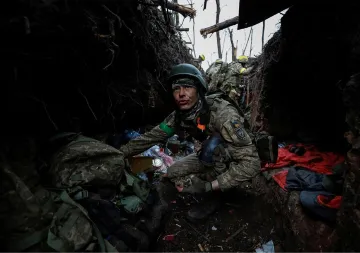
Now in its twelfth month, the Ukraine crisis is caught in a protracted winter of war rather than one of frozen hostility or attempted peace. Most prognoses point towards continuing military action instead of dialogue in the near term. This is primarily because Russia and Ukraine have made their maximalist positions clear. But is the door to dialogue completely shut, or is there room for ‘strategic accommodation’ through creative peace diploma
For starters, trade talks between the two countries resumed after a hiatus of nearly three years. The talks were suspended following the Mumbai attacks. But the thaw emanating from the latest bout of 'cricket diplomacy' has paved the way for cooperation in the sphere of trade.
President Trump's efforts to end the Russia-Ukraine and Hamas-Israel wars have faced significant obstacles, revealing the complexities of peacemaking. Despite his campaign pledge to resolve both conflicts quickly, negotiations have stalled.
Both sides are aware that bringing an end to the hostilities will take place in a piecemeal fashion, with long-drawn negotiations and the prospects of further escalation
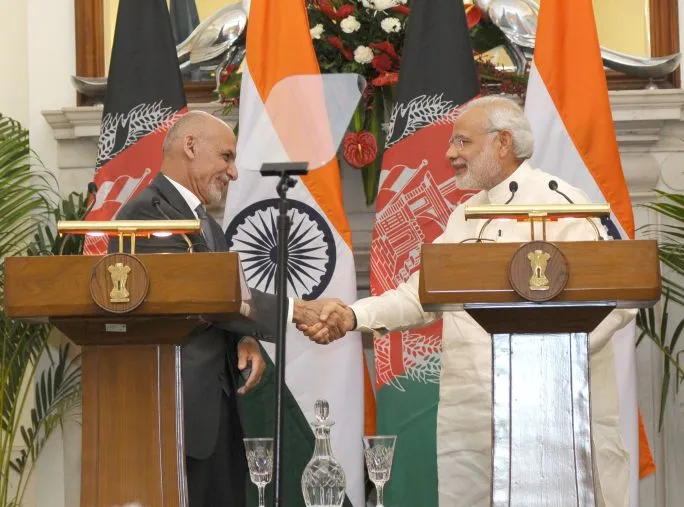
Afghanistan President Ashraf Ghani’s bold peace offer to the Taliban has aroused hopes of peace in the country torn by war for many years now. In a sweeping proposal made at the Kabul Process conference in February, President Ghani offered a ceasefire, the removal of sanctions, release of prisoners, the recognition of the Taliban as a political party, the conduct of fresh elections, and a review of the constitution. He repeated his offer in Mar