1392 results found
This brief examines the rapid growth of the global online gaming industry and the consequent increase in cyber threats. Issues such as microtransactions, money laundering, and predatory practices by developers can stymie the industry’s growth potential if not addressed. Many countries’ current gaming-focused regulatory frameworks do not cover these challenges and will need to be revised. India—a significant gaming market—must also conside
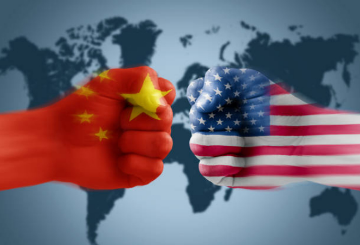
Given their own shoddy handling of the COVID-19 outbreak, Trump and the Republicans believe they must demonise China to win the November elections.
This paper dissects the causes behind Pakistan’s ongoing economic crisis. The causes include dwindling forex reserves, the phenomenon of ‘galloping inflation’, a falling Pakistani Rupee, uncompetitive and undiversified export basket, burgeoning external debt, lack of fiscal prudence, debt distress, and a worsening business environment—all cascading to a balance of payment crisis. While austerity measures, appeals for loan rollover to debt
As the world grapples with uncertainty in the post-COVID-19 era, China appears to be focusing on bolstering its rural economy. China claims to have brought nearly 100 million people out of poverty since 2012, but the regime feels that unbalanced development can jeopardise the gains of poverty alleviation. The widening economic gap could also foment unrest in the rural areas. Additionally, the government believes that the reliance on grain
The political health of the US is important not just for the country itself, but the world, given its outsize influence as the foremost economic and military power.
By 2041, Delhi’s population is expected to reach 28-30 million. To meet the requirements of a massive population in a systematic and sustainable manner, the Fourth Master Plan for Delhi (MPD) is being prepared and expected to be completed in 2021. This paper describes the progress and preliminary focus areas of the forthcoming plan, highlighting current challenges during preparation, as well as future ones expected in the implementation
As India reels from the economic fallout of Covid-19 despite the announcement of a relief package, calls for a more refined and demand-inducing stimulus have emerged. However, the bleak state of the government’s coffers has left limited fiscal space to act. This brief explains the plausibility of financing a demand-inducing stimulus using debt monetisation as a one-time policy measure. Outlining the criticisms against such proposals and how the
Access to, and development of indigenous digital platforms and cutting-edge technologies is imperative for robust socio-economic development and national security. In turn, such process needs to be democratised, and undertaken in a sustainable manner. India is a first mover in this novel idea of democratising technology and developing Digital Public Goods. Operationalised in the digital infrastructure called India Stack, India’s strategy aims t
The Russia-Ukraine war has dealt a massive blow to a world already battered by the prolonged COVID-19 pandemic, and the Sustainable Development Goals (SDGs) appear farther from reach. The current global scenario demands greater international cooperation for development. Yet, development aid is increasingly getting more securitised, and the imperative is for the international community to leverage cooperation during the current Decade of Action fo
Across the globe, more than 730 million women report ever having experienced some form of gender-based violence; those in low- and lower-middle-income countries are disproportionately affected. In the past two years, the COVID-19 pandemic has only increased the incidence of violence suffered by women in the hands of their intimate partners, owing to heightened stresses of loss of livelihood, disruption of social and protective networks, a
After improving between 2000 and 2013, hunger levels have significantly worsened in Africa in the years since. While global food insecurity is currently at an all-time high, Africa's record in addressing undernutrition was not impressive even in the pre-pandemic era when growth rates were higher. There are several challenges to food security in Africa, including short-term external shocks such as the pandemic and the Ukraine-Russia war, and long-
A survey finds overwhelming support for Modi’s foreign policy among Indian youth
New Delhi needs to note that China’s estrangement from the US is not as serious as the one with India.
Heightening great-power rivalry has impeded consensus-making in multilateral institutions. This has given rise, in recent years, to minilaterals especially in the Indo-Pacific. Even as there are criticisms that minilaterals are too informal and lacking in structures that are required for focused debates, China’s belligerence has galvanised support for, and focus within minilateral groupings in the region. Over the past year, the fallout of the
The COVID-19 pandemic is posing unique challenges to policymakers across the globe, necessitating efficient action in short timeframes. During such crises, having the right data at the right time is crucial to making informed policy decisions. Traditional economic indicators can be inadequate owing to issues of timeliness, granularity, and difficulty in collection. There is a need therefore for higher-frequency and more granular data to track e
During the COVID-19 pandemic, India contributed to the global response by increasing its vaccine development and health diplomacy efforts, underscoring, among others, its potential as a biotechnology powerhouse. The Government of India continued its effort to make progress in biotechnology research and development in the years after, launching the BioE3 policy in 2024. The BioE3 framework aims to develop a US$300-billion bioeconomy in India by 20

As the world confronts multiple challenges which are intricately connected, our path for development stands at a crucial juncture. In the context of the embroiling polycrisis, progress on the sustainable development goals (SDGs) has been steady but fragile with major and persistent challenges. Financing for Agenda 2030 has emerged as a major bottleneck with several developing economies, especially the least developed countries (LDCs), low-income
The COVID-19 pandemic sparked rapid digitalisation worldwide, with work-from-home interactions, online payments, and online consultations for various services becoming acceptable practices. While this shift in the manner and nature of work brought enormous benefits, crucially in terms of access, it has also increased the kind of cyber security threats that countries face, with vulnerabilities felt particularly in the health and financial sectors.
In the aftermath of the COVID-19 pandemic, reforming the global health governance system has become a key area of concern for the G20 and other multilateral platforms. This comes at a time when the world has increasingly become volatile, uncertain, complex, and ambiguous. As a grouping of developed and developing countries, the G20 must prioritise addressing global health challenges by identifying its direct and indirect determinants. This brief
The COVID-19 pandemic has had a massive economic and social fallout for India, as it has across the globe. In India, large numbers of people lost their jobs, and supply chains across industries and agriculture have been disrupted. At the same time, environmental indicators—notably air and freshwater quality—showed improvements following the long period of a nationwide lockdown. This brief outlines why India must make a focused decision to mov
As if COVID-19 was not enough, Amphan has not merely damaged infrastructure, rendered many homeless, and affected small businesses — but has imposed a cost on the West Bengal economy whose indelible impacts will be felt in the long-run.
The pandemic COVID19 doesn’t just come in the way of the UN Sustainable Development Goals, but calls for a rethinking of the timeline.
Disrupting conventional thinking, Prime Minister Modi held a video conference to fight Covid-19 with all SAARC leaders.
An urgent warning comes from a Harvard University study (bit.ly/3dthqiv), which establishes a correlation between long-term exposure to air pollution and Covid-19 mortality. The study finds that people living in polluted cities are more likely to have compromised respiratory, cardiac and other systems — and, therefore, are more vulnerable to Covid-19.
BIMSTEC member states have issued, on occasion, joint statements recognising the importance of holistic public healthcare and the need for alliances. Yet, intra-BIMSTEC collaborations so far have been limited, mostly focused on traditional medicine. Amidst COVID-19, the region’s states have an opportunity to take their health-sector partnerships to a “new normal”. Given the highly endemic nature of communicable diseases and the porous bor
The year 2022 saw the global economic outlook deteriorate amidst high inflation, fiscal tightening, and supply chain uncertainties arising from both the Russia-Ukraine war and the prolonged COVID-19 pandemic. Global Gross Domestic Product (GDP), after expanding by some 5 percent in 2021, contracted in the first half of 2022. This brief makes a case for gender lens investing (GLI) as a means to boost women’s participation in economic act
The COVID-19 pandemic has exposed the fragility of healthcare systems and strained economies across the globe. India and countries in Africa have emerged as hotspots due to the dual burden of large populations and weak health infrastructure. This lack of infrastructure, coupled with decreasing investments in healthcare over the years, has left their societies and governments underprepared and potentially overwhelmed by COVID-19. As developing reg
India and the United States (US) have been cooperating in the health sector since the late 1960s. The cooperation has intensified in the past decade, riding on institutional structures established following the launch of the US-India Health Initiative in 2010. It has seen further expansion since the COVID-19 pandemic, and today covers a wide range of areas including disease prevention and combating infectious diseases, maternal and child
A ‘new age’ free trade deal with India remains critical in anchoring the United Kingdom economically to the Indo-Pacific
The global shortage in semiconductors that occurred during the Covid-19 pandemic, resulted in heavy losses for many economic sectors. The fragility of the supply chain and the innate dependencies within, have made semiconductor collaboration essential to maintain the industry’s efficiency. This brief examines how semiconductors have become a fulcrum for building potential technology alliances. It outlines ongoing diplomatic initiatives
COVID-19 is the flash point which can tip us over the edge. But it was always touch and go. India needs a reset towards resilience.
The dispute could actually be the harbinger of a new and nervous era, a geopolitical side-effect of the terrible COVID-19 pandemic which is racking the world.
A cross-analysis of the three regions indicates multiple complementarities between India and Europe vis-à-vis Africa — and that there are good reasons to initiate triangular cooperation in certain sectors.
Amid the COVID-19 pandemic, extremist groups find workarounds to the digital blockade as ordinary citizens endure restricted access
Budget woes are unlikely to ease. The Chief of Defence Staff and the Army leadership are likely come under pressure to seriously think about downsizing the Army.
The United States (US)-China trade war and the COVID-19 pandemic fundamentally altered global trade patterns, revealing critical supply chain vulnerabilities. US tariffs pushed companies to shift manufacturing to more favourable locations, accelerating “friendshoring” to countries like India and Vietnam. The “China plus one” strategy has bolstered domestic manufacturing and attracted foreign investment through Production Linked Incentive