-
CENTRES
Progammes & Centres
Location
472 results found
Settling territorial disputes and balancing multilateral relationships are the twin challenges before India and China, opined speakers at the ORF seminar on 'Issues in Sino-Indian Relations and Leadership Change in China' held in Kolkata on July 27, 2013.
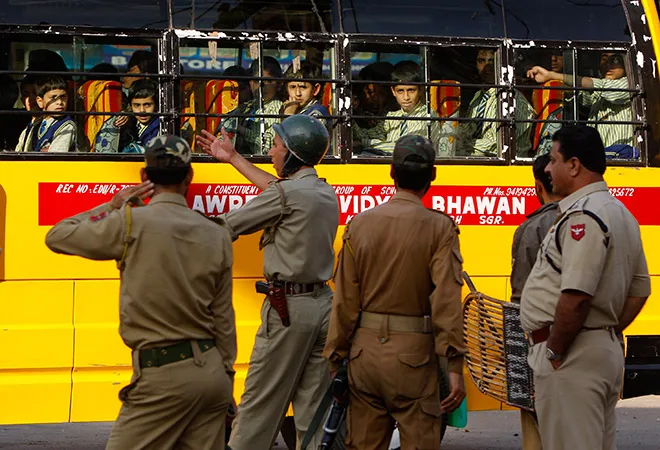
A multidimensional approach can be effective in Kashmir.
BNP is likely to fight parliamentary election in Bangladesh without the kin of Ziaur Rahman leading the campaign.
Politicians are trying hard to keep behind curtains the true state of affairs along the Line of Actual Control but it’s only adding to credibility deficit
A recent report of the 2017-2018 Parliamentary Standing Committee on Defence (PSCOD) has revealed that India’s defence services are facing a severe resource crunch. Given the enormous amount of money that the country is already spending on defence, the chances are slim that the government will come up with the significantly higher amounts of funds needed for modernisation. Meanwhile, the armed forces are facing obsolescence in equipment. The wa
The question of municipal leadership is of great significance in urban governance in India. There are various models of the position of chief executive of an urban local body (ULB), predominantly tilting towards the ‘strong mayor’ model either through ‘presidentialisation’ of the office or through a ‘mayor-in-council’[1] system. In India, it is the ‘state appointed municipal commissioner’ model that holds sway, sitting over a popu
While in politics, the consequences of loss tends to be temporary, the same cannot be said of in war.
Autonomous systems dominated the Dubai Airshow, but the UAE’s push for AI compute sovereignty and supply-chain depth emerged as the real driver of future aerospace power
The BRICS+ bloc, accounting for over 40 percent of the world’s population and a substantial share of its forest area, can play a critical role in shaping responses to climate-related health threats. The grouping’s leadership in harmonising policies across the domains of climate action and healthcare can have profound implications for global strategies to manage pandemics and protect planetary health. This brief makes a case for BRICS to champ
The poem, one of numerous written in that period, expresses admiration for the spell Nehru had cast by his deft navigation of foreign policy between the two blocs not for India alone but a whole group.
China seems willing to assume the climate leadership mantle but there are several factors affecting its acceptability at the global high table on climate.
Sri Lanka, in a way, should thank the dual leadership for delaying the local government elections.
Modi’s re-election assures India’s allies that Delhi will play a leading role in shaping the new world order
Elections-2004 has thrown up a question without addressing it, leave alone answering it. By drumming up on the Vajpayee leadership, the BJP-NDA may have kept the nation¿s focus away from the obvious question, but the latter does remain, however much in the background as they may deem fair: After Vajpayee, Who?
China's renewed engagement with the Southeast Asian neighbours seems to be a policy of the new leadership. However, it must follow up on these successful visits by its efforts and actions. For now, maintaining good relations with ASEAN members seems to be Beijing's new strategy to ease tensions in the SCS.
Is India stepping into global and regional leadership mode?
A lack of legitimacy of the new leadership in Kabul in the eyes of the Afghan public could pose potential problems for it at a time when it is confronted with a number of challenges. This could be exploited by the Taliban as well.
The change in leadership in Kabul has provided a new opportunity for the US and Afghanistan to work together. Media reports suggesting a larger role for the United States post-2014 than originally envisaged have been doing the rounds for the better part of the past six months.
The top job for now will possibly go to someone already blessed by Zawahiri, but the future al-Qaeda could be much more Afghanistan-Pakistan centric as the group looks towards a new era of ideological and operational leadership
The problem of contemporary India's foreign policy making is not that states have acquired a veto over the Centre. Most state leaderships have not only supported regional economic integration and trans-border connectivity, but are also craving for it.
From Agra to air-link, it has been one long U-turn for the Pakistani leadership of President Pervez Musharaff. Today, he readily agrees to address peripheral issues affecting relations with India, and has even ¿unilaterally¿ announced the restoration of over-flights for Indian craft. Going a step further, he has mooted the conferment of Nishan-e-Pakistan, the nation¿s highest civilian title on Prime Minister Vajpayee, if and when the latter ma
The great power contestation of the past one year has been characterised by the economic woes of many countries of the Global South, a global leadership vacuum and the resurrection of hard power aided by technological shifts in warfare
The Biden administration’s climate agenda is a crucial plank to restore American commitments to climate actions and reinstate US leadership globally. However, the agenda has been slow on results. Although the climate fight has been linked to most other federal goals, such as economy, jobs, infrastructure, and procurements, the Biden administration faces both domestic and external challenges that continue to limit how much it can achieve
Europe’s relationship with China has transformed in recent years, with Chinese behaviour and actions now increasingly at odds with European values and interests. As Europe adjusts to new global realities amid a full-fledged war, the European Union (EU) and its member states are recalibrating their strategies and relationships with China. This paper aims to decipher these evolutions by assessing the EU approach and those of certain key European
While there is no doubt that Modi’s outreach has paid us rich dividends, it takes two to tango. The UAE leadership has taken a pragmatic and forward-looking view of the rise of India. It also sees a convergence of interests in standing against religious extremism. As the IPL kicks off, it is important to shed our own stereotypes, to update perspectives and take a fresh look at a country that has emerged as such a vital partner in such a short s
Chinese observers say that the event is meant to be an ultimatum to the Japanese side to retreat, particularly on the Taiwan issue. China hopes that the exhibition of strength will make Japan more restrained and prevent it from taking the "Taiwan's problems are Japan's problems" stance.
Two decades since its inception, the Bay of Bengal Initiative for Multi-Sectoral Technical and Economic Cooperation (BIMSTEC) has yet to truly succeed as an instrument of regional integration. The primary reason for the group’s slow progress is general inertia, or lack of interest amongst its members. There have also been more pressing national and regional issues that have overtaken the group’s development. This is set to change under the im

Blue economy’ is the integration of ocean economy development with values of social inclusion and environmental sustainability, along with dynamic and innovative business models. For India, however, blue economy extends beyond being merely an economic and environmental proposition. It presents India with an unprecedented opportunity to meet its national objectives, strengthen connectivity with neighbours, and exert influence in the surrounding
वैश्विक आबादी में 40 फ़ीसदी तथा विश्व के वन क्षेत्र में पर्याप्त हिस्सेदारी के साथ BRICS+ ब्लॉक जलवायु-संबंधित स्वास्थ्य चुनौतियों का जवाबर तैयार करने में अहम भूमिका अदा कर सकत�
There is a renewed interested in the idea of India taking a leadership role in the Commonwealth to infuse a new lease of life into an organisation which for many in Delhi has long back outlived its usefulness.
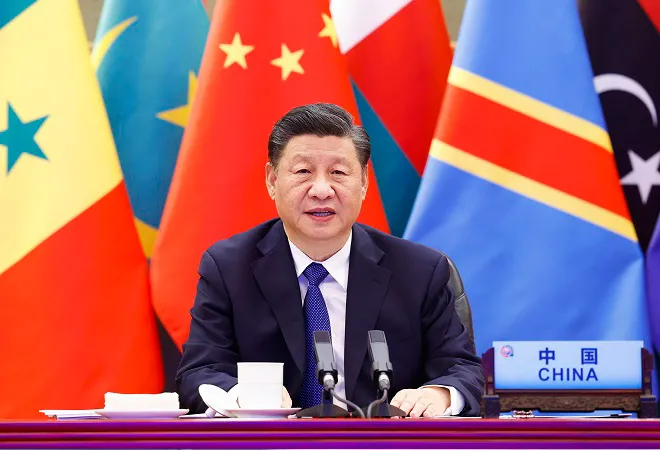
The quinquennial National Congress of the Chinese Communist Party (CCP) is typically the venue for political leadership changes and any restructuring of the country’s military apparatus. However, the 20th CCP Congress in October 2022 saw Chinese President Xi Jinping consolidate his control over the state and military. This brief seeks to understand what Xi’s third term as CCP chief and Central Military Commission chair will mean for t
Days before the historic talks between the separatist amalgam, the All Parties Hurriyat Conference under the leadership of Maulana Ansari, and the Government of India, there is widespread speculation as to the outcome of the same. After all this is the first time
China’s space policy planners are convinced that the country should aim for manned lunar landings by 2040. It has already established a sophisticated robotic lunar exploration programme and human landings are perceived as the logical next step. New navigation and communication architectures are being developed for this purpose, in addition to building life support systems and a suitable launch vehicle. However, China’s political leadership wo
On 3 September 2025, the People’s Liberation Army (PLA) held a grand parade in Beijing, showcasing ballistic and cruise missiles, nuclear triad components, unmanned platforms with countermeasures, and conventional systems from across its services. The event marked the 80th anniversary of China’s ‘War of Resistance Against Japanese Aggression’, which Beijing interprets as culminating in Japan’s surrender to the Allied Powers in September
China’s communist party has survived where others have failed — a testament to its capacity to adapt and reinvent itself with the times. Mao’s successors put ideology aside and focused instead on economic growth. Yet today, under Xi Jinping’s leadership, there is much lip-service paid to the ideology of the communist past, even while key communist principles like collectivism are actively undermined. With a slowing down economy, communi
Utilising connections and collective action to accelerate social advantages, increasing youth inclusion and gender balance are crucial.
India has almost blinked to the King of Nepal on the question of arms supply. These supplies were put on hold on February 1, 2005, following King Gyanendra¿s coup against the democratic system and leadership.
The depth of the Congress's problems is evident from the party's inability to come to grips with the problem of party leadership. For structural reasons -- primarily the fact that it is a proprietorial entity -- this is the most critical problem for the party. This was evident from the reactions to P. Chidambaram's remark that a "non-Gandhi" could "someday" become president of the party.
The outcome of the Third Plenary meeting of the 18th Central Committee of the Communist Party of China which ended on Wednesday in Beijing is like a typical iceberg -- you see some of it above the water, but most of it is below. The leadership knows well that if reforms of the financial sector and of creating a legal governance regime are delayed, the economic miracle could well turn into a nightmare.
Although it would not be entirely false to suggest that Maoists have managed to capture the imagination of a large section of Nepalese society because of the widespread poverty and continued neglect by successive monarchs and political leadership, there are quite a few other, equally valid, reasons why Maoists have had a run of the Nepalese countryside.
If the Pakistan-TTP talks succeed Pakistan may actually metamorphose from a hybrid theocracy to a complete theocracy, as Ayesha Siddiqa argues, because the Taliban, good or bad, want implementation of the Sharia. Thus all would depend on how far Pakistan's military and civilian leadership want to go to accommodate Taliban demands or prefer to wage war against TTP.