-
CENTRES
Progammes & Centres
Location
655 results found
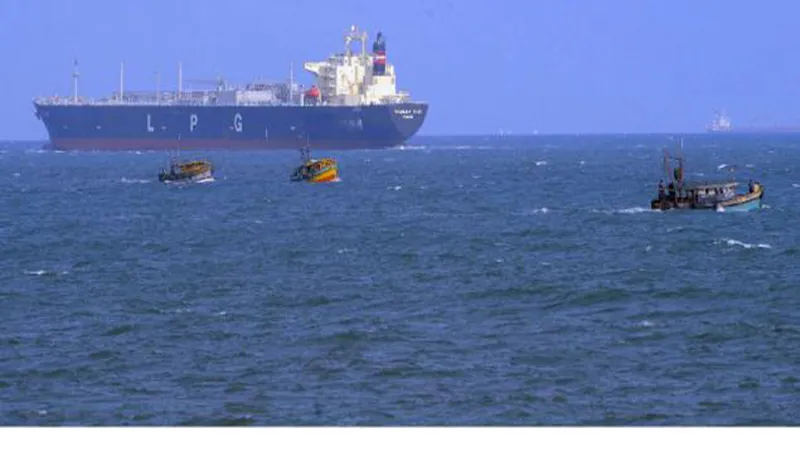
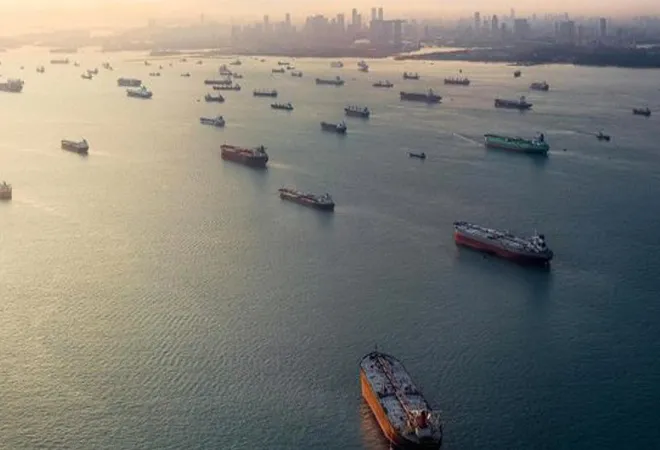
The dependence on China’s demand and exports has driven the shipping industry for too long and has increased risks for the entire supply chain.
प्रभावशाली अंडरवाटर डोमेन अवेयरनेस के लिए भारत को न सिर्
भारत को चाहिए कि वो अपनी क्षमताओं को चीन के संदर्भ में और �
रूस का ये ज़ोर दे कर कहना था कि, वो सुरक्षा का एक ऐसा ढांचा �
Counter-proliferation, counterterrorism, maritime security, maritime domain awareness and HADR are some of the potential areas for JAI to work togethe
What makes the waters of the Gulf of Guinea vulnerable to piracy?
There has been a status quo of tensions in the South China Sea, a focal point of frequent upheaval.
The Western Indian Ocean region’s geographical proximity and its rich natural resources, provides India with a great opportunity to increase its mar
The Indian Navy’s effectiveness as a net-security provider will depend, in large measure, on its leadership’s ability to plan for complex future c
राष्ट्रीय सुरक्षा प्रमुखों ने विभिन्न क्षेत्रों में सह�
Naval power lies at the centre of Chinese aspirations and coalesces energy security, maritime strategy, territorial integrity, naval nationalism, fore
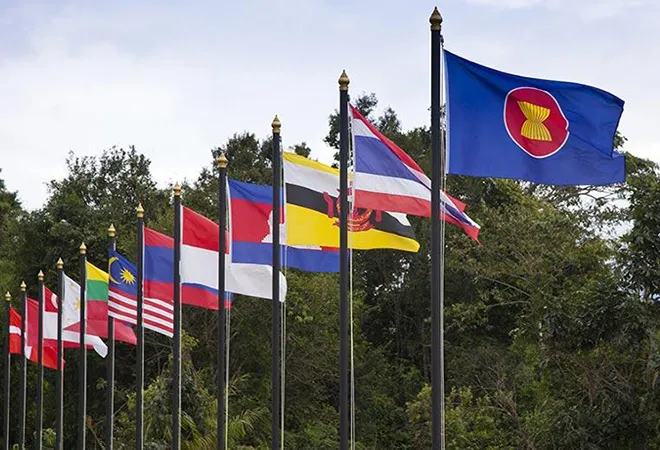
ASEAN states are keen to know if India is willing to take a stronger stand on maritime security in the Asia-Pacific.
Maritime security — on which much else depends — is interconnected with events in landlocked countries. Afghanistan is a prime example: Over the p
The ever-increasing list of 'core interests' involving land and maritime territories indicates an open-ended expansionist drive on the part of China.
Why the newly planned centrally funded Coastal Border Police Force is no solution for India’s littoral security woes.
Several emerging trends like increasing congestion of global commons, especially in the maritime domain and the rapid development of disruptive techno
The way China is encroaching in continental South Asia and the maritime domain of the Indian Ocean — it can raise the hackles of any Indian leadersh
The LEO satellite constellation has important implications for transcontinental communications. It can be used for meeting the 25 million Indian diasp
The eighth anniversary of 26/11, the terror strikes in Mumbai, provides a fit opportunity to review the state of the country’s coastal security
A continued focus on training and development of a methodology that includes a realistic approach to human rights terms and principles is needed.
India's Maritime Agenda may appear to be a major step forward, but unless translated into a time-bound action plan which is resolutely implemented and closely monitored, it may remain merely another document.
Resolution of the maritime dispute between India and Bangladesh has opened up a new horizon for cooperation between the two countries. They can now join together to exploit the natural sources in the Bay. Both countries should try to transform the Bay of Bengal region into a major hub for trade and commerce, bringing prosperity to the region.
India’s geography lends itself favourably to the cultivation and expansion of maritime ties. Yet, for much of the country’s contemporary history, the country has overlooked these opportunities. As the world reengages with its vast ocean spaces, India too, has become more willing and capable of participating in the maritime domain. This paper outlines the evolution of the country’s maritime outlook as it shifts its largely continental-orient
The Indo-Pacific, often regarded as the ‘maritime underbelly’ of Asia, has emerged as the world’s economic “centre of gravity”. The home of vast geo-economic opportunities, and facing manifold security challenges at the same time, this maritime domain has attracted the keen attention of global powers in recent years. This births prospects for multilateral collaborations in maritime security, and justifies the significance of a �
Post-9/11, counter-terrorism experts all over the world have been focussing attention on three new aspects of counter-terrorism: counter-terrorism relating to weapons of mass destruction (WMD), maritime counter-terrorism and counter-terrorism relating to energy security. Each of these requires a new approach and a new thinking.
In recent years, the Small Island Developing States (SIDS) of the South-West Indian Ocean (SWIO) region have emerged as vital security and developmental partners in the geopolitics of the Indian Ocean Region (IOR)—thereby gaining prominence in India’s foreign policy priorities. This paper examines India’s bilateral and multilateral engagement with the SIDS of the SWIO region, and argues that India should consider the concerns of the
This paper examines security collaboration in the Bay of Bengal. It argues that despite increased cooperation in the maritime domain, the security perceptions of Bay states differ significantly, arising primarily from disagreements associated with China’s presence in the region. Crucially, the Bay states are wary of being seen as siding with India to counterbalance China. Even in nontraditional security areas where cooperation is readily possib
During a lecture on 'Japan's foreign policy: Strategy and practice', Japan's Vice Minister for Foreign Affairs, Mr Akitaka Saiki reiterated the Japanese position that the security issues in the Pacific Ocean, Indian Ocean, the South China Sea and East China Sea cannot be treated separately.
Debate on whether Indian armed forces need a continental land defence strategy or a sea-based maritime strategy has gained currency in recent years, but there is yet a clear answer to emerge.
This paper evaluates the possibility of an increase in maritime terrorist violence in Asia, based on a recounting and analysis of some of the most recent past incidents in these waters. It argues that the vulnerability of high seas shipping to criminal acts of violence and the weak and inconsistent nature of maritime governance raises the possibility of a terrorist strike in the Asian littorals. In assessing the odds of a major terrorist attack i
As part of the Maritime Security Programme which was launched by then Chief of the Naval Staff Admiral Arun Prakash on 19th May 2006 at ORF Chennai, Observer Research Foundation, the National Maritime Foundation and the College of Naval Warfare, ORF Mumbai joined hands to conduct an International seminar at ORF Mumbai on 11th and 12th January 2007.
The trilateral maritime cooperation initiative by India, Maldives and Sri Lanka, and the Outcome Document signed recently by the NSAs of the three countries, has the potential for further improving naval ties in the shared Indian Ocean Neighbourhood.
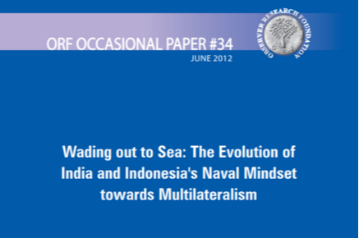
A more concerted and intensive engagement will serve both India and Indonesia well