-
CENTRES
Progammes & Centres
Location
7264 results found
A year after India abstained in the Libya vote, it's clear that India's decision to step aside gained it little, and may have done significant damage to its international standing. If Delhi is to meet its aspirations of becoming a significant regional, let alone global, player, then it needs to think more carefully about the message its positions send.
Since the overthrow of the regime of Colonel Muammar Gaddafi in 2011, Libya has been plagued by violence and instability. Internecine fighting for power seems be the new norm in Libya, and the country has gradually slipped into a quagmire of civil war.
It was the latest carnage by the Islamic State (IS) that finally brought Libya to world attention. Largely unnoticed, this ruthless predator had created space for itself in Libya in the New Year.
If Eastern Libya goes out of Tripoli's control, the Western half of the country will be left with two-thirds of the country's population and without oil revenue. In such a predicament, any regime in Western Libya will become a failed state, l spawning disorder in the entire region.
A few weeks ago the media were running out of print space and airtime covering the Rahul Mahajan story. Rahul¿s sole claim to fame is that he is the son of a slain ex-minister; his own activities made no difference to most of us then or now. Yet in the midst of innumerable health and other bulletins about this ¿celebrity¿, one of the channels had a constitutional expert voicing his opinion on the episode.
The United States wants a higher strategic relationship with India, which does not include agreeing with Indian views on Pakistan. Our participation in the Bonn conference should bear this in mind.
In defining the term 'quality of life', there is no better way to give it a concrete shape than trekking in the woods of an alien land, traversing the streets and bylanes of its cities and staying with people whom you would otherwise never meet in your life.
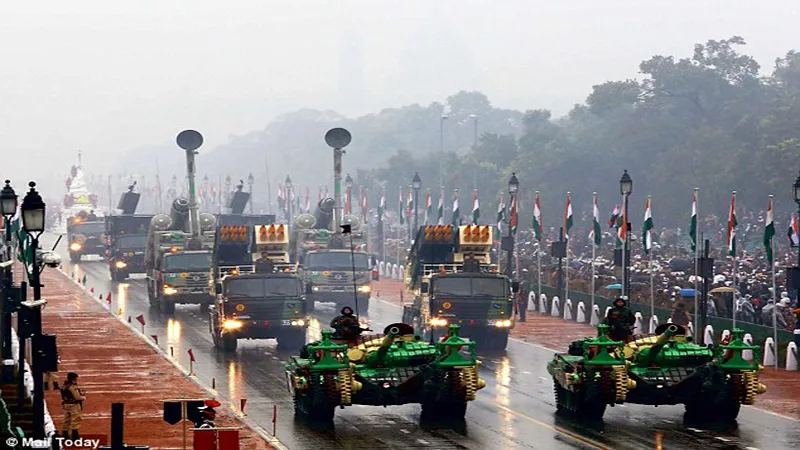
The Indian Army’s (IA) difficulties with regard to the acquisition of light tanks are as much self-inflicted as they are a product of fiscal constraints. The Army has exerted only half-hearted efforts in developing its light-armoured capabilities—inconsistent with current Army doctrine and in disregard of history. Indeed, the IA has used light armour in high-altitude operations in the past. This paper argues that the IA is hobbled by an infan
Throughout the 1990s, the Anglo-US duo remained obsessed with India's nuclear plans and virtually refused any discussions on Pakistani assistance to terrorism in India. The US also did succeed in delaying our missile programme even as they equipped Pakistan with nuclear capable F-16s.
The NDA Government has launched a fresh gold monetisation scheme, but skeptics aren't convinced that this will succeed where others in the past have failed abysmally. Till the scheme is made much more lucrative and perhaps mandatory in some form, it is doubtful that this scheme will perform better than the earlier ones.
Climate change experts at a roundtable at Observer Research Foundation emphasised the need for maintaining a pragmatic attitude at the 20th Conference of the Parties of the UN Framework Convention on Climate Change at Lima. According to them, the goal should be to set reasonable expectations that can be achieved in Paris.
Observer Research Foundation organised a closed door roundtable meeting of Indian Non-Government Experts on climate change with Amb. Antonio Garcia, Special Envoy for Climate Change, Peru.
While there are fears in both the US and China about each other on the nuclear issue, the platforms to resolve the issues and dispel hostile perceptions were limited, says Dr. Lora Saalman, Carnegie's Beijing-based Nuclear Policy Program scholar.
Clausewitz may be out of fashion and less relevant today but no one can question his evergreen noting, ¿Each age has had its own peculiar forms of war.... Each, therefore, would also keep its own theory of war¿.
Climate change and economic development are emotive subjects that are closely related: yet one is caused by the other. People’s lives are increasingly getting affected by the negative side-effects of climate change, particularly in developing countries which, at the same time, face enormous challenges to their aspirations for economic growth. Leading scientists agree that global warming is a reality and greenhouse gas (GHG) emissions are requir
The ongoing security transition is critical to the success of the peace process in Afghanistan. As part of the US 2014 plan, the NATO forces are to hand over the responsibility of security of the country to the Afghan security forces, district by district.
Media's increasing reach cannot be ignored and policymakers and policymaking has to adapt itself to this grind. Media, despite it many vices, serves as a medium for greater appraisal of government policies. But media should understand that sustained attention comes only with sustained credibility.
According to the Delhi Police, Haroon Rashid, an Indian mechanical engineer, who is alleged to be a member of the Pakistan-based Lashkar-e-Toiba (LeT), was arrested by them at the Delhi airport on May 16, 2005, on his arrival from Singapore where he had reportedly gone to do a training course.
China and India both face the twin problem of floods and droughts. While building dams has been the typical way of dealing with this problem, both the countries are exploring the more controversial project for water transfer between river basins, with China taking the lead with its South-North Water Transfer Project (SNWTP).
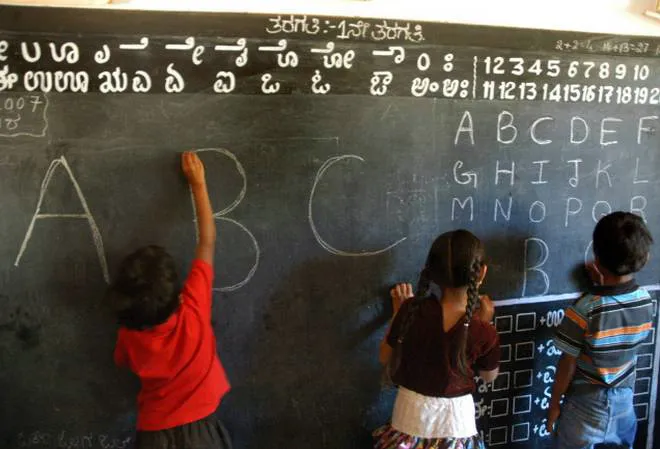
This brief examines the literacy landscape in India between 1987 and 2017, focusing on the gender gap in four age cohorts: children, youth, working-age adults, and the elderly. It finds that the gender gap in literacy has shrunk substantially for children and youth, but the gap for older adults and the elderly has seen little improvement. A state-level analysis of the gap reveals the same trend for most Indian states. The brief offers recommendat
India's Pakistan policy is now inextricably linked to its China policy.
Though the 'Arab Spring' had dethroned the long serving President of Egypt Hosni Mubarak, there is still little scope for genuine democracy, according to Mr. Swashpawan Singh, former Indian Ambassador to Kuwait.
The US Presidential debates might not change the election result, but the good thing is that the world now knows what exactly a Romney Presidency would look like from a foreign policy point of view and what Obama is likely to do if he wins a second term -with little substantial difference in their foreign policy positions.
A solution to the Ukrainian imbroglio lies in shedding old Cold War stereotypes and treating the crisis as an opportunity to complete the unfinished business of establishing geopolitical equilibrium in the former Soviet Space.
To check non-tariff barriers in the south Asian region, India being the largest economy in the region must take the lead, but other partners must extend cooperation and come together on a common platform.
Growing economic protectionism and recurrent geo-economic and geo-political tensions in recent years are testing the resilience of the global economic order. Erstwhile proponents of globalisation such as the United States and the European Union are themselves recoiling from the global value chains that are over-reliant on China. As the localisation of goods and services has become more critical, it calls to question the viability of a globalised
Madrasas in India offer basic literacy to millions of mostly poor Muslims, generally free of cost; they also serve as safe spaces for the preservation of Islamic culture. In many areas across the country, madrasas are the only option for poor Muslim families to provide their children basic education. This brief evaluates current madrasa education in India and identifies specific weaknesses that hamper its modernisation. It recommends remedial mea
The importance of Xinjiang Province in China’s Eurasian connectivity initiative—the Silk Road Economic Belt (SREB)—has received some coverage in the media. However, these news articles offer only a cursory view of China’s primary motive in pursuing the initiative, that is the ethnic unrest in Xinjiang. This paper argues that the conflict in Xinjiang is a main driving force to pursue SREB and that the initiative is congruent with a broader
What does the 90,000-plus leaked classified documents on Afghan War show? Two things are most obvious-one, the Americans have lost the script in Afghanistan and two, Pakistan has emerged as a full-fledged terrorist State,
The crucial question is this: Is it time to look beyond institutions, which are supposed to repositories of our trust but routinely betray them, and look at means of self governance?
After Sweden introduced the office of the Lokpal or Ombudsman in 1809, 125 countries across the world have enacted statutory laws for the creation of such an institution to tackle the problem of corruption and bring in accountability.
With the Parliament Standing Committee omitting a number of key demands of Team Anna, the Lokpal Bill is likely to plunge the nation into yet another round of agitations and street protests. But is there a possible wayforward?
In the recent history of terrorism, there have been four instances of well-planned, well-executed and well-synchronised multiple explosions by terrorist groups causing large casualties. These are the explosions in Mumbai (Bombay) in March,1993, which killed over 200 innocent civilians, at Coimbatore in Tamil Nadu in February,1998,
As Washington and Beijing circle each other in Asia, Delhi needs to step up engagement with both. The question is not about picking sides, but about relentlessly pursuing India's own interests.
India as an external power is keen to play the role of a credible stabilising factor in the South China Sea region and cannot afford to be ambivalent. The advantages of taking a stand are many. Such a venture in the South China Sea will give India strategic leverage. Hence joining the fray is not an option but an imperative to safeguard our strategic interests and aspirations.
Narendra Modi is in a good position to take a strategic approach to the Middle East. While Delhi must be sensitive to the multiple faultlines, old and new, Modi must signal that India is open to business with all countries in the region.
Now that the fate of the Lokpal Bill is hanging in balance, it may be a good time for the polity and the nation as a whole to take a fresh look at the legislation between now and the Budget session of Parliament.
Despite having been in power at the Centre for six years at a stretch, the BJP seems to be still suffering from the 'Opposition' conundrum. It is yet to produce a leader who is independent of the party's past.
Modi's visit to Dhaka has been a forward-looking step, in the effort to strengthen bilateral relations between the two countries. However, there has been little focus on the common challenges that the neighbours face. Unless these are addressed, future cooperation between the two will not be effective enough.
It is in India's interest to ensure that there is a friendly government in Dhaka which is not swayed by fundamentalist interests. It had to be more subtle where friendship with India is seen as beneficial by the average person in Bangladesh. For this India needs to take bigger steps like a deal on the Teesta waters and Land Border Agreement.
The gathering of southeast Asian leaders last week at a summit in Delhi was a celebration of India's Look East policy. Could we imagine a similar "Look West" strategy towards the Arabian Peninsula?
A nightmare scenario facing the world today is that of nuclear weapons in the possession of terrorists. As US President George Bush remarked during his recent UK trip, ¿the greatest threat of our age is nuclear, chemical, or biological weapons in the hands of terrorists.¿ Terrorist groups, as they have proved time and again in the past with conventional weapons
The next government must recognise that the Bay of Bengal is no longer a backwater but a strategic hub connecting the Indian and Pacific Oceans as well as China and the Bay of Bengal. Delhi must match its rhetoric on trans-border connectivity with much needed political will and administrative competence.
When a government yields to every pressure group at home, its capacity to pursue national interests abroad inevitably erodes. The UPA government's diplomacy in the final months of its decade-long tenure is a good example of the costs of violating this canon. The failure to clinch a commercial agreement on Kudankulam with Moscow is not a reflection on India's diplomatic skills.