-
CENTRES
Progammes & Centres
Location
7227 results found
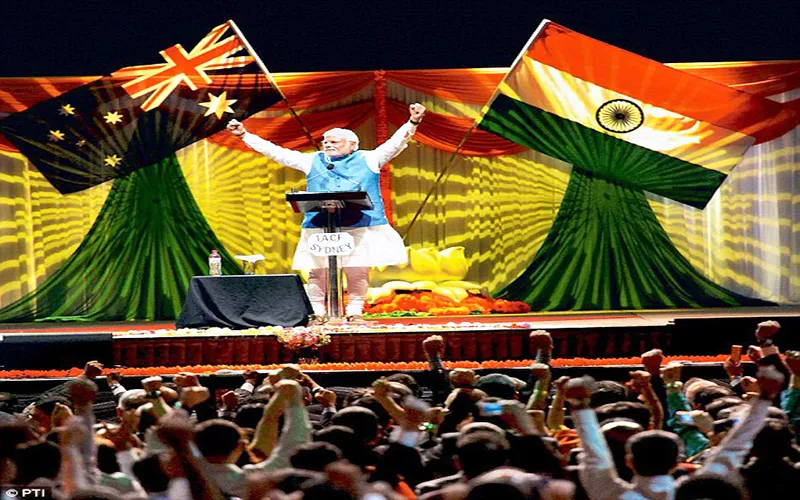
After the loss in Bihar, now it is incumbent on Modi and his team to start rolling out reform, iron out the wrinkles and implement his promises, otherwise, 2019 will be a distant dream. The days of waiting are over.
The Observer Research Foundation (ORF), India and the Stanley Foundation, USA co-hosted an international workshop on climate change on February 25-27, 2014 in New Delhi. The central objective of the workshop was to unbundle the different policy responses resulting from the multilateral negotiations thus far and their impact upon the evolution of existing and future multilateral frameworks. This Policy Brief aims to capture some of the salient per
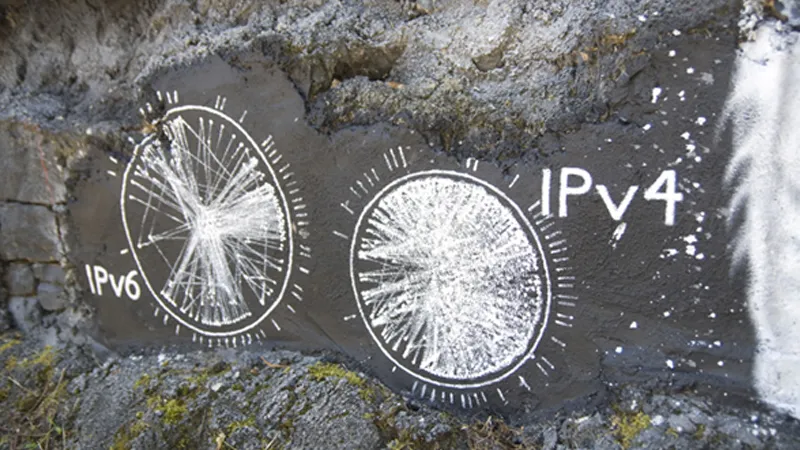
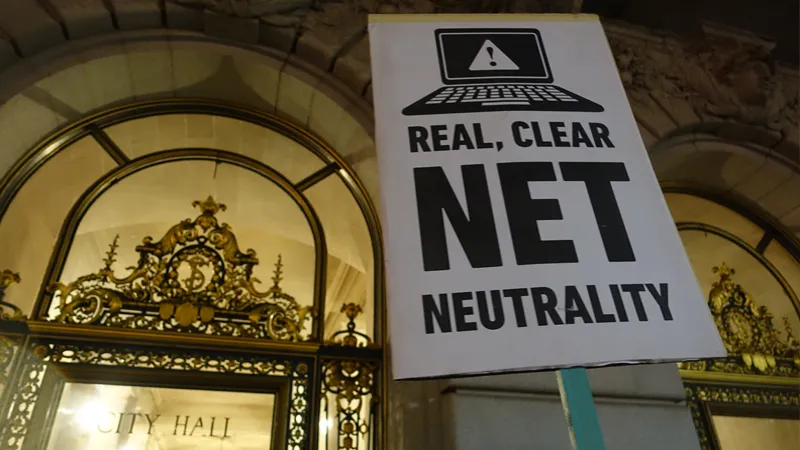
As the conversations around internet governance become trapped in confrontational language, it is time to move the emphasis back to decision making that works for all
The threat to regional security is mainly from pan-Islamic jihadi terrorist organisations and not from ideological or ethnic terrorist groups.
As economic growth continues to slump around the world, it has become imperative for developing nations such as India to seek to strengthen partnerships with African nations. There is a growing consensus that Africa is the last remaining capitalist playground. With an abundance of natural resources and the lack of an institutionalised capacity to harness them, Africa's statesmen have sought to move beyond their dependence on foreign (mainly West
The ever increasing importance of States in foreign policy - which is traditionally a preserve of the Centre - is not restricted to India, but in fact has become an important matter of debate in international relations.
Former Pakistan Ambassador to the United States, Mr. Hussain Haqqani, has urged regional powers to begin dialogue to prevent Afghanistan from slipping into a civil war situation after the US pullout later this year.
The COVID-19 pandemic has forced nation states to shut down borders and to look decidedly inwards. In this newly emerging and highly tenuous global political economic landscape, a question that is being widely debated is what globalisation will look like in a post-pandemic world. This brief ponders the question in the context of India and its neighbourhood. Revisiting theoretical insights from ‘New Regionalism’, this analysis examines whether
Chinese President Xi Ginping, who came calling in India recently, has been considered to be the strongest leader of rising China since Deng Xiaoping. But a spate of events has raised questions as to how powerful is he and if he is really in control of the vast PLA.
With the inauguration of a railway track in the Northern Province, Prime Minister Narendra Modi, during his two-day visit to Sri Lanka from March 13 to 14, has managed to hit the right string amidst the people of Sri Lanka. The trip has marked the beginning of a renewed India-Sri Lanka ties.
The 21st-century governance challenge is to manage globalisation while preserving the sanctity of individual pathways that humans may choose to follow in pursuit of their dreams.
The Narendra Modi government is going to close down the Planning Commission as it existed. But, any new organization of Indian economic leadership must learn from the failures and successes of the erstwhile Planning Commission, continuing its best aspects while reforming all that is irrelevant.
This brief outlines a framework for India if it is to play a more proactive role in integrating and reimagining its immediate neighbourhood, in particular with reference to the economic relations with its BIMSTEC partners. The analysis is done in the context of important economic and strategic developments in the Asia-Pacific region in the recent years. It describes how India can navigate between competing economic and geo-strategic imperatives b
If India is the glue that binds the Sino-Pak alliance, as many argue, Delhi should have the capacity to weaken that bond through its own policies. Delhi has managed to alter the triangular dynamic with Pakistan and America by expanding its partnership with Washington. There might be similar possibilities awaiting Modi in Beijing.
India and Iran are, in their own way, natural allies, a fact underscored by the increasing anti-Shia nature of Pakistan. We need them more than they need us and so we must begin the process getting Teheran off its great sulk against us.
Whatever be the end-game in the ¿Karuna rebellion¿ within the monolithic LTTE, the development may have heralded a process of ¿social justice¿ or social re-engineering¿ as is understood in India ¿ and also come to stay, in a way. To the extent, the ¿Karuna factor¿ may have become unstoppable in the socio-political sense of the term, whatever be the immediate consequence of the rebellion, or its impact on the suspended peace process in Sri
In the aftermath of 9/11, fissures between the 'Islamic' and 'non-Islamic' world - a categorisation which is rather nebulous - have 'vindicated' the claims of many individuals on the Indian and Pakistani side that faith is a cause of conflict between both countries.
One of the issues is how the rest of the world reacts to terrorism that seeks to avenge perceived insults and wrongs. There have been various writings on this with respect to Islamist terror and this includes writings by Pakistanis and Muslims from other countries who urge a relook at the way Islam has been hijacked.
President Bill Clinton's five-day visit to India in 2000 followed by a five-hour stopover in Islamabad convinced New Delhi that the world order had changed. Relationships were to be shaped by the new post cold war realities, not old loyalties.
Prime Minister Manmohan Singh must take a leaf from the Atal Behari Vajpayee book. Remember how he was stung at Kargil by Pervez Musharraf after his bus journey to Lahore. But he persisted. He was willing to go some distance even at Agra, the hardliners in his own party pulled him back.
India has over thirty years of experience in developing biogas, biomass and solar energy and this expertise needs to be leveraged better
This Paper outlines the potential of renewable energy in addressing India's energy supply and access; it identifies challenges and provide a discursive overview of the various market and policy instruments developed to scale up renewable energy generation. India’s significant economic growth over the last decade has led to an inexorable rise in energy demand. Currently, India faces a Ichallenging energy shortage. To grow at 9 per cent over t
With the new government in New Delhi, there is a renewed interest in internet and internet governance in India, according Mr. Thomas Dukes, US Deputy Coordinator for Cyber Affairs. He said the Digital India initiative has been revived and the Government's interest and investment in furthering it is clearly visible.
The strategic compact between India and the European Union (EU) is coming up for renewal in 2025. While the Roadmap to 2025, launched in 2020, was an important step in the relationship, the strategic partnership remains largely underwhelming. The unfulfilled potential becomes a matter of even more urgent concern today, amidst the geopolitical turbulence and geoeconomic challenges confronting the world. As negotiators from both India and the EU co
The synchronised explosions in London on July 7, 2005, seem to be the handiwork of the Al Qaeda and the International Islamic Front (IIF) formed by it in February, 1998.
Maritime terrorism directed at international trade and energy supplies is not just within the realm of possibility but a distinct threat that confronts the international community. Acts of maritime terrorism of a noticeable scale began with the Palestinian Liberation Front hijacking an Italian cruise ship in 1985.
The DMK's current resurgence had its beginning in the 2004 Lok Sabha polls that the ruling AIDMK-BJP combine lost completely after the negative fallout of the economic and fiscal reforms hit the common man
The new Indian approach to Nepal, and to the South Asian region, form a core of the Modi government's foreign and security policy. The goal is to bind them closer to India through a web of economic relationships. To implement this vision, Modi also needs to untangle political issues that have bedevilled relations between India and them.
In the Kashmir Valley, violence has receded. But the situation is not normal, as evidenced by recent incidents of attacks. Normality will not come till the Union government addresses the sentiment that is exploited routinely by the Hurriyat. Normality will also be judged by the return of the exiled Pandit community to the Valley.
Before the Government plunges into the physical modernisation of the armed forces, it needs to put in place the much needed modernisation of the way we think about, plan and manage our national security system. Buying or making shiny new hardware for the sake of looking modern neither enhances our security, nor helps our economy.
In a world increasingly being shaped by rapid technological advancements, environmental crises, and deepening inequalities, the dominant models of quality education offer a narrow and inadequate vision. This paper makes a case for a multi-dimensional and adaptable capability approach (CA) that offers a transformative lens for guiding future policy reforms. It offers policy directions for India and other Global South contexts, advocating for a red
India now has an easier relationship with Kabul and Washington. An India-Pakistan-Afghanistan trialogue this year to try and dispel some of the suspicions Pakistan has over India's ambitions in Afghanistan may be the way forward.
Global growth is expected to experience an uptick this year due to renewed economic activity in the emerging and developing market economies. These economies have large investment requirements for infrastructure development and maintaining a sustainable level of economic growth—for which they are dependent on international credit markets. With the growing need of economies to borrow capital abroad, the role of credit rating agencies—most of t
President Obama recently outlined a re-oriented counter terrorism strategy that aimed at trimming down the predominance that counter-terrorism had occupied in US policymaking. The speech also made public Obama's intention to scale down the drone campaign, subject it to tighter scrutiny and oversight.
Two broad principles outlined by Jawaharlal Nehru must guide Delhi's current approach to the Asian power rivalry. One is to seek good relations with both China and Japan; and other is Nehru's insistence that postwar Japan should not be isolated or punished because of its imperial past.
The June 5 hartal, or shut down, brought back fears of the return of hartal politics which had been a bane of Bangladesh politics in the recent. Such shut downs often followed or preceded bouts of violence across the country, bringing the economy, and every thing else, to a grinding halt.
The full-fledged effort to resettle began last September which got stuck mainly because of the suspicions raised by the security forces regarding the presence of the LTTE sympathisers among the IDPs
The Donors conference this week attended by 60 Foreign Ministers and other leaders, including UN Secretary General Ban Ki Moon was, among other things, a demonstration by NATO and US led forces that they have the military muscle to host such a meet in Kabul.
There have been few significant changes in the basic parameters of the Indian economy in the last three months and in general, the economy is still on a relatively high annual growth path of around 7 per cent. The impact of drought that affected some parts of India during the last monsoons is yet to be severely felt on industry because it always
The current focus on ¿domestic issues¿ in the US presidential poll campaign may have a lesson or two for India, where economic reforms, and introducing a ¿human face¿ to the process have been drawing as much attention. In a way, Senator John Kerry, the Democratic challenger to Republican President George Bush,