7298 results found
Professional diplomats will find little that is new or startling in the Wikileaks cables. For them the quality and content of reporting in the leaked cables is quite standard fare. Transmitting to Headquarters information gleaned from contacts, assessing its worth,
Agriculture remains the world’s biggest employer and the most important source of food and raw material for various economic activities. The fulfillment of a number of the Sustainable Development Goals (SDGs) is anchored on the performance of the sector. This brief examines the most crucial negative consequences of how modern agriculture is practiced, and how these will make it difficult for the world to realise the SDGs. Drawing on examples fr
India and Nepal are fellow riparian nations in South Asia and thus could potentially use their shared water resources as avenues for collaborative effort. Using water to generate hydropower for maximum benefit comes from a place of mutual interest, allowing for optimum leverage for the socio-economic development of both countries. This brief outlines a history of the India-Nepal hydroelectric power scenario, and offers recommendations for growth.
Forests help mitigate the impacts of climate change, provide economic benefits for the country, and meet specific facets of India’s sustainable development goals. It is essential, therefore, to revisit India’s forest governance and evaluate the country’s efforts at forest restoration and conservation. This brief examines the current state of India’s forests, explores the effectiveness of forest restoration and conservation measures, and r
Traditional Indian fermented foods represent a confluence of cultural heritage, nutritional functionality, and environmental sustainability, offering an effective dietary intervention amidst public health and climate-related challenges. Produced through natural or controlled microbial fermentation involving lactic acid bacteria, bifidobacteria, and yeasts, these foods—such as idli (steamed rice cake), dosa (rice and lentil crepe), dahi (curd),
The thaw in the India-Pak relations has opened a new window of opportunity. In the first stage, it will assist in India hosting the Heart of Asia conference next year and may also lead to a fruitful visit by Modi to Islamabad for the SAARC Summit.
Overall, the infrastructure sector is the winner in this year's budget. The allocation to the sector will go up by 700 bn rupees in 2015/16 over last year. But this sector needs consolidation in policy framework starting from approval to implementation and an institutional mechanism for fair pricing and competition.
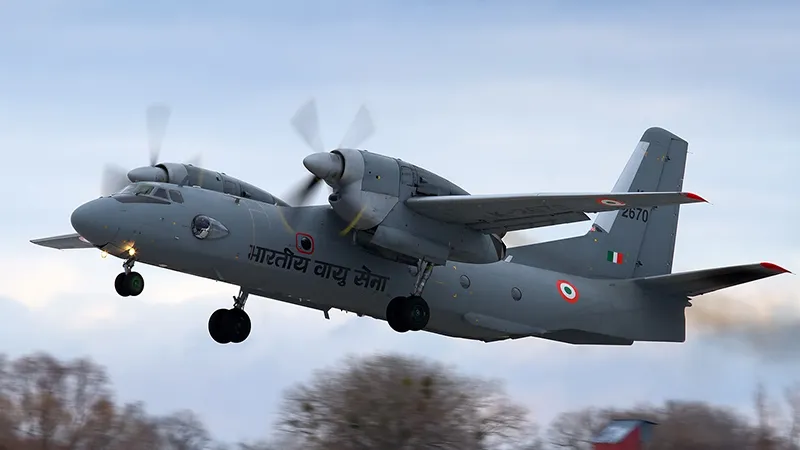
Despite renewed efforts, the complex integration of the aerial refuelling probe on the Tejas fighter hasn’t been properly accomplished.
Bangladesh's bilateral relations with India got a major boost with its Prime Minister Sheikh Hasina's visit to Tripura on January 11 and 12. Sheikh Hasina visited the north-eastern Indian State to attend the convocation of the Tripura Central University at Agartala.
President Barack Obama's State of the Union address to the US Congress begins with America's recent military engagement in self congratulatory terms. Among the more modest claims is: "For the first time in two decades, Osama bin Laden is not a threat to this country".
ORF Chennai chapter pays tribute to R K Mishra, Chairman of the Observer Research Foundation.
The essence of SSC is pivotal & sincere. But it is not devoid of criticism. The use of the word, ‘South’, itself reflects the colonial hangover that developing countries are trying to shed
Healthcare in India could use the help of better data and analysis from both public health systems and private sector interventions.
The COVID-19 pandemic has caused unprecedented stress on India’s urban public health infrastructure, underscoring the need for urban planning to account for increased demand for health amenities during crises. This paper evaluates the city of Mumbai’s 1991 and 2034 development plans and finds inherent infrastructural inadequacies. It calls on urban-policymakers to complement development plans with robust dynamic health strategies that conside
The increasing range of cross-boundary health issues has prompted the integration of health into the discipline of diplomacy, and this trend is reflected in India-Africa partnership. India’s development partnerships are, however, predicated on the idea of development effectiveness, which requires active private sector engagement. By focusing on four opportunity sectors — medical tourism, tele-health, frugal innovations, and the pharmaceutica
The story doing the rounds in Delhi is that in another exhibition of generosity, India is about to withdraw from the Saltoro Ridge (commonly referred to as the Siachen Glacier) in the interest of peace, but without securing the country¿s strategic interests.
If Hindu extremism prevails, India will have little to give the world and be in no mood to learn. Unless the PM acts now to check these negative forces, Modi and the agenda for India could end up being a minor part of the vast collateral damage.
At a roundtable on the situation in Bangladesh, experts underlined the need for ensuring a credible election in Bangladesh for the country's stability and the strengthening of India-Bangladesh relations.
If internecine clashes in the eastern Afghan city of Herat are a sign of the things to come, peaceful political evolution of the country seems to be a messy affair. Around 50 people had been killed in those clashes that continued for eight hours in one of the more stable cities of Afghanistan.
In Delhi, the Army still honours its martyrs in the airport parking lot as, ostensibly due to security concerns, it doesn't have access to the reception area built last year.
West Bengal Governor M.K. Narayanan thinks that India must carve out an area of influence for herself as China has made it clear that it is not going to restrict itself to Western Pacific, and so, there is high likelihood that China will come into the Indian Ocean because of its interest in oil.
It is becoming increasingly clear that a resolution to the Kashmir dispute cannot be delayed much longer if the peace process between India and Pakistan is to yield tangible results in the foreseeable future. This period cannot be longer than five years.
It is time that the Modi Government carried out a comprehensive assessment of our internal security structures and put in place measures to enhance their efficacy. Also, the feasibility of the earlier proposal by the army for permitting lateral movement of its personnel into the CAPF needs to be re-examined.
The government has to free India's top 50 institutions across all disciplines from the iron grip of UGC and AICTE. The institutions must be given the freedom to devise their own course curriculum. After all they have the best subject experts.
There is uncertainty in the availability of domestic coal and in this context there is probably a need to rethink India's energy security strategy based on domestic coal
Clinton's India visit was only moderately successful with not much progress on nuclear liability issues and Afghanistan. But the good thing is that both countries are talking out their differences, showing their commitment to taking this mutually-beneficial partnership to a new high.
Nepal's relationship with China has historical links and thus is not new. Their first recorded official engagement dates back to the middle of the seventh century when Nepal's adventurism in Tibet led to Chinese intervention in favour of the latter.
This is the biggest protest campaign in Afghanistan since the ouster of the Taliban regime. This is bloody, widespread and countrywide.This also shows that they are fed up with the United States and they just needed a spark to vent their feelings.
Human traffcking remains a highly acute issue in India and rehabilitation efforts must be stepped up to make sure that those rescued from these hazardous situations are given a chance to rejoin mainstream society. However, various loopholes exist in the judicial and executive processes involved in the country’s rehabilitation systems. This paper describes such problems evident in the process of home enquiry for the rescued victims: fraugh
The central administration in China is wary of a protracted confrontation about the public in Hong Kong, and considering the nature of the demand, a prolonged protest would certainly be an embarrassment to China in the global political arena, says a China expert.
The Indian army’s higher leadership must reflect on its role as the sword arm of the republic, and have a clear vision of itself as the upholder of law.
It does not require much investigation or analysis to prove that Pakistan President Pervez Musharraf is not really inclined to set his house in order when it comes to terrorism.Take his July 22 address to the nation. He seemed to be at pains to explain how Pakistan itself was a victim of terrorism.
There is a strong sense in Japan today that Prime Minister Shinzo Abe and India's new Prime Minister Narendra Modi would take India-Japan relations to a new height, say senior officials and scholars in japan.
Mr. Larry Diamond, Senior Fellow in Stanford University, US, spoke on 'Horizontal Accountability: The Quest for Effective Democratic Governance, at an Interaction of the ORF Chennai Chapter of the Observer Research Foundation, on 12 December.
Most of the joint exercises being conducted by security forces, like like the Malabar 2015, are of the simple basic variety and, hence, really provide no 'net value addition' to the Indian force that participates. Thus, approvals for such exercises should necessitate a case-by-case approach in the future.
With the US and EU, who together are responsible for the makeup of 46% of the world economy, preparing to enter into the largest trade deal in history, the TTIP, the question of how the BRICS adapt and consolidate their position globally is one that holds considerable relevance. The options available to the BRICS are limited.
In 1990, China's GDP was roughly the same as India's and parts of its infrastructure, such as its railway system, were considered inferior. Today, China's GDP is around $9 trillion and India's is $2 trillion. The high speed train travelling at 300 kph from Shanghai to Beijing signals the extent to which China had pulled away from India.
The pandemic COVID19 doesn’t just come in the way of the UN Sustainable Development Goals, but calls for a rethinking of the timeline.