-
CENTRES
Progammes & Centres
Location
51 results found
Transboundary waterways in Northeast India provide a strategic conduit for trade, regional integration, and sustainable development, linking the regio
As India pursues its Act East Policy, digital connectivity in the Northeast Region is emerging as a strategic bridge that links local aspirations with
The Northeast’s role as a crossroads for the Indo-Pacific means US strategic engagement could simultaneously drive growth and intensify challenges,
ASEAN recalibrates its strategy through dual summits with China and the GCC, signalling a pivot toward multipolar, sustainable partnerships.
The Nigeria-South Africa minerals pact charts a new course for African-led industrialisation, regional integration, and strategic control over the con
मागील शतकभरात, वस्तू आणि सेवांच्या आंतरराष्ट्रीय व्याप�
Enhancing regional integration will bode well for India as a rising power, a key tenet of which is a stable neighbourhood
The deepening military and defence cooperation between the Turkic states aims to make the region more secure and interconnected for stability and pros
उझबेकिस्तानने चीन आणि इतर राष्ट्रांसह भागीदारीद्वारे आ
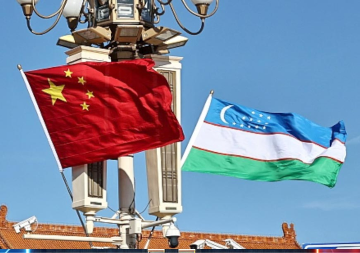
Uzbekistan has embarked on an economic reform drive to unlock Uzbekistan's socio-economic potential through partnerships with China and others
The establishment of the Alliance of Sahel States by Burkina Faso, Mali, and Niger and their withdrawal from ECOWAS undoes the decades of regional int
While India emphasises on harnessing the potential of integrated power exchanges, regional trends worldwide suggest “market coupling” as a concept
अलीकडे झालेल्या परराष्ट्र मंत्र्यांच्या बैठकीत चीनने द
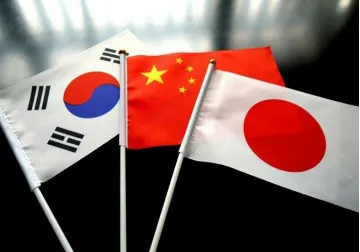
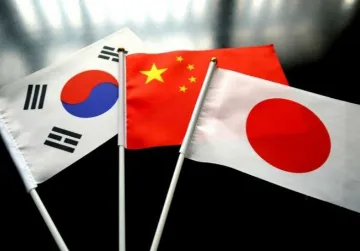
China’s messaging at the recent Foreign Ministers' meeting suggests that the CJK trilateral does not have an optimistic future
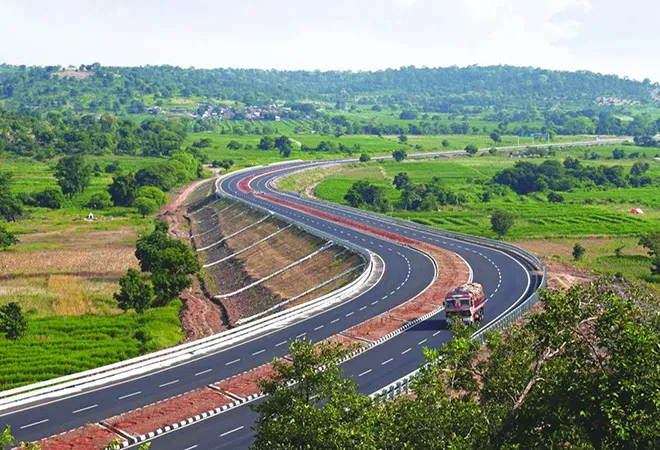
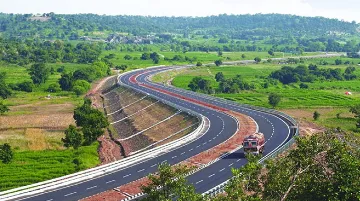
Growing political instability in Myanmar and financial issues have stymied the progress of the Trilateral Highway project
India and Australia can support the development of a Single Window System in fellow Indian Ocean Region states for trade facilitation at the regional
Countries in the Indo-Pacific region would have to enhance regional integration and align their policies in order to propel economic revival in the po
India would need to ratchet up its economic investments and regional integration initiatives in the Indo-Pacific if it aims to compete with the Chines
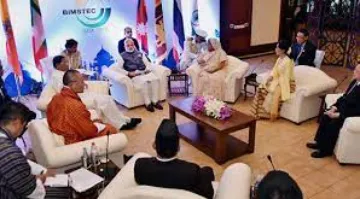
The big challenge before BIMSTEC is to muster public support for the regional forum.
The concerns identified by BIMSTEC reveal that the organisation restricts itself to engaging in only those security challenges which are non-state cen
India will have to carefully navigate the emerging regional geopolitics in BIMSTEC
As economic growth continues to slump around the world, it has become imperative for developing nations such as India to seek to strengthen partnerships with African nations. There is a growing consensus that Africa is the last remaining capitalist playground. With an abundance of natural resources and the lack of an institutionalised capacity to harness them, Africa's statesmen have sought to move beyond their dependence on foreign (mainly West
The paradox of the African continent is that it is resource-rich but remains poor in many parts. Has regional integration improved economic performance and does it pave the way to a better future? This paper examines West African integration--its evolution, the successes it has scored and the challenges that remain.
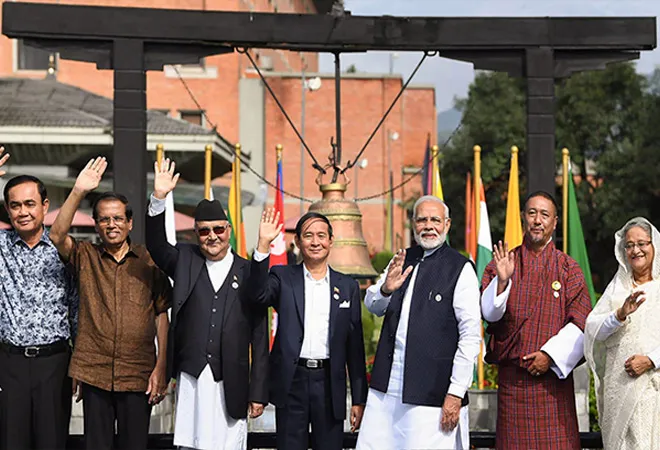
The need for regional integration is now BIMSTEC countries to make up for the deficit created by a crippled SAARC in South Asia
Since his assumption to power in 2014, Indian Prime Minister Narendra Modi has been slowly stretching the arm of the country’s foreign policy into Pacific waters in furtherance of the ‘Act East’ policy. While India’s relationship with the Pacific island states (read, not Australia and New Zealand) is quite unestablished, Modi is attempting to set the foundations for prosperous future cooperation. In the form of a guidebook for India on Pa
The European Union (EU) stands at a critical junction in its institutional evolution. The European sovereign debt crisis in 2009, the Brexit decision in 2016, and the success of anti-European populist parties in many member states have triggered intense discussions about necessary reforms in the Union, which only intensified after Emmanuel Macron became president of France in 2017. His vehemently pro-European outlook and ambitious suggestions for
The current Indian government has given clear indicators that it is likely to place regional integration high on its economic diplomacy agenda, be it SAARC, ASEAN or BCIM. The last two are especially important to India's Act East Policy.
Delhi's economic decision-makers, with their inward orientation, appear to have no capacity to think of a strategy for regional integration in partnership with China, or any other great power. The best it can come up with is to establish an official study group that can spin out the Chinese proposals for a few more years.
Two decades since its inception, the Bay of Bengal Initiative for Multi-Sectoral Technical and Economic Cooperation (BIMSTEC) has yet to truly succeed as an instrument of regional integration. The primary reason for the group’s slow progress is general inertia, or lack of interest amongst its members. There have also been more pressing national and regional issues that have overtaken the group’s development. This is set to change under the im
Enabling greater free trade and removing NTBs should be undertaken with the goal of not just regional integration and growth but also development of communities, employment and poverty alleviation across South Asia.
The problems of water, energy, climate change, and urbanisation, are all intertwined; they are, also, all 'wicked'. There is little consensus on how to effectively navigate these problems, let alone, how to solve them. Of these, water is key: the threat of climatic changes is primarily manifested in water, its dwindling supply, and the conflicts that may potentially arise. It also encompasses so-called 'toad's eye' concerns of the grassroots, oft
The benefits of strengthening physical connectivity in a geographically contiguous region are increasingly being recognised. These links are expected to increase economic activity and people-to-people interaction, leading in turn to regional and sub-regional integration. In this backdrop, the Motor Vehicle Agreement (MVA) signed among Bangladesh, Bhutan, India and Nepal is expected to facilitate cross-border movement of vehicles, thereby reducing
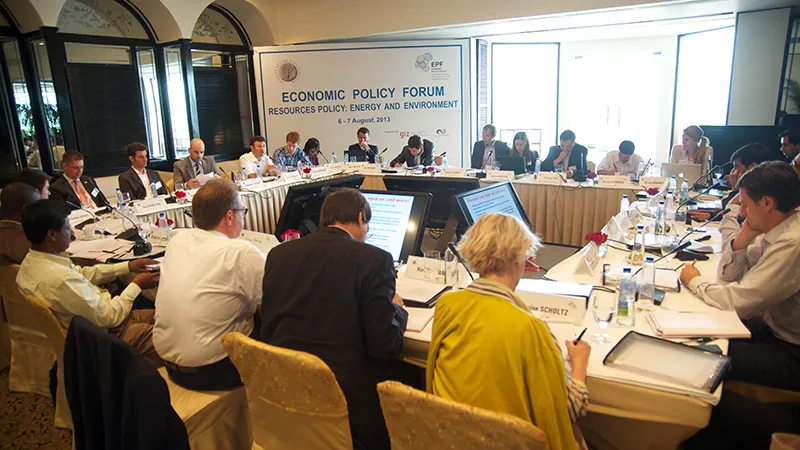
After a successful launch in January this year in Berlin, the Economic Policy Forum, a new alliance of think tanks from emerging economies and selected developed economies, met at a conference on 'Resources Policy: Energy and Environment.' The meeting also facilitated an initial conversation on 'The Prospects for Regional Integration.'
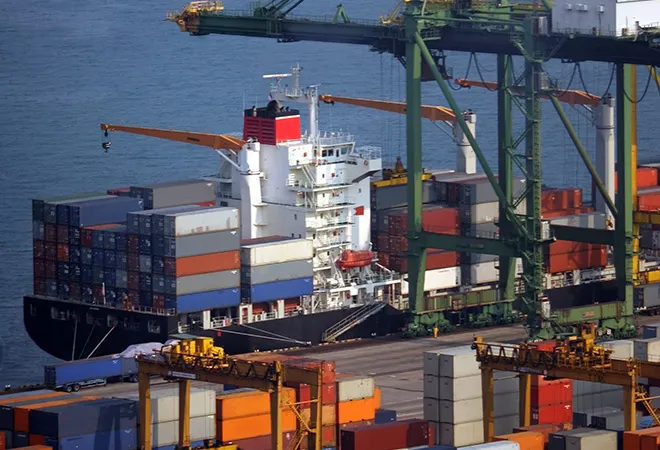
Sittwe Port in Myanmar’s Rakhine State is part of India’s Kaladan Multimodal Transit Transport project. It connects India’s northeastern states to the Bay of Bengal, advancing the country’s Act East policy and strengthening regional connectivity. Operational since May 2023, the port has handled over 109,000 tonnes of cargo so far, showcasing its potential to bolster trade. However, challenges to the port’s commercial viability persist,
This Issue Brief focuses on the reasons for the need to have sub-regional integration and cooperation between the four South Asian countries of BBIN--Bangladesh, Bhutan, India and Nepal. It also looks at previous attempts made at sub-regional cooperation by countries in the region and the areas of potential cooperation.
The potential welfare gains arising from the services agreement appear to be in India's favour as well as for member economies of ASEAN. The policy focus of both ASEAN and the individual member nations has been on merchandise trade liberalisation, and on inducing foreign investment-led transfer of technology, which has so far resulted in low regional integration in services.
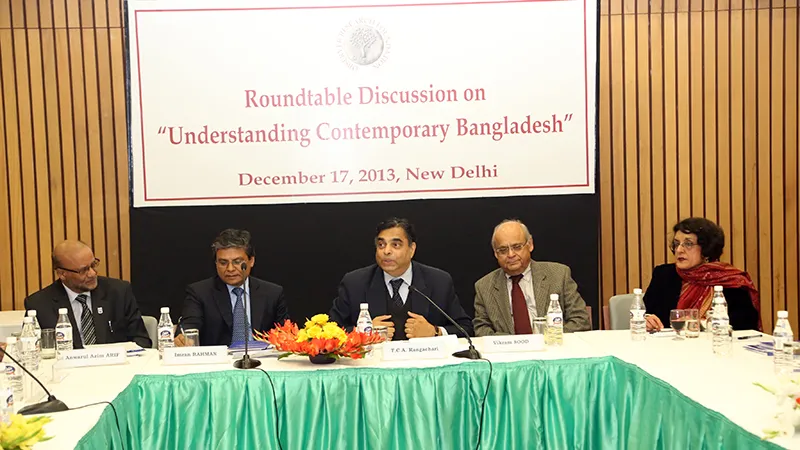
At a roundtable on "Understanding Contemporary Bangladesh", attended by vice-chancellors from nine universities of Bangladesh, the consensus view was that regional integration is not only beneficial for Bangladesh but for all of South Asia.
New Delhi must now accelerate the transformative governance changes it has initiated in the North East
The African countries are set to launch the African Continental Free Trade Area or AfCFTA, the biggest free trade agreement in the world since the World Trade Organization was created in the 1990s. When implemented, the AfCFTA is projected to increase intra-African trade by 52.3 percent by 2022, from 2010 levels. In turn, higher trade levels can facilitate economic growth, transform domestic economies, and help the countries achieve the Sustainab

This study discusses three major mega free trade agreements (the TPP, TTIP and the RCEP) and attempts to develop a strategy for India to navigate the repercussions engendered by these groupings and thereby safeguard India?s trade and sustain its economic growth.
Shorenstein APARC, in collaboration with Observer Research Foundation, will hold a conference on regionalism and regional integration in South Asia at Stanford University on June 19 and 20, 2008. The conference papers will be issued as an edited volume
जगात परस्पर विकासासाठी युरोपीय देश एकत्र आले आहेत, आफ्रिकेतील देशही संघटित आहेत. पण, भारतासहीत दक्षिण आशियातील देशांमध्ये असे ऐक्य दिसत नाही.