209 results found
Ad-hoc research initiatives and infrequent budgetary allocations would not suffice if India is to develop a vibrant research ecosystem.
What has happened in the interregnum to see an uncharacteristic rapid change in attitude?
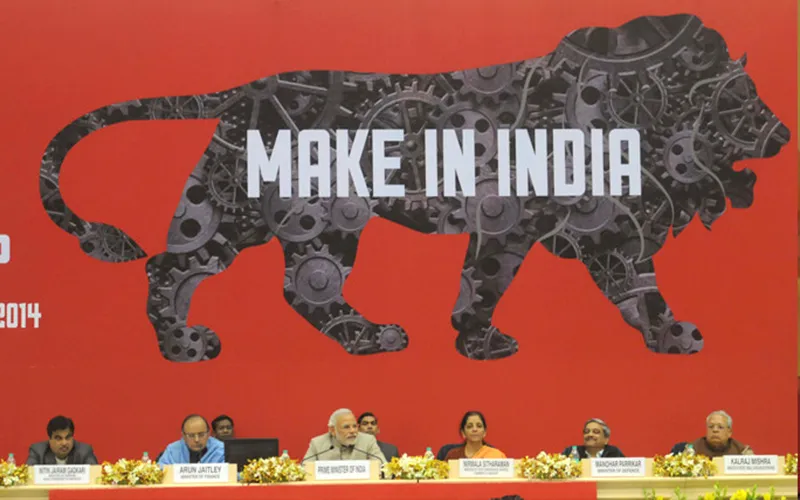
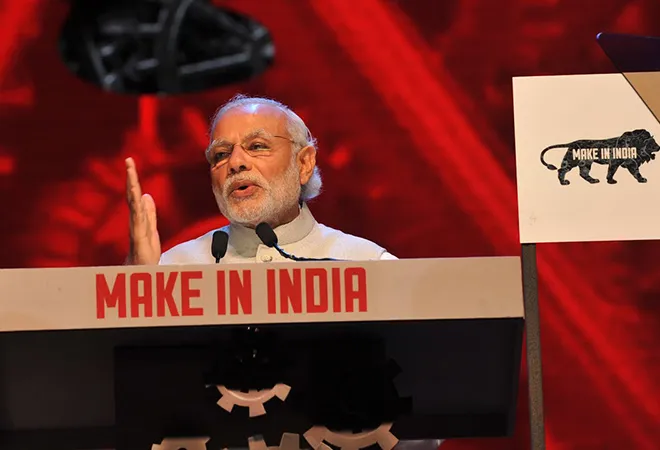
The ‘Make in India’ scheme launched in 2014 could be the starting point in galvanising the economic resurgence in post-pandemic India.
The pandemic will cause global FDI is to fall under the $1 trillion mark for the first time.
Can India jumpstart its economy by expanding bilateral trade relations with the US to reverse negative economic trends?
While pushing the case for Atmanirbhar Bharat Abhiyaan, there exists a need to address those areas where India should aspire to develop and possess na
Indian government and businesses would do well to carefully examine their prospects.
A proper understanding of India’s thriving R&D services industry and its impact on national innovation capability needs to be developed.
Pakistan is now deeply in hock to China. From weapon systems to economic bailouts, to diplomatic support in various international fora, China is Pakis
Gateway status depends on the type of business a company is looking to engage in and over what term horizon. It is important for each country to under
With China’s economic strength and the relative weakness of many smaller European countries, it is justified to see a “divide and rule” strategy
Most of the FDI is going to the service sector followed by pharmaceuticals, infrastructure and manufacturing. Foreign investors are interested in quic
Most FDI has gone to south India, Gujrat and Maharashtra. In the north, FDI is located around Delhi, Haryana and Punjab.
There is more room than imagined for reform in the Union Budget for Make in India. Political willingness will provide the answers.
The social and economic profile of the participants in India's vast retail trade is complex and varied. Besides, there is ample evidence that large sections of the petty bourgeoisie (trader and shopkeepers) may not be happy with their current existence. They would not mind if global capital inflows result in the creative destruction of existing arrangements.
There has been a heated debate about opening up the retail trade sector in India to foreign direct investment (FDI). Allowing foreign investment to come in retail trading is supposed to indicate that economic reforms are on track and that like in China , Walmart, Carforre, MAKRO, 7 Eleven and many more giant retail store chains, would be seen in India.
FDA in retail is not the reform that can change the face of Indian agriculture as the problems of small farmers and their vicious cycle of poverty have to end through state action and not by big foreign retailers.
The Government's decision to bring in FDI in retail has created an uproar, but it is not surprising at all as it has not only been ill-timed but is also being clumsily handled by the political class.
Economic experts firmly believe that FDI is the need of the hour and with political will and good governance measures, it could prove to be crucial in enhancing development in the region.
Opening up retail trade should not have happened at a time when inflation is high, GDP growth rate is falling, industrial growth and exports are declining. Unfortunately, it would take a long time for the multi-brand retailers to establish their own supply chains and hence inflation is unlikely to come down in the near future.
If the government wants to reduce poverty through FDI, then some fine-tuning in policies will have to be undertaken. FDI will have to be directed to labour-intensive sectors, especially from the unorganised sector. In Bangladesh, much of the FDI has gone to the garment sector which has enriched workers and reduced poverty.
Why India may not be the top of the list for FDI leaving China and what can be done to make it more attractive.
The issue of 100 per cent foreign direct investment in defence keeps getting muddied by the day, with various industry bodies such as the Confederation of Indian Industry and the Federation of Indian Chambers of Commerce and Industry apparently flip-flopping on an hourly basis.
Export-oriented FDI has the potential to vault India into the league of industrial economies: a stage which it allegedly skipped on its way to becoming a post-industrial service-based economy. Export-oriented FDI is labour-- and employment --intensive. In China export obligation is mandatory for foreign investors. This should be done .
Even if we go by the Financial Times' FDI figure, let's remember that having low FDI inflows for a year or half a year does not mean much. China has received, on average, $100 billion per year in the last decade compared to India's annual $20 billion figure. The best way to compare is looking at the per-capita FDI stock, which is $691 for China compared to $181 for India in 2013.
Billions of dollars in FDI have been assured to India thanks to Prime Minister Modi's successful foreign tours. However, there also has to be real technology transfer that spills over to the local economy. Only then, Modi's dream of FDI as 'First Development India' can be fulfilled.
If India is to sustain a high growth rate, there will have to be more foreign investment in infrastructure and manufacturing. So, it is going to be a challenge for the government to make investments in areas that are important for us more attractive to foreigners.
In March, a "matrix" between the two Sudans set conditionalities and dates both countries must respect. It was an insurance against political vagaries and deep deficit budgets. But with oil revenues falling into Machar's hands, the entire ambit of monies and transit fee from Juba could come unstuck one more time!
A common thread that runs through TPP, TTIP and CETA deals is the Investor-state dispute settlement system (ISDS), an opaque supranational court that decides disputes, bypassing the domestic courts and national laws. Now, the fear is that these trade deals might just end up producing managed rather than free trade.
India has pulled ahead of China and United States as the most favoured destination for foreign direct investment. But is being number one good enough to make the Modi government's 'Make in India' productivity reform a success story and achieve its desired 8-8.5 per cent growth?