-
CENTRES
Progammes & Centres
Location
16775 results found

A ten-member parliamentary delegation from Tamil Nadu visited Sri Lanka and met with President Mahinda Rajapaksa and discussed the resettlement of the 250,000 war refugees.
President Mahinda Rajapaksa-led ruling Sri Lanka Freedom Party-United People's Freedom Alliance coalition won the southern provincial council elections with a heavy margin.
Several thousand Tamil refugees have started seeking asylum in Australia and Canada. Both the countries, however, are wary of accepting the asylum seekers for security reasons.
Sri Lankan authorities criticised the latest move by the international community, particularly the US, to 'interview' war hero former army chief General Sarath Fonseka about events that led to the defeat of the Liberation Tigers of Tamil Eelam and the death of its leader Vellupillai Prabhakaran.
In a move that was not unexpected, Sri Lanka's Chief of Defence Staff (CDS) General Sarath Fonseka resigned from his post, which was created exclusively for him by the Mahinda Rajapaksa government soon after the end of the ethnic war.
Sri Lankan Human Rights Minister Mahinda Samrasinghe claimed that 143,672 Internally Displaced Persons (IDPs) have been resettled. There were 280,000 IDPs when the fighting ended in May 2009.
Sri Lankan President Mahinda Rajapaksa has called for early Presidential elections, which would be held on January 23, 2010. Under the Sri Lankan Constitution, the President can call for an early election after the completion of four years out of his six-year term.
To mark the beginning of the Tamil and Sinhala New Year celebrations in the country, the Sri Lankan President, Mahinda Rajapaksa announced a two-day unilateral ceasefire in the Northern Province. The truce declaration was also aimed at providing safe passage to civilians trapped in the "no-fire zone".
The two-day ceasefire call given by Sri Lankan President Mahinda Rajapaksa failed to produce any tangible results after it was rejected by the Liberation Tigers of Tamil Eelam (LTTE). The 24-hour ultimatum issued to the LTTE chief, Velupillai Prabhakaran,
With the Sri Lankan security forces continuing their advance into north-eastern Mulaithivu district, the last stronghold of the Liberation Tigers of Tamil Eelam (LTTE), the international community has again raised its concern over the safety of trapped Tamil civilians.
Blaming the ruling Awami League government for the deteriorating condition of power, water and law and order of the country, Bangladesh's main opposition Bangladesh Nationalist Party (BNP) launched a month-long agitation against the government.
After days of speculation and diplomatic haggling, the United Nations Security Council finally decided to discuss the humanitarian issue in Sri Lanka arising out of the ethnic conflict in the island nation.
The Liberation Tigers of Tamil Eelam (LTTE) officially admitted that their chief Vellupillai Prabhakaran "attained martyrdom" while trying to escape the last Tiger stronghold of Mullaithivu, where the LTTE top leadership had holed up in a final stand against the advancing Sri Lankan army.
Sri Lanka secured a major diplomatic victory when the United Nations (UN) passed a resolution backing its post-war plans for refugees. The UN resolution, which was passed 29 to 12 with six abstentions, urged support and assistance to Sri Lanka in its efforts to deal with large number of refugees.
Sri Lanka celebrated Victory Day at Galle Face Green in capital Colombo on June 3 to mark its victory over the Liberation Tigers of Tamil Eelam (LTTE). President Mahinda Rajapakse, who is also the Commander-in-Chief of the armed forces, praised the soldiers for their sustained efforts in wiping out the Tigers.
Sri Lankan Chief Justice Sarath N Silva, who retired recently, ruffled many a feathers when he appreciated the Liberation Tigers of Tamil Eelam (LTTE) for not dismantling the judicial system in northeastern Sri Lanka.
Sri Lanka is seeking foreign aid for the resettlement of 280,000 predominantly Tamil refugees, officially known as Internally Displaced Persons (IDPs), languishing in camps without any access to basic amenities like food, clothing and sanitation.
Local council elections in the Northern Province districts of Vavuniya and Jaffna will be held on August 8. Though President Mahinda Rajapaksa assured free and fair elections, the opposition wants foreign observers to oversee the conduct of the elections.
President Mahinda Rajapksa earned praise from all quarters for establishing the Development and Reconciliation All Party Committee. The committee comprises members from the main opposition United National Party,
Foreign aid reserves are at an all-time low in Sri Lanka. The island country requires foreign assistance to resettle millions of Internally Displaced Persons (IDPs) and reconstruct war-ravaged areas of the northeast.
A major reshuffle of the Sri Lankan defence establishment took place last week. General Sarath Fonseka took over as the Chief of Defence Staff, a newly created post, with powers to map out military strategy and planning. Gen.
The so-called executive committee of the Liberation Tigers of Tamil Eelam (LTTE) appointed Kumara Pathmanathan alias Selvarasa Pathmanathan as the chief of the once dreaded outfit. There is intense speculation on where the executive committee is located.
The International Monetary Fund has cleared a standby facility of US $2.6 billion to Sri Lanka. This clearance comes despite criticism from various quarters over the deteriorating humanitarian conditions.
The new chief of Liberation Tigers of Tamil Eelam (LTTE), Selvarasa Pathmanathan alias KP, was arrested in Thailand on August 6. Thai authorities claimed that KP was arrested by the Malaysian Police after he had gone to Malaysia to meet with senior LTTE cadres to discuss his "new policies".
The ruling Sri Lanka Freedom Party of the President Mahinda Rajapaksa recorded an emphatic win in the local council polls held in the turbulent northern areas of Sri Lanka. The elections, held just two months after the defeat of the Liberation Tigers of the Tamil Eelam (LTTE),
The Sri Lankan government has decided against cutting back expenditure on defence, given that a fragile peace has been established only recently after the decimation of the Liberation Tigers of Tamil Eelam (LTTE).
The Sri Lankan government registered an official protest after the London-based Channel 4 television station telecast footage that showed Sri Lankan soldiers executing some blindfolded Tamil men in the Northern Province of Sri Lanka.
Sri Lanka ordered a senior United Nations official James Elder to leave the country with immediate effect. Elder was the spokesperson of the United Nations Children Fund (UNICEF).
The Sri Lankan government is establishing special courts to clear the backlog of cases against former LTTE combatants, who either surrendered or were captured by the Sri Lankan armed forces.
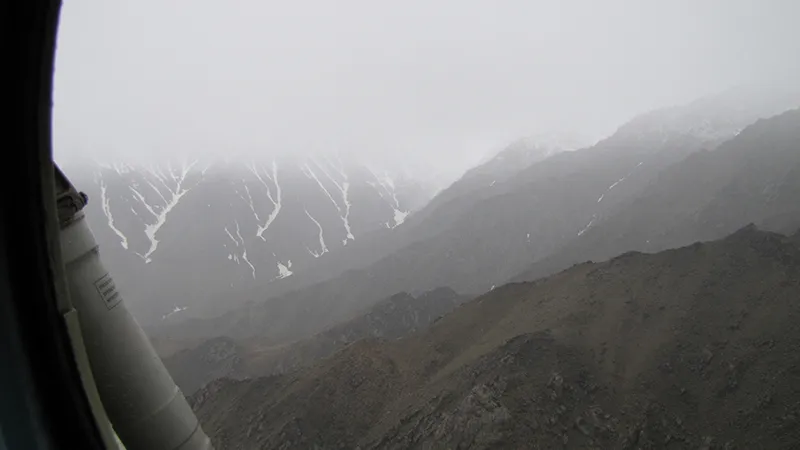
The kidnapping of an American University professor and his Australian colleague in Afghanistan resulted in a failed rescue mission.
This week we focus on India and Bhutan relations, healthcare in Myanmar — and other roundups from the subcontinent.